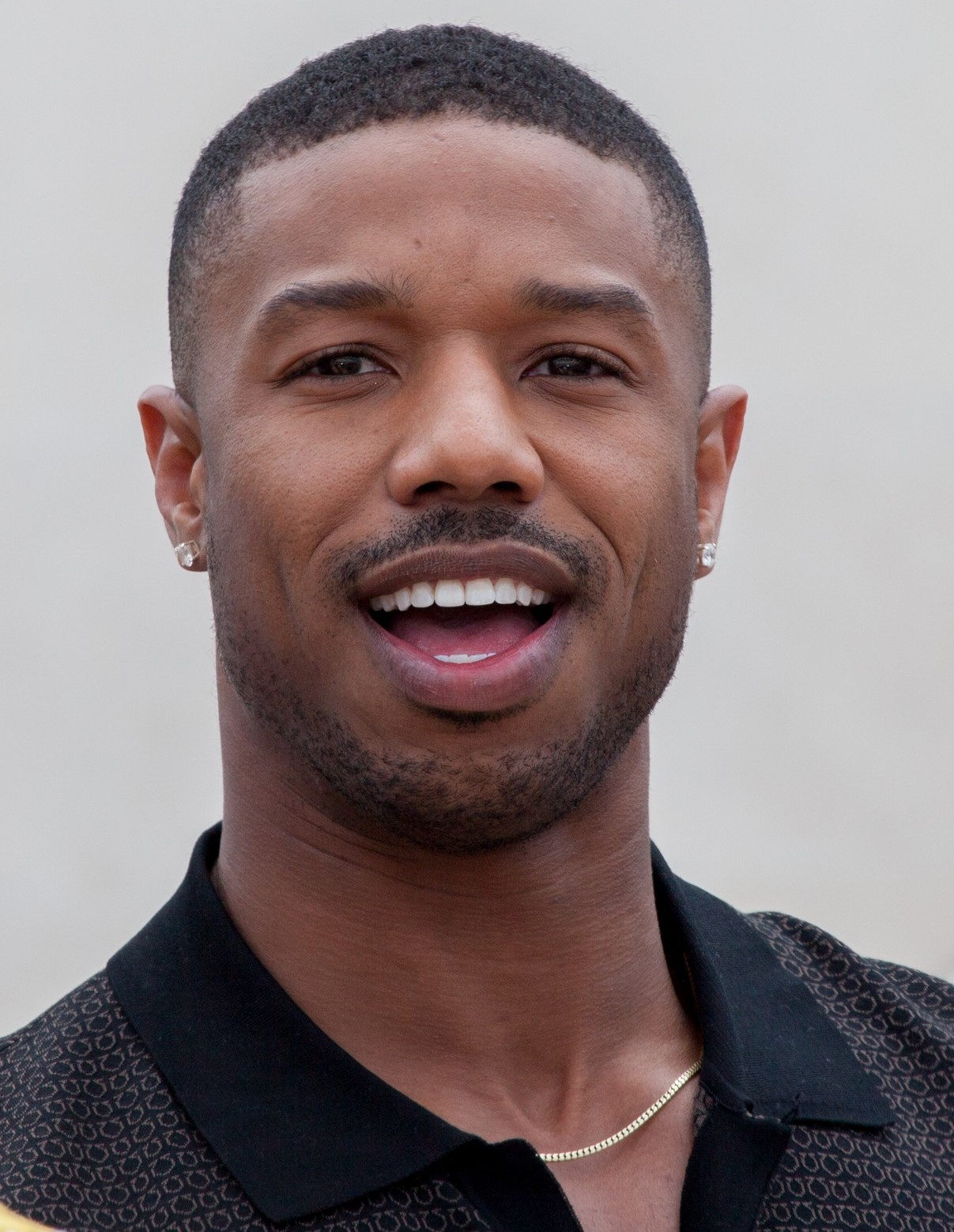
Michael B. Jordan
American actor and director
10
APPEARANCES
10
PODCASTS
Sep 17, 2026


Michael B. JordanGUEST
Uh, you know, whenever time has passed, and you know, this isn't, like, a, a complete remake.
Michael B. JordanGUEST
This is more of a re-imagination of, of a, um, of an idea and of a film and of a character that I, I, I fell in love with for the past, like, you know, 25 years [laughs] of my life.
Michael B. JordanGUEST
Um, you know, watching, watching when I was younger, and I always wanted to play a character like this.
Michael B. JordanGUEST
You know, the '68 version with McQueen was based around, you know, bank robberies and, and, and that was, uh, thematically on par for that time period and that generation.
10 MINS LATER

Chioma NnadiHOST
When an audience, you know, sees a film like the ones that you make with your friend and longtime collaborator Ryan Coogler, it's, it's kind of not surprising that there's so much excitement about, around them, right? How do you think about continuing to make good films and also leaving the doors open for others? 'Cause I think that's a, that's quite a challenge.

speaker_0HOST
Uh, what do you think about her claims?
Michael BGUEST
So, um, the Jewish community in Ottoman Palestine, um, I mean, it's hard to get certain exact demographics, but it was a pretty...
Michael BGUEST
The bu- the bulk of the community was of Sephardi origin, um, and they were primarily Ladino-speaking well into the 20th century.
Michael BGUEST
Um, there were some Arabized communities, and Arabic was definitely the lingua franca.
Michael BGUEST
But, um, it was a mix of Ladino-speaking communities, Arabized communities, uh, Yiddish-speaking communities, um, Buharan Jews, Yemenite Jews.
Michael BGUEST
It wasn't a, like a singular Arabic-speaking Middle Eastern Jewish community, uh, like some of those narratives say.
19 MINS LATER
speaker_0HOST
Um, any, uh, a- any things you've seen or that are interesting from that, um, what happened historically?

speaker_2UNKNOWN
[laughing]
Michael B.GUEST
And then, uh, also California, and I went to school in England for a year and a half.
Michael B.GUEST
My twenties coincided with the sixties, and the sixties were the years that I drank, and that is when I became, I believe I became an alcoholic.
Michael B.GUEST
And the sixties are, for me, in many ways, the horror-filled years, uh, even though some of them were pretty conventional.
17 MINS LATER
speaker_3UNKNOWN
[laughing]

speaker_1UNKNOWN
Hello everybody.
9 MINS LATER
speaker_1UNKNOWN
But...


Trevor NoahHOST
That part of the story seemed really important to you, and I'd, I'd love to know what you were hoping to achieve in telling that part of the story.
Michael B. JordanGUEST
I think, I think it's, it's just that, you know, the honesty of what it's like, what it's like b- from the soldier's perspective, who has a family, who has things that they care about, you know? Obviously, they're dedicated to a ser- uh, to, to a service, to, to, to a country in order to, you know, protect their oath, you know what I'm saying? To, to, to, um, uh, to uphold those values.
Michael B. JordanGUEST
But when that, but when that comes home and, and, and, and, and you feel betrayed, you know? And, and you're being lied to on so many different levels, you know, w- how far would a man go to get those answers? You know, I think we've all felt like this at one point.


Willie GeistHOST
And you put riders in the deals where you have to have a certain level of inclusivity in terms of who works on the movie, which is an amazing piece of leverage that a, a handful of stars I would think could bring to a, a project.
Michael B. JordanGUEST
project.Yeah, the inclusion rider, you know, um, you know, you know, that mandate kind of, um, um, was inspired by Frances, Frances McDormand, you know, um, a few years ago during her famous, uh, you know, Os- Os- Oscar speech.
Michael B. JordanGUEST
And I was, you know, in the audience, and I heard it and I was like, "Oh, man.
Michael B. JordanGUEST
There's something, you know, in writing that, that we can actually, you know, put into play?" I was like, "Okay, cool." So and that was something that, you know, we, we, you know, my team started to build upon and um, and we made that, you know, part of our, you know, our company policy.
Michael B. JordanGUEST
You know, something that, you know, just kinda, you know, tries to, you know, raise the accountability, you know, of, um, of, uh, partners with Outlier Society.
Willie GeistHOST
... what was the leap for you? How did that young kid at 11 years old hop into modeling, and eventually that was sort of the road to show business?


Michael B. JordanGUEST
I got journals for Smoke and Stack and had an opportunity to really, like, crack through, you know, their childhood with Ryan and, and, um, be as colorful as we needed to be and go through those milestone, you know, character canon moments, um, in their, in their life, the childhood trauma that they carried with them, the trauma of, you know, their environment and, you know, the world that they were living, the era that they were living in, coming up in the early 1900s, um, that would ultimately get us into that, you know, 1930 sweet spot that our story picks up on.
Michael B. JordanGUEST
So doing that was kinda like the first things that I kinda, like, went through, and then everything else is, like, you know, you building a house, you know? It's, like, layers and layers and layers that you kinda have to dive into.
Michael B. JordanGUEST
Working with my dialect coach to really-- and doing some chakra work and some energy work to really, um, identify where he's holding his pain, where he's holding his trauma, and let that dictate and determine a little bit of his cadence in which they speak, Smoke or Stack, um, the way that they walk.
Michael B. JordanGUEST
The music that I was listening to, 'cause music's such a vital, um, heartbeat of this, of this movie.


Paola MardoHOST
When you first got the script and read it, what questions did you have for Ryan? And what did you really want to get right about playing Smoke and Stack?
Michael B. JordanGUEST
I think the first questions that I had was, maybe a little bit around the twins backstory.
Michael B. JordanGUEST
There's a lot of questions of like what their life was like before page one.
Michael B. JordanGUEST
And that's the juiciness, that's the stuff that I really, you know, I'm excited to dive into and figure out because I know that's gonna shape all the little micro decisions and choices and, you know, of these characters throughout the whole film, you know? I think the surreal montage was something that I read on the page that I was like, kind of like, you know, asking questions.
Michael B. JordanGUEST
Did you see it? Yeah, you know, I'm a super imaginative person, you know, and love things like that, like those surreal, I love that in film.
Michael B. JordanGUEST
And yeah, I could picture it, but it's always, when I get a script from Ryan, it's reading it, And then it's almost like a game for me to try to figure out what he meant in certain situations.
Michael B. JordanGUEST
You know what I mean? Like, what'd you mean by this? Or like, what is that? Were you trying to do this? Like, what were you trying to do over here? So that is always a nice little inner puzzle that comes along with a Coogler movie, with a Coogler script.
14 MINS LATER
Paola MardoHOST
Did you guys figure that out? Did they meet Capone? How did they get the Irish beer, Italian wine situation?


Katey RichHOST
Yeah, so what is that for you? How do you get that tunnel vision on the set? Is it about ritual before you get to the set? Is it about what you do between takes? What do you do to maintain that focus as two different people, which is like two different sets of focus?
Michael B. JordanGUEST
It's two different sets of focus, you know, with these two distinct characters.
Michael B. JordanGUEST
You know, when he means what he says, when he says it, you know, he's going to, you know, he chooses words wisely, you know, and there's a, he's not as approachable know uh on set so i think i think the things of uh the music that i was listening to you know for him you know the wardrobe and costume you know all the work and preparation and building this guy you know for the last you know months prior all that just becomes muscle memory when you're on set uh and and and the beautiful thing about this cast about you know this production uh there were so many things to help you fall deeper into the illusion.
Katey RichHOST
How do you change the way you build your rapport with your co-stars with those two specifically? Because each of them brings out so much of these two different guys and you have to be a different person with both of them.


Clayton DavisHOST
What struck you most about your first read of Sinners and what did Ryan want from you that maybe you hadn't done before?
Michael B. JordanGUEST
I think what struck me at first when you pitched me the project, even before I read it, was his personal connection of why he wanted to tell the story and what it meant to him through his relationship with his Uncle James and blues music and how that evolved and transformed into the story set in 1930s Jim Crow era down in Mississippi, even though it was shot in Louisiana.
Michael B. JordanGUEST
It felt like a different, um, something that he wanted to, not something to say, but something he wanted to explore.
Michael B. JordanGUEST
I think going from, you know, the franchises that he's been used to doing over the past, you know, you know, 10 years, uh, I think, I think, I think, I think, you know, I felt like he wanted to want to do something for him, uh, fully.
Michael B. JordanGUEST
And then after reading the script, uh, I mean, it was a, it was a, it was a, it was a fast read.
Clayton DavisHOST
So did you feel like you were stretching? You felt like you were flexing a bit, showing some of those different...