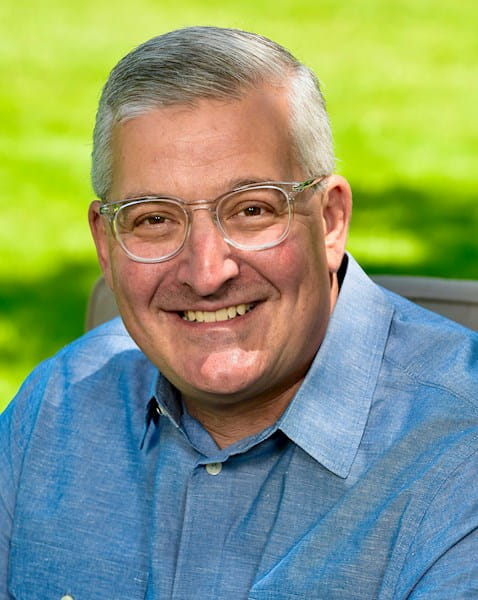
Michael Alter
American businessman
6
APPEARANCES
5
PODCASTS
Oct 7, 2026

Hal WeitzmanHOST
How can they s- think about building a process that it actually is repeatable and might help them to scale?
Michael AlterGUEST
One of the things that I teach in my class is that the entrepreneur has to be involved early on in the sales process.
Michael AlterGUEST
And one of the challenges that you have with entrepreneurs is they think, "Hey, I'm a, I'm a product person.
Michael AlterGUEST
I'll just go hire somebody to sell my great idea." And that almost never works.
Michael AlterGUEST
And the reason it never works is 'cause you got to take this idea and translate it, and oftentimes we're just not right with the product market fit, like we just talked about, the first time out.
6 MINS LATER
Hal WeitzmanHOST
You know, f- for us, someone who's leading a sales team in a big established company, what are the kind of the skills that they need versus what you talked about in the s- in the kind of medium-sized growth stage?
Hal WeitzmanHOST
So just tell us about some of those differences and how you would think about addressing those.
Michael AlterGUEST
When you think about sales to me, there's really two dimensions to it, right? There's the sort of behavioral skills that you have that are deployed in a non-linear way.
Michael AlterGUEST
And I think the process and the math is relatively consistent and it starts out relatively simple and you can make it more and more sophisticated.
11 MINS LATER

speaker_1HOST
Mm-hmm.
Michael AlterGUEST
My parents were engineers, uh, so my grandparents, uh, uh, from one side was doctors, uh, were doctors, from other side, uh, pharmacists.
Michael AlterGUEST
So I, um, uh, in the end of my, uh, high school education, uh, get a problem where I have to go in the future or to medicine or to engineering.
Michael AlterGUEST
So finally, I choose engineering because, uh, yeah, for me, it was too, I think, too high responsibility for the life of pa- patients.
Michael AlterGUEST
[laughs] So in, uh, 1971, I, um, uh, uh, get entering in a Moscow Institute of Steel and Alloys, uh, exactly in a department iron ore thermal treatment.
12 MINS LATER
speaker_1HOST
Uh, can you explain a bit about coking coal? Why do we need coking coal?

PaulogiaHOST
No fact would even need contra-resurrection affirmation to make 90%, and in fact, could even withstand some pro-resurrection rejection.
Michael AlterGUEST
When Habermas says virtually all critical scholars accept his minimal facts, the pool from which those scholars are drawn is a pool in which the overwhelming majority of participants have a vocational commitment to the very conclusions being tested.
Michael AlterGUEST
Many hold positions where publicly doubting the resurrection would end their careers.
Michael AlterGUEST
According to the Association of Theological Schools, roughly 270 member institutions cycle through approximately 2,600 doctoral degrees and 3,000 full-time faculty positions each year.
14 MINS LATER
PaulogiaHOST
If any postgrads are looking for thesis ideas, you can have that one.


Michael AlterGUEST
You got, you, you gotta go back from, uh, start at the beginning I suppose, like any business.
Michael AlterGUEST
Um, Allen and Tom were my original partners in Fitz's, uh, when we restarted it in, uh, 1992.
Michael AlterGUEST
Uh, you know, if you look on our bottles it says, "Since 1947." Although I might feel like I'm from 1947, I'm not.
7 MINS LATER

Michael AlterGUEST
Yeah, I mean, I think there's a, there's a lot and there's probably a lot of different things.
Michael AlterGUEST
And one of the things that I think is interesting about entrepreneurs is they come in many shapes and sizes, and so it's hard to say there's any one path to entrepreneurship.
Michael AlterGUEST
'Cause you see a lot of people that are successful 'cause they know an industry inside and out, and then they see a problem and they build it in that industry versus others that, you know, they don't know anything about real estate, but then they've built a great prop tech business, um, because of the advantage that they understood a problem from a different angle.
Michael AlterGUEST
Uh, I, I would say there are some common characteristics I think of entrepreneurs or people that are successfully entrepreneurial, um, and that is, one, it's sort of an innate curiosity, and it's a curiosity about whatever problem they're tacki- tackling and sort of a willingness to marinate in it.
Michael AlterGUEST
Um, and at the same time, these are folks with giant ears in that they listen really well.
5 MINS LATER