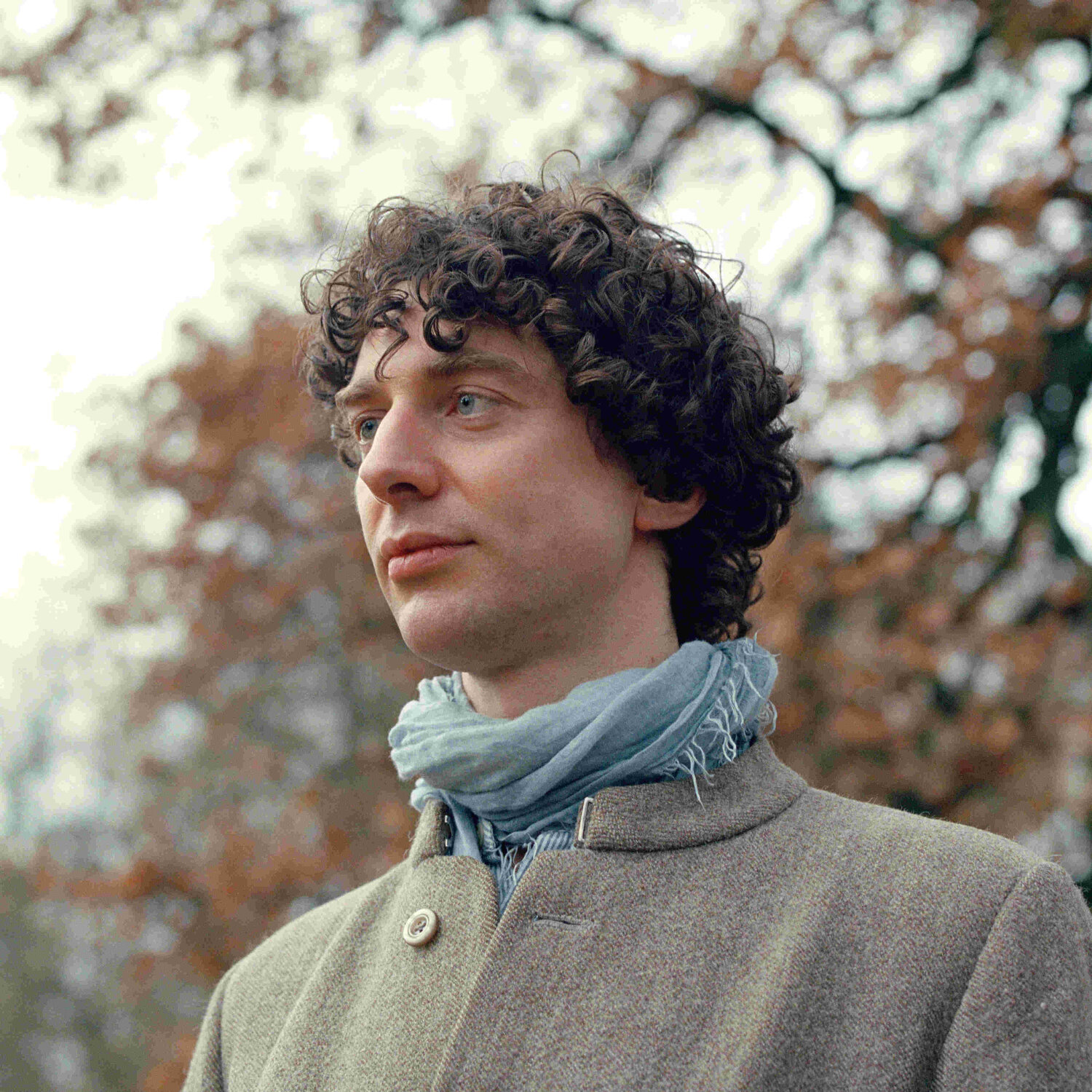
Merlin Sheldrake
British mycologist and writer
4
APPEARANCES
4
PODCASTS
Aug 31, 2026

FreddieHOST
Just how much compassion sharing and collaboration is there in nature or is it ultimately selfish?

Merlin SheldrakeGUEST
I mean, this has been a polarized discussion for over a century in the biological sciences, and I think unnecessarily polarized.
Merlin SheldrakeGUEST
What I mean by that is that there are those who say that nature is fundamentally a place of conflict and competition, and there are others who say nature is fundamentally a place of cooperation.
Merlin SheldrakeGUEST
And I think one of the reasons that became polarized is because of the way that evolutionary science was being discussed and conceived of in the late 19th century.
Merlin SheldrakeGUEST
And in anglophone spheres, the view of nature, Thomas Henry Huxley put it most clearly as a gladiator's show, where the strongest, fittest, and cunningest live to fight another day.
Merlin SheldrakeGUEST
This view mirrored the understanding of human social progress within an industrial capitalist system.
7 MINS LATER
FreddieHOST
I mean, do we even know how?

speaker_12UNKNOWN
[laughs]
Merlin SheldrakeGUEST
It was, it was like 10:30 in the pub, and we were really riding high on this idea, and so I went straight home.
Merlin SheldrakeGUEST
I was like, "We've got to trademark it right away because, so otherwise someone else will come up with this, this thing, and then we'll be out of this wheeze." And then, so I went back down and, and I, I was like, "I've got to trademark it right away." So I went on and I actually did.
7 MINS LATER


Rowan HooperHOST
But on the activity of the HIFI, Merlin, something I want to ask you about was after I'd seen this activity, I remember this quote from a biologist, Nicholas Money, who said, sensitivity or irritability are not the same things as consciousness but they are starting points in considering whether filamentous fungi have minds and you know when i saw the network the movement in the network you can't help thinking i couldn't help thinking about what is going on here in the kind of fungal intelligence and is that idea being taken more seriously now
Merlin SheldrakeGUEST
I think the idea that intelligence is not limited to humans and higher animals is certainly being taken more seriously.
Merlin SheldrakeGUEST
And I think that's opened up lots of really interesting frontiers and lots of new and exciting questions which can better help us understand the living world.
Merlin SheldrakeGUEST
They have to integrate these different data streams in their rambling, constantly shape-shifting bodies with no center of operation, no central place to integrate.
Merlin SheldrakeGUEST
those data streams and um and they're responding moment to moment to what's going on around them and they have to um that's how they do what they do so there's an astonishing um kind of vertigo that i think some of us feel when we are watching these organisms behave in real time because you're watching them solve problems without a brain you're watching them navigate a changing world um in ways that are so different from the ways that we do it
7 MINS LATER


Merlin SheldrakeGUEST
Well, I think it's helpful to think about some of the behaviors that we're trying to explain.
Merlin SheldrakeGUEST
So one of the, the very famous slime mold, the plasmodial or acellular slime mold behaviors, is the ability to navigate labyrinths or mazes.
Merlin SheldrakeGUEST
Um, and there are some very well-known examples of this with, um, researchers recreating a Tokyo subway network, but others have done it with network of Roman roads in Italy or the American highway system, where if you put blobs of foo- oats, they love oats.
Merlin SheldrakeGUEST
So you can put oats o-on a big dish, and then the slime mold will find the most efficient path between the oats, having explored the dish.
22 MINS LATER