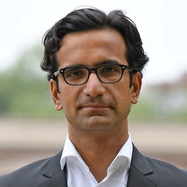
Mehran Gul
Geneva-based innovation geographer and author of "The New Geography of Innovation," winner of the FT/McKinsey Bracken Bower Prize.
5
APPEARANCES
5
PODCASTS
Sep 16, 2026


Mehran GulGUEST
And it's really an effort by the Singaporean government to build much of the technical talent in-house rather than having a model of subcontracting these things out as you see in the US.
Mehran GulGUEST
In the US, even national security topics are subcontracted out, even in the defense industry.
Mehran GulGUEST
And in, in Singapore, on the other hand, there is an emphasis on building these capabilities in-house because the idea is that it's the government policymakers that are the closest to the problem, and the more you separate the people developing the solution and the people understanding the problem, the worse the solutions are going to be.
Mehran GulGUEST
And so GovTech has come up with some very interesting products, such as Singpass, which is an app through which you can do everything from paying your bills to applying for passports to applying for, uh, loans.
Mehran GulGUEST
A-around 98% of all transactions that you would want to make with the government can be made on Singpass, you know, paying taxes.


Geoff NielsonHOST
I mean, A, A, would you agree with that? And does that in your mind create a really high level of systemic risk here? Like what-- I, I guess to ask a follow-on question to that, assuming you agree with it, like how high is the risk that a lot of this valuation could, you know, just disappear overnight and, and upend this entire structure that we've been talking about so far?
Mehran GulGUEST
Um, so on, on the point about sort of the oligarchy that you mentioned, I think it's an interesting question to at least ask whether America is a technological oligarchy, right? And, um, I asked-- I, I interviewed Margret, Margaret O'Mara, who wrote the history of Silicon Valley called "The Code," and I asked her exactly that question, you know: "Do you think America is an oligarchy?" And, you know, a few years ago she kind of like brushed off that question because like, you know, it, it seemed like an absurd question to ask.
Mehran GulGUEST
But in a time when there's one individual who is worth as much as the Indian economy, right? Uh, Elon Musk, you know, would-- uh, is it really that absurd a question to ask? And even this question of like, you know, uh, you know, what if he gets hit by a bus? That might sound like, you know, maybe an exaggeration, but if I were to reframe it and say, what if, what if he overdoses on ketamine, right? And you know, which w- it's a real risk.
Mehran GulGUEST
And, um, like I agree with you and, you know, in terms of valuations and whether they can switch quickly, I think there's an interesting parallel between what you're seeing in the US today and what you saw in Japan back in 1989.
Mehran GulGUEST
If you look at the US today, there's something like the eight or nine most valuable companies in the world are all American.
Mehran GulGUEST
It was exactly this back in 1989 where the top, uh, nine, um, companies in the world were all Japanese, as hard as it might be to imagine today.
12 MINS LATER
Geoff NielsonHOST
I'm curious if you have any other, you know, geopolitical, technological, economical predictions in the next handful of years that we haven't covered as a result of, of what you've unearthed.

29:15

So what's going on in Europe? Why is it seem to be such an underperformer when it comes to this?
Mehran GulGUEST
I mean, it's not just one thing, but maybe I'll talk about things that I maybe talk about less often.
26 MINS LATER
55:28
And so I guess the question I've popped into my head then is, OK, if everyone's running the same playbook, does that mean that geography matters less? And also, is there even anyone out there that's trying something fundamentally different in a way that matters now or might possibly matter in the near term future?


Andrew KeenHOST
So Mehran, what does this tell us about startup entrepreneurs? Are you suggesting that Europe in particular, Burnham or Macron or, or the Germans should be loosening federal controls? Of course, there's more and more suspicion of technology and innovation and in, in some ways even wealth creation in Europe.
Mehran GulGUEST
The, the, the sort of European attitudes towards wealth have, I think, always been there, the contrast that you see between Europe and the US.
Mehran GulGUEST
But in, in Europe, you know, almost talking about money is almost a dirty thing, and, uh, you know, I think startup incubators like StationF are trying to get over that cultural hangup that people have.
Mehran GulGUEST
But you know, I, I tend to push back also against just explaining all of this entirely through, um, cultural lenses as well, you know, not, not willingness, willingness not to talk about money, not taking risks.
Mehran GulGUEST
I think there are lots of institutional factors that are play at, at play as well.
Mehran GulGUEST
Um, you know, just to give you a couple of examples, if you look at an average American company at the Series A stage, you know, usually about 20% of an average American startup is owned by its own employee base.
8 MINS LATER

Lynne ThomannHOST
Can you talk a bit more about that difference and what it implies?
Mehran GulGUEST
When we talk about electric vehicles, for instance, I think in the US, even today, people have an association between electric vehicles and Elon Musk and Tesla, because that was the first major company that came up in the US that moved the economy away from gasoline to electric-powered engines.
Mehran GulGUEST
But globally, today, seven out of 10 EVs sold in the world are manufactured in China.
Mehran GulGUEST
If you look at the top 10 EV manufacturers in the world, seven of those companies are Chinese, and these would be companies that an American wouldn't even recognize these companies.
Mehran GulGUEST
You know, companies that you would've never heard about are now manufacturing more EVs than Ford, for instance, or GM, for example.
Lynne ThomannHOST
What did you hear in China that complicates that view?