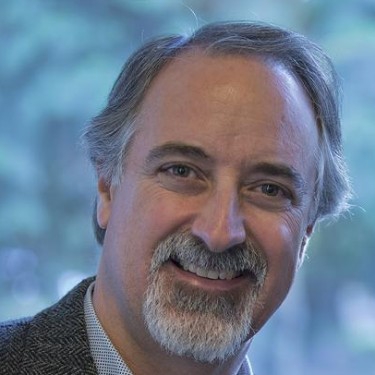
Max Cameron
Professor of Political Science and Public Policy at the University of British Columbia, specializing in democracy, constitutionalism, and Latin American politics; author of "Divided We Fall."
4
APPEARANCES
3
PODCASTS
Sep 17, 2026


Carole TaylorHOST
And if you look at the polling, the people of Canada are very happy that we stood up and said no.

Max CameronGUEST
You know, when I was writing this book, it started in 2024, roughly around the time that Trump was elected for his second term.
Max CameronGUEST
And I was caught up, along with everyone else, in the spirit of getting our elbows up and pushing back against the efforts of the United States to apply the Donro doctrine to Canada, as well as the rest of the hemisphere and so forth.
Max CameronGUEST
And we just saw this appalling behavior around Greenland, Venezuela, Panama, the war with Iran.
5 MINS LATER

Robin GillHOST
It feels like Donald Trump's grasp at the presidency has been a vanity project as opposed to actually making good change or change that was necessary in the United States.
Max CameronGUEST
Yeah, there's something, I mean, I've long believed that he lacks the character to be a good president, that he's not fit to be the president of the United States.
Max CameronGUEST
I think what's really important, and this is important for all of us, not just folks in the United States, but for Canadians too, that as we think about ourselves as a country or as a community, to be able to feel shame about the things that we've done wrong and pride in the things that we've done right and keep those things in an appropriate balance.
Max CameronGUEST
One of the characteristics of the U.S. political culture is the belief in exceptionalism, that the United States has a providential role.


Jill BennettHOST
Does it point to an issue with the system itself and how effective public hearings are the way they're held right now?
Max CameronGUEST
Yeah, I think public hearings are actually a deeply problematic mechanism for engaging with the public.
Max CameronGUEST
I would give as an example, there are all kinds of participatory innovations around the world.
Max CameronGUEST
Uh, uh, things like, uh, citizens assemblies, which actually started in BC, um, participatory budgeting, deliberative polling.
Jill BennettHOST
Because one of the issues too, isn't it, and I get what you're saying, roundtables and being part of more of the process sounds like it would be a lot more productive because I think also there's this idea that by the time you get to the public hearing, and again, there's all of this waiting and dozens of speakers in many cases, I think there's a general feeling from people that even though they're making arguments and speaking, they kind of feel like the decision has already been made.

Max CameronGUEST
Uh, it was a surprise to me not only to see, uh, the flags going up across the country, to see the expressions of, of patriotism, uh, along with indignation against Trump, um, to see the way in which Canadians got their elbows up and, and, and began, I think, to, to reverse what has been a trend over the last little while toward a growing sense of frustration, um, maybe even a kind of civic shame about so many of the things that we know are wrong with this country.
Max CameronGUEST
I'm thinking about things like the residential schools and the Truth and Reconciliation Commission.
Max CameronGUEST
Um, um, and, and, you know, Canadians, uh, I know we're going through, I think, a lot of self-doubt, and I don't think it's necessarily a bad thing, uh, for us to be doing that, to think about how we could be better as a country.
Max CameronGUEST
But we also need to take pride in the things that we know make us strong and unify us.
Max CameronGUEST
And I thought it was remarkable how so many Canadians, uh, came together in a spirit of, of, of patriotism.