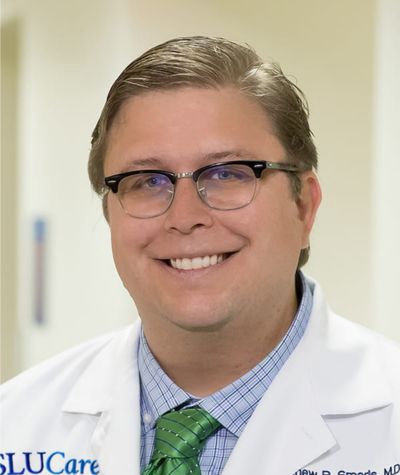
Matthew Smeds
Vascular surgeon and tenured Professor of Surgery at Saint Louis University; Editor-in-Chief of the Journal of Vascular Surgery Cases, Innovations and Techniques.
1
APPEARANCES
1
PODCASTS
Sep 17, 2026

43:40

Dr. Smeds, what about this study to you that you picked out for this month's spotlight?

Matthew SmedsGUEST
Well, you know, this is honestly one of the coolest papers that I've read in the last couple of months.
Matthew SmedsGUEST
And the paper immediately grabbed my attention because it isn't simply improving an existing tool.
Matthew SmedsGUEST
Every surgeon who performs fenestrated or branched endovascular repair knows that target vessel cannulation is often the rate-limiting and most frustrating part of the procedure.
Matthew SmedsGUEST
Seeing the authors accomplish all four cannulations in their model using a magnetically steerable guide wire without the usual collection of steerable sheaths and support catheters made me stop and think about where this technology may eventually lead.
Matthew SmedsGUEST
What excites me the most isn't necessarily this specific prototype, it's the platform itself.
7 MINS LATER