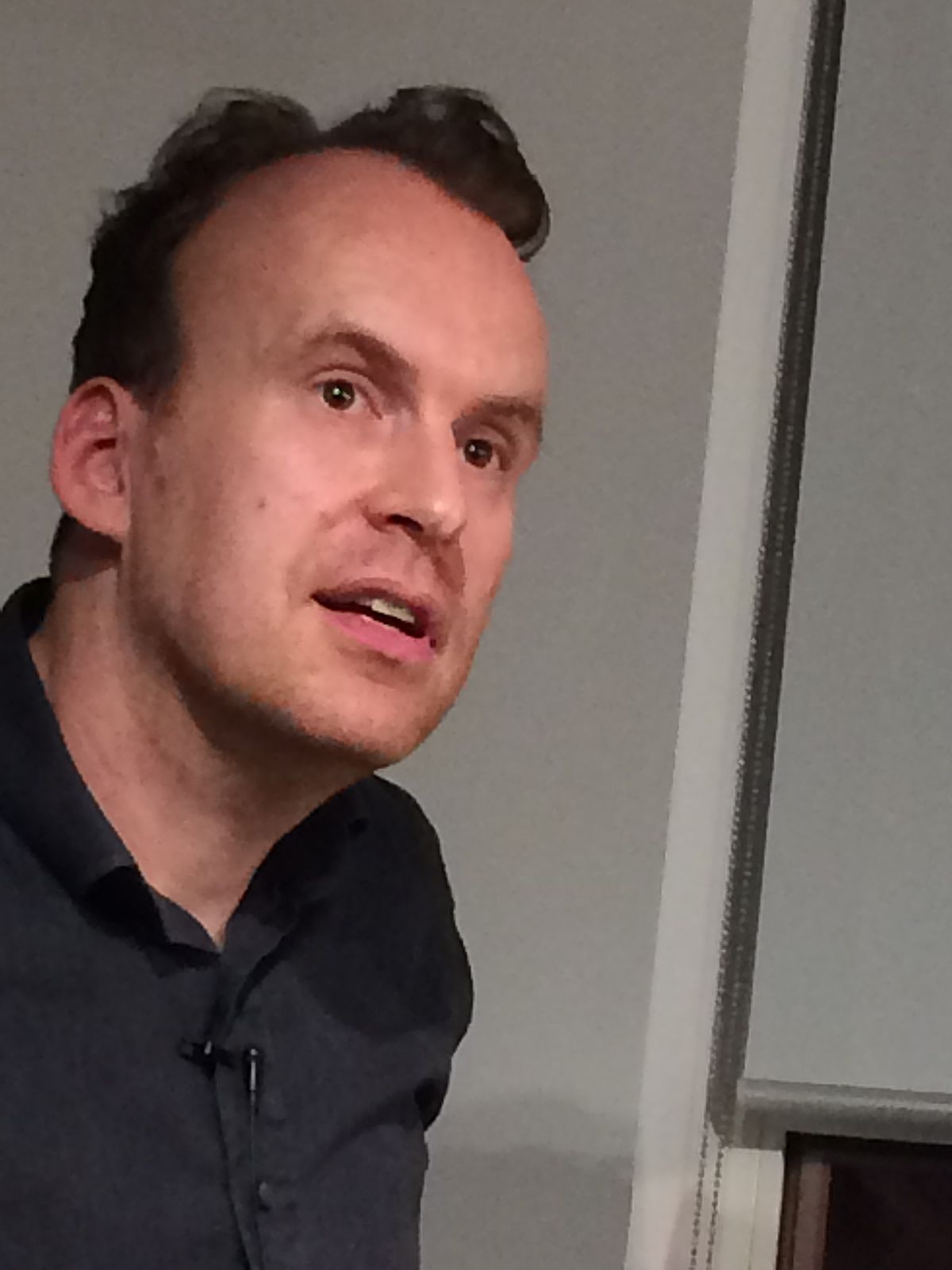
Matt Haig
Author and journalist
19
APPEARANCES
15
PODCASTS
Sep 1, 2026


Matt HaigGUEST
I'm always sort of nervous about talking about creative writing processes because people have such strong views.
Matt HaigGUEST
But I would say, like, for me, I'm at the point now where I'm almost glad I didn't have kind of like formal creative writing training because I feel like everything...
Matt HaigGUEST
I feel like the key to where my career took off and what made me different was often not following what were established rules.
8 MINS LATER

Rachel LloydHOST
But I don't know if that's something that's aligned with your experience of your readers.

Matt HaigGUEST
So I think it really helps to have a good relationship with your ed- editor because then you know them, you know their taste, you know when to listen to them and when to sort of fight your own corner.
Matt HaigGUEST
Um, and y- y- you know when they're saying something which a general reader would think versus when it's them as a person.
Matt HaigGUEST
You know what I mean? So y- you know them well enough, know what is their specific taste versus what could be a general point that lots of people would make.
Matt HaigGUEST
So, um, it's a lot of conversations, a lot of phone conversations, a lot of back and forth.
42 MINS LATER

David PerellHOST
You said this, that I thought was interesting, about sales numbers: "If we were number two in the bestseller charts, the only book we would ever be thinking about is the one selling more."


Matt HaigGUEST
And I thought, "That must've been such a massive change to go from pre-car to car." But that was, at that time, that was pretty much it.
Matt HaigGUEST
It feels like every five years, there's some massive new change, and I think part of the sort of, like, mental health epidemic, part of the issues we face is just through the shell shock of, like, this continual barrage of stuff, and I do think a lot of what we call progress is actually regress from one side of things, in the side that it takes us further from nature, from, like, being a fellow animal on the planet Earth and looking after the planet.
Matt HaigGUEST
I feel like everything that we've called human progress, whether it be the Agricultural Revolution, Industrial Revolution, Digital Revolution, has, has taken us more away from being a, the living organism that we are into something that's unnatural, that we're not made to deal with.
Matt HaigGUEST
Like, I don't know if you've ever heard of Dunbar's number, but there's a professor, Roger Dunbar at Oxford University, who a good few decades ago came up with Dunbar's number.
16 MINS LATER
Matt HaigGUEST
Which I didn't, I wasn't equipped for, but I was in a sort of two states of mind because obviously when you're a struggling writer you just wanna be a bestseller, and this book was a bestseller, and then you wanna be sort of have readers and you have readers, but it wasn't in the way that I planned.
Matt HaigGUEST
And in fact, when I was writing Reasons to Stay Alive, I got paid a lot less money to write that than if I'd have turned it into a novel, about a quarter of money.
Matt HaigGUEST
But I always felt that it had to be me writing it, 'cause I remember when I was depressed, I just really craved hearing stories from real people who'd survived.
Matt HaigGUEST
Because if you go back 20 years, the mental health conversation like pre the sort of Stephen Fry documentaries didn't really exist in any meaningful way.
Matt HaigGUEST
So when you were hearing about depression, your mind was drawn to the suicides, it was drawn to Kurt Cobain or Sylvia Plath or whatever because the famous figures you knew with depression, you associated with that, with tragedy.
Matt HaigGUEST
Whereas now that's very different and I'm pleased to have been a tiny part of that sort of conversation in terms of like talking about depression as something you live with rather than die from.
11 MINS LATER
speaker_0ADVERTISER
Find a Dee Dee's Discount store near you and go check it out today.


Indira LakshmananCORRESPONDENT
Are you encouraging readers to write their own alternate endings now to change our lives while we still can?
Matt HaigGUEST
A, a novel's job, such as it can be, is to help us think and sort of reflect and explore things.
Matt HaigGUEST
And this book, in a way, is saying something quite different to The Midnight Library.
speaker_1ADVERTISER
trauma.What drives you?


Matt HaigGUEST
It was a book called The Memory Thief, and it was called The Yesterday Train, then it was The Midnight Train, and I realised I was having this conversation.


Gaby RoslinHOST
Now, of course, it can't be okay, but we have to appreciate the moment and think about the future and remember the past, but don't wallow in the past and don't think, oh, well, if this happens…
Matt HaigGUEST
I think it's no coincidence that we have everyone, you know, the whole world and his wife seems to be yabbering on about mindfulness and living in the moment.
Matt HaigGUEST
But I think the reason is that it's suddenly risen up in recent years is because A lot of the world is designed to take us away from that.
Matt HaigGUEST
So we need these continual reminders because it's very easy to get sucked into the sort of treadmill of needing more X, Y, Z.
Matt HaigGUEST
It was a book called The Memory Thief, and it was called The Yesterday Train, then it was The Midnight Train, and I realised I was having this conversation.

Matt HaigGUEST
The sort of summer of sleep deprivation, the sort of low-level depression I'd had since a teenager, and all the sort of mental health issues I hadn't been aware of or artic-articulating to myself just sort of, like, burst up.
12 MINS LATER

Matt HaigGUEST
I mean, the person who first gave me confidence in writing was an English teacher called Mrs. Kurzweil at my secondary school.
Matt HaigGUEST
As I s- uh, as I said in the other podcast, I, um, was branded s- uh, special needs at school in some subjects, and I lacked self-esteem, and I was autistic without knowing it, and, um, I had a lot of stuff going on and wasn't The most well-behaved or academic teenager.
Matt HaigGUEST
But I had this one teacher, Mrs. Kurzweil, who kind of gave me faith in myself, and I dared show her some creative writing I'd done and things like that.
Matt HaigGUEST
And then in terms of other writers, um, when I started to write my first novel, I sent it to Jeanette Winterson, and she, uh-- 'cause I'd had some contact with her as a journalist and freelance journalist, and she was the one writer I vaguely knew.
9 MINS LATER

Matt HaigGUEST
Like, I was convinced at the age of 24 I would not live to be 25 years old, and my depression was very convincing and very sure of itself that, you know, I, I wouldn't last long.
Matt HaigGUEST
So time for me was the enemy of, uh, depression 'cause time disproved depression.
Matt HaigGUEST
You hold on long enough, and then, um, you know, uh, depression loses some of its authority because you're literally disproving what depression is.
Matt HaigGUEST
So for me, time and change, you know, is everything, and it's something I, I always want to get across to people, especially when I'm writing about mental health.
Matt HaigGUEST
Um, the hardest question I ever had at an event like with this was someone, and it was about one of my, uh, nonfiction books called Reasons to Stay Alive, and the question was, "You had a partner.
35 MINS LATER
speaker_9UNKNOWN
Have you felt it?

Simon MayoHOST
So, so just introduce us to, to, to your main cast and y- and the main characters that we follow through this.
Matt HaigGUEST
Um, he had a quite impoverished background in Sheffield, um, in the '40s and '50s, and we meet him again as an old man in his 80s on, um, on his last day on Earth, and, um, in between, he falls in love with a woman called Maggie, Maggie Shaw.
Matt HaigGUEST
And, um, a lot of the book is actually, well, quite a bit of the book is set on their honeymoon in Venice.
Matt HaigGUEST
He's got a chain of bookshops, uh, so he's a sort of a recognized business person.
18 MINS LATER
Simon MayoHOST
... you know, with some grown-up ideas, but do you think your heritage as someone who wrote for kids is in there?

Matt HaigGUEST
No. It's about a man called Wilbur Bud, who, um, at the end of his life, he, uh, finds himself on a train station and, um, a train arrives to take him back through the entirety of his existence, from birth right the way through to his mid-80s when he dies.
Matt HaigGUEST
A little bit similar to the protagonist of, um, The Midnight Library, he's got a lot of regrets in his life.
29 MINS LATER


Matt HaigGUEST
So I, I think 'cause I'm, I'm quite an annoying person, and I'm quite sort of like trying to sort of like r- rebel against myself even sometimes.
Matt HaigGUEST
Uh, because, because I recognize certainly like when I was a young man and I did a MA in literature, and you're sort of encouraged to think a certain type of thing as literature, and you're s- taught to be suspicious of story, happy endings, cleanings-
17 MINS LATER


Matt HaigGUEST
It was in Boots, the chemist, and I was showing off again, um, to a couple of my friends because by this point, and it may have been living in Nottinghamshire, but I'd fooled my foolish teenage brain into thinking I was like a modern-day Robin Hood, because I, I had these little rules.
Matt HaigGUEST
And I, I a- always gave, I, I stole things I didn't want and just gave to other people and stuff like that.
Matt HaigGUEST
And so anyway, I went in to Boots, and the two items I stole, and I do remember this vividly, was a Crunchie bar and some wet look hair gel.
18 MINS LATER


Matt HaigGUEST
And obviously, you know-All of us are at the mercy of our minds and our environments as well, but you, you like to fool yourself, but you're not.
Matt HaigGUEST
I went to, uh, initially, uh, after, uh, I tried to die by suicide, I was sent to a Spanish hospital where I was given this sort of like industrial strength medication, which did not work for me at all, made me worse.
Matt HaigGUEST
But then I went back, when I was back at my parents house in Nottinghamshire, um, I went to the GP.
6 MINS LATER


Matt HaigGUEST
Breakdown almost makes me believe in God, 'cause, uh, it was like an act of sort of intervention that had to happen.
Matt HaigGUEST
But I, I'm actually pa- even though I, I'm still kind of got PTSD about, uh, going through a breakdown, 'cause it, it's like hallucinations, it's like vomiting, it's just like pain.
Matt HaigGUEST
It's, it's like feeling like the sky's falling in, m- running out of supermarkets and shopping centers, hiding under tables.


Matt HaigGUEST
Then there was a charity in the UK, a very good charity called BookTrust, and I was their writer in residence for a while, which basically meant I had to write a blog once a week.
Matt HaigGUEST
And so I started with your basic blogs about being a writer, writing tips, and I was, I was starting to bore myself about three months in, uh, repeating myself over and over.

Simon ThomasGUEST
If someone is listening right now, is struggling, but feels like they can't tell anyone, what would you want him or her to hear?
Matt HaigGUEST
Basically, um, the thing to remember is that you're not always going to feel exactly this way, and that, um, you are, your, your, your feelings are gonna change.