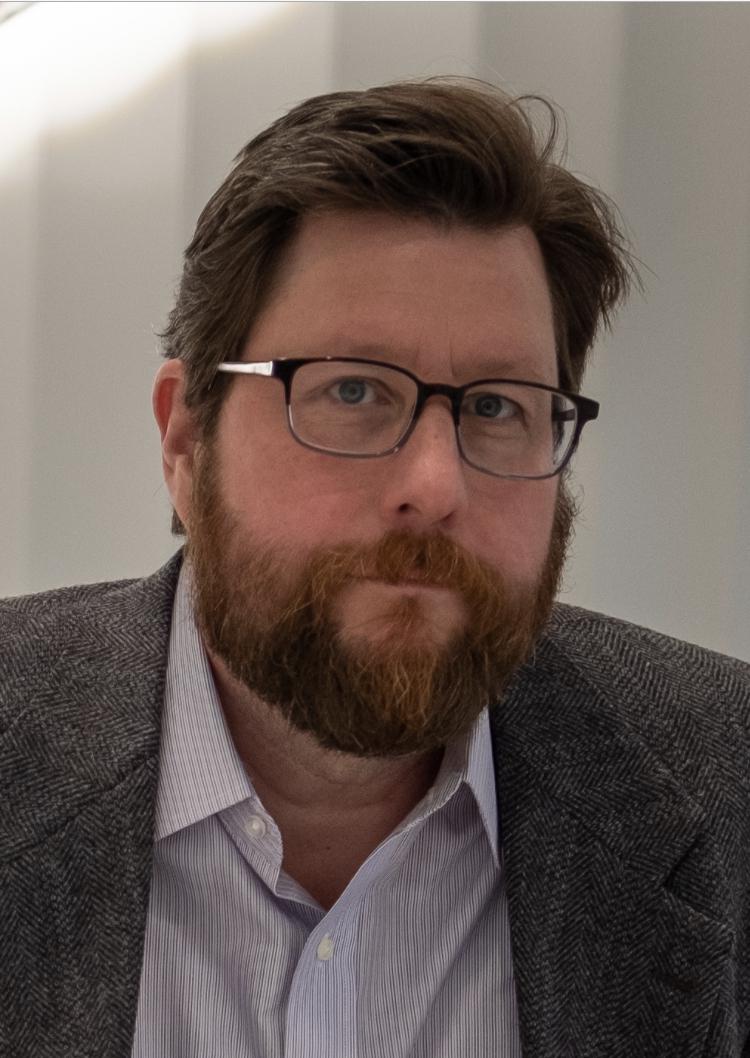
Matthew Duss
38
APPEARANCES
27
PODCASTS
Oct 13, 2026


Matt DussGUEST
Well, one is, I mean, the Houthis have been engaged since relatively early on in the Gaza War.
Matt DussGUEST
You know, they were sending missiles, you know, into Saudi Arabia, toward Israel, but mostly threatening shipping through the Bab al-Mandab Strait, which leads up to the Red Sea.
Matt DussGUEST
You know, Netanyahu recognized that the Hussis have really escalated their role in the current war, which he started.
12 MINS LATER


Steven A. CookGUEST
I think in order to answer the question, has the, the Middle East benefited from the Abraham Accords, I think, you know, we're audio, but I, I, I feel like I just need to motion at the Middle East
Matt DussGUEST
EastYou know, I mean, I mean, what is happening now, and I think as, as I pointed out in my article, we can see some very, very solid through lines from the Abraham Accords to this war in Iran, frankly to the October 7th attacks.
Matt DussGUEST
The question of has it benefited the Middle East, I think we might ask, well, okay, who? Who, who might it have benefited? Um, which is a good way to kind of pull apart this, th-this question a bit.
Matt DussGUEST
And I think it's important to understand, like, who wanted to get what from the Abraham Accords initially.
Matt DussGUEST
Yes, of course, it was sold and, and as a kind of, oh, a new era of peace, and it had, you know, a, a signing ceremony on the White House lawn, clearly meant to evoke, you know, the Oslo, uh, Accords, that famous picture with, with Bill Clinton and Yasser Arafat and Yitzhak Rabin, and, you know, Donald Trump clearly wanted his own version of that picture.
Matt DussGUEST
And I think that is part of, you know, for at least, you know, it's very clear for the Israelis, for Netanyahu, for the Israeli government, the major benefit of the accords was to sideline the Palestinian issue.
Matt DussGUEST
I mean, this, from his perspective and from, from the perspective of a lot of his, you know, supporters and advocates here in Washington, this kind of proved the argument that they had been making for a long time, which is that, oh, the Palestinian issue is overblown.
22 MINS LATER
Steven A. CookGUEST
Whether that made them more aggressive or not, people can make both arguments, but I think the arguments are based more on where they stand on the massive divide between Israel and the Palestinians, and, and what you think is, you know, whether you're, like, pro-Israel or anti-Israel or whatever, that's how you judge this question.

2:18

It's to address what we see as a really major vacuum in actual facts and knowledge and understanding of things that are knowable and understandable and so I wanted to start by asking you from your long experience both in the policy world and in the the sort of entities that are trying to affect it where today do you see the most acute uh sort of blind spots where we I mean collectively the policy making uh universe the blob American decision makers have really gone out of their way to not know or not learn or not quantify information that could actually save us or help us.
Matt DussGUEST
I mean, there's a number of ways to answer that, but I would say the one that really jumps out to me is a lack of understanding of other countries' politics.
Matt DussGUEST
And in many cases, the lack of, like, acknowledgement that other countries have politics.
20 MINS LATER

Matt DussGUEST
Yeah, I mean, I would say, I mean, part of the value of, I mean, let's just to stay on Israel for a minute.
Matt DussGUEST
I mean, it was a strategic partner in a region that was, you know, also had a lot of Soviet, you know, partners.
Matt DussGUEST
And that's why the Camp David Accord was so important to flip a leading Arab state, Egypt, to be part of the U.S. side.
Matt DussGUEST
But I think after the Cold War, especially post 9-11, yes, a region of the United States was investing in heavily militarily, having Israel as both a strategic partner, also a base for U.S. weapons, made sense.

Matt DussGUEST
I mean, I'm glad you brought that quote up because it's something I've mentioned a lot.
Matt DussGUEST
That line from, I think it was a January 2008 primary debate between Obama and Clinton, where he said, yeah, I don't want to just end the Iraq war.
Matt DussGUEST
I want to end the mindset that got us into this war in the first place, which I love.
20 MINS LATER
A’ndre GonawoloHOST
And what does that particular, in your view, failure tell us about the broader democratic approach to American power in 2023 and in 2024? Had they evolved at all since the 2000s or was it sort of returned to form?
Matt DussGUEST
I mean, I, I think this is something that should have happened two decades ago, probably more.
Matt DussGUEST
Um, these are, the settlements in occupied Palestinian territory, these are, um, widely regarded as illegal.
Matt DussGUEST
I think that's, that's the clear over and pretty overwhelming l- consensus among scholars, that, you know, building, you know, settlements for your population in, in land that you've, uh, uh, claimed and occupied by war is, is unacceptable.
Matt DussGUEST
Um, and unfortunately, countries in the West, particularly the United States, have been very, very hesitant to take this step, as they've been hesitant, unfortunately, to impose any real, tangible, material consequences, um, on Israel whatsoever for l- you know, literally decades of settlement building, of, of expanding and entrenching the occupation, of a whole set of policies that are designed to prevent and foreclose the possibility of a Palestinian state.

11:59

Y- your take on the interviews that Kushner did after his visits yesterday, d- does that square with mine, that he has basically adopted the Netanyahu position, that there, there is no nothing in Gaza until Hamas disarms first?
Matt DussGUEST
That seems to be the case, both from his own comments and also from other kind of readouts and leaks Um, from the talks that I've seen reported just over the past 24 hours, I think there were a lot of people, including myself, who were, you know, kind of impressed and encouraged, not a term we use often when it comes to Donald Trump and foreign policy.
Matt DussGUEST
But, you know, with the agreement, you know, the phased agreement, um, for Hamas in certain steps to begin the process of disarmament, um, in exchange for, you know, essentially Palestinian self-government, um, in the Gaza Strip.
Matt DussGUEST
I think anyone who understands these issues knows that Hamas will not give up their arms under a situation of Israeli military occupation, that there would have to be some, you know, Palestinian authority, um, if not the actual Palestinian authority, but a Palestinian governant- government inside Gaza for Hamas to be able to make that transition from an armed force to a, a, a political one.
Matt DussGUEST
And I think Netanyahu understands that because Netanyahu ultimately does not want this agreement to succeed.
Matt DussGUEST
This has always been, uh, part of his goal because he understands once the war ends, he will have to face some very difficult, uh, political questions.
9 MINS LATER
22:18
Like, would that meaningfully impact Israel's capacity to kill people in Gaza?
Matt DussGUEST
And yes, there were lots of people, Netanyahu, Tom Cotton, Lindsey Graham, run down the list of people who were in his ear telling him, oh, yeah, it's going to be amazing.
Matt DussGUEST
So now we're in a situation, obviously, where Iran has not only stopped traffic or slowed traffic or controlled traffic through the Strait of Hormuz, where some 20% of global energy supplies flow through.
Matt DussGUEST
It has also shown that it has the really serious capability to strike various facilities throughout the Middle East, particularly in the Gulf, U.S. military facilities.
14 MINS LATER


Derek DavisonHOST
Then I, I wanna get into sort of broader questions about twenty twenty-eight and Democratic foreign policy.
Matt DussGUEST
One, you know, first of all, I think, you know, it's been a long time coming, let's say.
Matt DussGUEST
I think the polls showed, especially among Democrats but not only, that the Democratic base was shifting pretty steadily.
Matt DussGUEST
And then, you know, after October 7, during the Gaza genocide, very, very quickly, um, you know, to, you know, opinion of Israel was going down, uh, support for the Palestinians going up.
Matt DussGUEST
Um, so I think there's just the substantive issue of what is our country supporting, why are we doing this? Um, but also it's come to, you know, it's kind of become part...
6 MINS LATER

Danny BessnerHOST
But I'm curious to, like, what is, what is the vibe that you're getting within the Democratic Party right now?
37:03
I, I wonder if that shakes the, the credibility of the people you've been describing.
Matt DussGUEST
I mean, I would hope it would, and, you know, what you said about George W. Bush is true, but let's also remember, you know, the Iraq invasion happened, uh, just a couple years, uh, not even two years after the September 11th attacks.
Matt DussGUEST
America was, the United States and, and was still, you know, a lot of people were still very traumatized by that.
Matt DussGUEST
Um, but I think that was m- much fresher in the memories of, of the American people in, in 2003 and then in the 2004 election even though the Iraq invasion and the occupation of the country had already started to go quite badly in 2004.
Matt DussGUEST
I think George W. Bush was buoyed, um, by, by that memory of, of that, of that horrible day.
Matt DussGUEST
We are a- almost 25 years after, um, we have seen, uh, the American people grow quite tired of these endless wars, these, these long-term military interventions that don't seem to make things better in the regions where we're intervening, and certainly haven't made things better for American communities, uh, here at home.
39:06
Um, what do you think that would look like? What is, what is the progressive position on how to get out of the conflict with Iran?


Matt DussGUEST
But, you know, as I said earlier, already this war is already going to have a very long tail.
Matt DussGUEST
The blocking of the shipping through the Strait of Hormuz, whether it's energy, whether it's fertilizer, a whole number of things that are going to continue to have impacts over the over the next years, whether it's, you know, fertilizer not being able to get to commercialize.
24 MINS LATER

Jeet HeerHOST
This is a policy that would be bad even if it were done well, let alone done in the sort of...
Matt DussGUEST
It was offered by the Saudis back in 2002, which offered Israel full peace and normalization from every Arab state in exchange for basically following international law, for enabling the creation of a Palestinian state on the 67 lines with, you know, with negotiated, even, you know, room for negotiation.
Matt DussGUEST
Um, that's ultimately, I think, and again, there's a whole other argument is a Palestinian state even still feasible.
Matt DussGUEST
Um, But just in terms of, you know, a regional arrangement that deals with one of the key sources of instability, conflict and grievance, which is the Palestinian issue.
Matt DussGUEST
I mean, the 2002 Arab Peace Initiative, which was reaffirmed multiple times over the following years by all the Arab states.
8 MINS LATER


Jasmine El-GamalHOST
And also you have another party that's basically around and in some ways, I think, and we can go into this later, enabled the kind of environment and the kind of impunity that we're seeing now on his part so the first question is when he got elected the second time weren't voters aware of what they were voting for no
Matt DussGUEST
you're right people knew what trump was going to do he told people they saw the example of his first term he was not hiding a lot of this of course he made a lot of claims about what he wanted to do and people shouldn't believe but The thing to take away from it is, first of all, I think there was a sense among many, particularly Democrats, this kind of fantasy that, oh, Trump was an anomaly.
Matt DussGUEST
And, you know, the Democratic establishment will always find some excuse for why it's not their fault when they constantly screw up.
24 MINS LATER
Jasmine El-GamalHOST
So not just the midterms coming up, but also the next presidential election, we have unfortunately gotten to a point where the Democratic Party so far has not been able to rise to the challenge of despite this president doing the most awful, horrific things, damaging U.S. democracy and institutions in a way that we've never seen before, they still are not able to rise to the moment and provide a better alternative.


Chris ChivvisHOST
How do you think domestic politics have changed in general and especially on the left?
Matt DussGUEST
Well, I think you'd seen, you know, to stay with the Democratic Party for a minute, you'd seen Democratic voters expressing, you know, critical views of Israeli policy, more support for Palestinian rights over a number of years.
Matt DussGUEST
You'd seen this growing disconnect between the Democratic base and the Democratic leadership just widening for a long time.
Matt DussGUEST
No matter what Democratic voters seem to say about these issues, you still had a Democratic establishment that was always no daylight.
Matt DussGUEST
You obviously saw in 2016 Senator Sanders, my old boss, proclaiming support for Palestinian rights, saying the U.S. needed to play a more even-handed role.
27 MINS LATER
Chris ChivvisHOST
What kind of change do you think is actually realistic in the U.S.-Israel relationship over the course of the next five or 10 years?

Matt DussGUEST
Part of it is, you know, we keep seeing leaks of an imminent deal and they're getting closer.
Matt DussGUEST
And I think a lot of this, and I think we've discussed this before, is that a lot of this is, you know, Trump just trying to calm the markets, right? This is, you know, this is really one of the only polls that actually matters to Donald Trump is, you know, as a real estate guy, someone who fancies himself, you know, a financial expert, despite his multiple bankruptcies.
Matt DussGUEST
He, you know, he, you know, monitoring the markets and keeping the stock market calm and, You know, I think that's definitely a part of it.
Matt DussGUEST
But as we've seen, I mean, first of all, this ceasefire, there's been an ongoing kind of lower level exchange of fire all along.
Matt DussGUEST
You have the situation with Israeli Prime Minister Benjamin Netanyahu, who clearly does not want a ceasefire.
13 MINS LATER

Matt DussGUEST
Part of it is, you know, we keep seeing leaks of an imminent deal and they're getting closer.
Matt DussGUEST
And I think a lot of this, and I think we've discussed this before, is that a lot of this is, you know, Trump just trying to calm the markets, right? This is, you know, this is really one of the only polls that actually matters to Donald Trump is, you know, as a real estate guy, someone who fancies himself, you know, a financial expert, despite his multiple bankruptcies.
Matt DussGUEST
He, you know, he, you know, monitoring the markets and keeping the stock market calm and, You know, I think that's definitely a part of it.
Matt DussGUEST
But as we've seen, I mean, first of all, this ceasefire, there's been an ongoing kind of lower level exchange of fire all along.
Matt DussGUEST
Um, you have the situation with Israeli prime minister, Benjamin Netanyahu, who clearly does not want to cease fire.
13 MINS LATER


Matt DussGUEST
Yeah, and I do think that the foreign policy for the middle class, I think was good.
Matt DussGUEST
You know, Trump shocked everyone by winning in 2016, and I think that the foreign policy for the middle class kind of represented a real effort to, a real self-critical effort to say, "What have we missed about what Americans believe and don't believe about foreign policy?" I mean, in the language of recovery, um, the first step is admitting you have a problem, and I think that, [chuckles] that, those, that, that effort was a recognition of the real problem.
Matt DussGUEST
And I think it's, it's kind of, um, conclusions were represented in a speech that, that Jake gave at Brookings, uh, in April 2023.
Matt DussGUEST
And this was interesting because it was the national security adviser offering essentially a speech on the global economy, America's trade policy, and it represented a, a turning of the page, so to speak, from the old neoliberal era.
26 MINS LATER


Shaye GanamHOST
How do you think this does get resolved? Because it doesn't seem to making any progress at all right now.
Matt DussGUEST
Well, I mean, there's going to be issues arising from this war that will not be resolved for a very, very long time.
Matt DussGUEST
There will be a new status quo, one that is far less favorable to the United States.
Matt DussGUEST
But in order to get to a ceasefire, to really sustain a ceasefire, to really end this war, I think we're going to need Donald Trump to kind of step back from his demand that Iran give up any enrichment of uranium on its own soil.
Matt DussGUEST
If we go back to the Obama administration, there were long negotiations over Iran's nuclear program, concerns that Iran had a nuclear weapons capability, although let's be clear, there is zero evidence that Iran has been racing for a nuclear weapon, no evidence that they actually have a nuclear weapon.
Matt DussGUEST
But the Obama administration and its partners in Europe and elsewhere were heavily involved in trying to get to an agreement that would ensure that Iran would not obtain a nuclear weapon.
Shaye GanamHOST
Can that be solved? Or is that something that, I mean, Iran says that's their red line, right?


Jayme PoissonHOST
And just how significant is Saudi Arabia's absence from, from the accords? Does it matter?
Matt DussGUEST
It does matter, and I think it's important to note why Saudi Arabia has been so hesitant.
Matt DussGUEST
Again, Saudi Arabia, uh, long seen, you know, internationally and also they regard themselves as a very key voice, um, of the region, a leading Arab government, and also a leading Muslim government by virtue of the fact that they have, you know, two of the holiest sites in Islam, Mecca and Medina, uh, are in Saudi Arabia.
Matt DussGUEST
So they have seen themselves as representing a much broader set of perspectives than just their own, although obviously the Saudi public, um, has its own views.
Matt DussGUEST
The, the Saudis have said and continue to say that they cannot move forward with, um, normalization with, with Israel, um, without some real movement toward Palestinian liberation, an end to the occupation, uh, and the establishment of a Palestinian state.
Matt DussGUEST
Um, so this is again, why Donald Trump's announcement the other day, and we've seen other members of the administration and other members of the US government and Congress, like Senator Lindsey Graham, who've really been making a hard push, um, on the Saudis to sign up.
9 MINS LATER
Jayme PoissonHOST
... w- what has that move meant for the dynamics in the Gulf leading up to the Iran war?

Sam SederHOST
Uh, but, but we'll get there, because part of this story is the, uh, the Biden, uh, administration sort of just accepting all of this.
Matt DussGUEST
So the Abraham Accords signed in August of 2020, um, initially an agreement, you know, you know, allegedly, air quotes, "brokered" by Jared Kushner, um, as if Jared, you know, he, Jared, I guess, showed up kind of at the last minute to, to, to dot some I's and cross some T's.
Matt DussGUEST
But it was an agreement between the United Arab Emirates and Israel, um, who had had a kind of behind the scenes relationship for some years already, but it was a way for them to bring that relationship out into the open.
Matt DussGUEST
It was called a peace and normalization agreement, which was somewhat strange given that the UAE had never actually been at war with Israel.

Emma VigelandHOST
Um, can youLay that out, and also even in that context, discuss the rivalry between the UAE and the Saudis.

Matt DussGUEST
You see this, you know, just, just look at the national security strategy that the Trump administration put out in, um, in, uh, in December, where it talked about the civilizational character of Europe being under threat.
Matt DussGUEST
Just to put it bluntly, the national security strategy defined keeping Europe white as [chuckles] a core interest of the United States.
Matt DussGUEST
So while we would agree that the old approach didn't succeed, um, I think there will be, there is some disagreement as to why.
14 MINS LATER

Sean SpeerHOST
Is there, in your mind, a durable re-realignment within the Democratic Party along the lines that we've been discussing, or does it still depend on a relatively narrow set of actors and moments like the Sanders campaign?


Matt DussGUEST
That his opponent, Péter Magyar, um, won, didn't just win, but, you know, has a, a strong enough presence in, in the legislature now that they'll actually be r- able to make real change.
Matt DussGUEST
So Orbán had been serving for, for, you know, for his, his many terms, you know, as kind of a model of, you know, an illiberal Democrat, as, you know, people have various terms, but someone who had been slowly and steadily and, and, and quite aggressively kind of refashioning the, the, the institutions of government in Hungary to ensure, as much as possible, kind of a permanent ruling majority by himself and his party and his interests and, and his, you know, populist right-wing authoritarian allies.
Matt DussGUEST
Steve Bannon is someone who has been working on these issues, uh, for many years and, and, and promoting it.


Tavis SmileyHOST
But just again, broadly speaking, how do we read what happened to Orban? How do we read that our vice president is over there campaigning for him?
Matt DussGUEST
Yeah, I would say the first thing to take away is that these authoritarian populists are not invincible.
Matt DussGUEST
He had spent a lot of effort kind of refashioning Hungary's institutions, I think undermining, clearly undermining its democracy and kind of establishing himself and his party as the dominant power in in the country.
10 MINS LATER

James SteinbergMODERATOR
[laughs] Um, [laughs] so Matt, over to you.
Matt DussGUEST
Um, so to get to the question what the United States wants, uh, the United States does not know what it wants.
Matt DussGUEST
It, it-- we're in a moment right now where the, um, you know, to state the obvious, the old consensus has come apart.
56 MINS LATER
speaker_1ADVERTISER
Others wanna come in on this, but wh-whether you see new consensus emerging or new lines of the debate? Matt?

Matt DussGUEST
Every one of these countries that Iran has attacked, we should have expected, whether it's, you know, Bahrain, the, the United Arab Emirates, Saudi Arabia, um, Qatar, obviously, uh, Israel.
Matt DussGUEST
Um, you know, deterrence b- in the most basic sense is creating the belief in the mind of your enemy that attacking you will cause more pain than it's worth, right? Um, and, and, you know, whether we're talking about nuclear deterrence, you know, the United States and the Soviet Union were in a posit-- you know, nuclear deterrence, the idea of like, well, if we attack them, they will attack us with nuclear weapons, and nobody wants that.

Greg SargentHOST
Can you just sum up for people what Barack Obama accomplished with the Iran nuclear deal and why it was good?
Scroll for more appearances