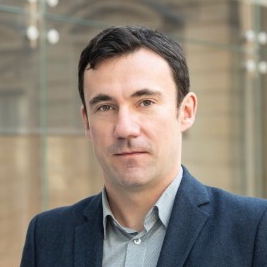
Mathieu Duchatel
Director of International Studies at Institut Montaigne; expert on China policy, economic security, and EU-Asia relations
1
APPEARANCES
1
PODCASTS
Jun 11, 2026


Leslie VinjamuriHOST
But what is at stake? What is the G7 trying to do? And not only what is it trying to do, but what in this paper that you've written, what is it that you are advocating when it comes to the G7's focus on critical minerals?

Mathieu DuchatelGUEST
So yes, we kind of focused the paper on this question of supply chain resilience to be as much as possible in sync with what we thought with my co-author, Joseph Delat, was actually realistic.
Mathieu DuchatelGUEST
The first one is economic intelligence sharing with regards to supply chain.
Mathieu DuchatelGUEST
It's extremely difficult but if you talk to companies if you talk to governments i think everyone wants to have better intelligence on supply chain bottlenecks and a better capacity to anticipate supply shocks mapping and sharing resources among G7 government to actually map as precisely as possible the chemical product supply chain.
Mathieu DuchatelGUEST
If you talk to, for example, people in the semiconductor industry, industry, they will tell you that this is the next area of vulnerability for the European ecosystem, for other industrial ecosystems.
13 MINS LATER
Leslie VinjamuriHOST
I mean, do you think that there's some idea that if the G7 goes well, especially on the economic security critical minerals on this track, that there's some hope that it gets shopped through the G20 or is that just simply fanciful both because of the geopolitical moment that we're in but also because, you know, that's where things sort of fall apart on the critical minerals agenda?