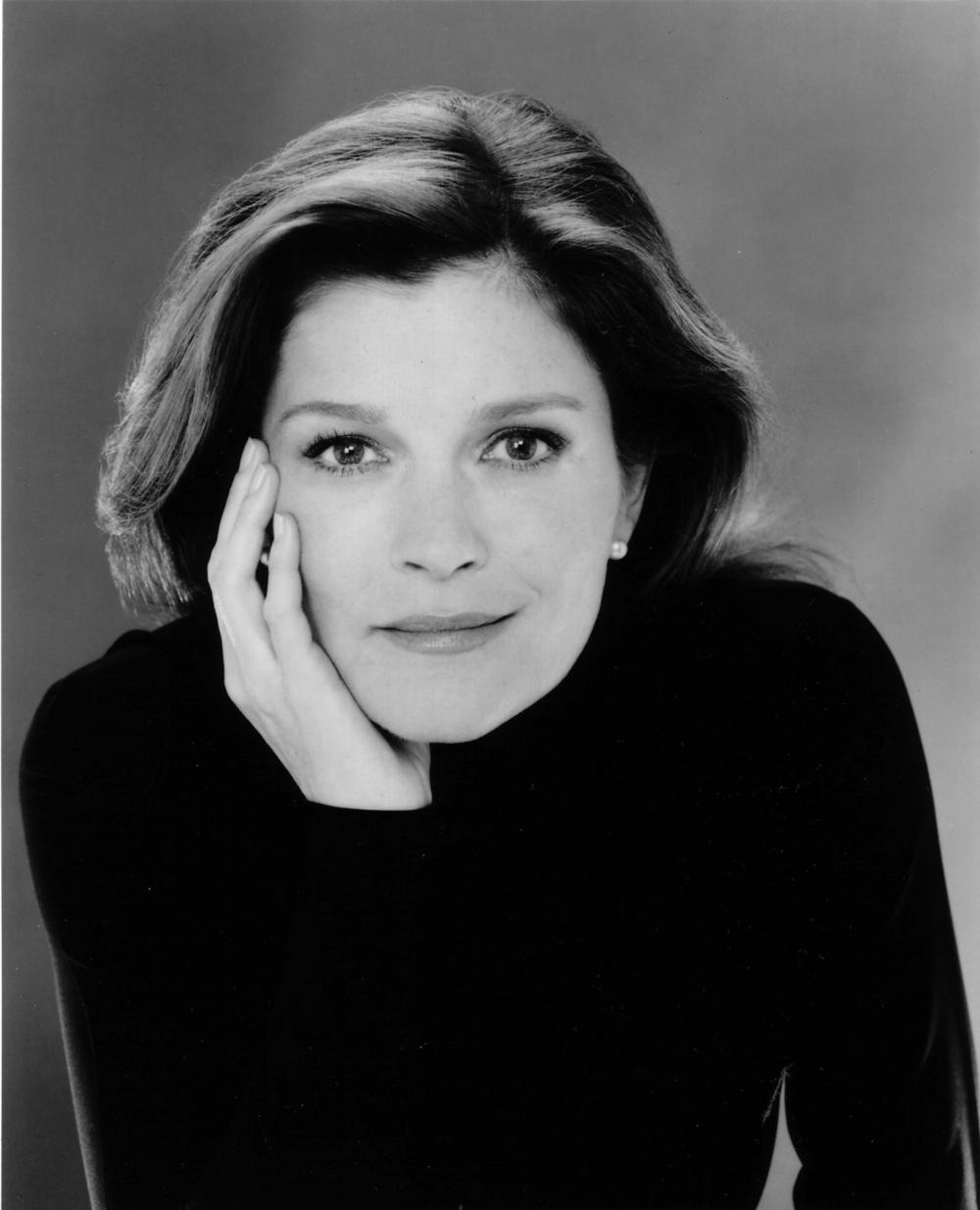
Mary Ryan
Fictional character
19
APPEARANCES
11
PODCASTS
Oct 22, 2026


Una O'HaganHOST
Talk to us about how common this is and what are the signs and symptoms and what advice you would give to women who may be living with this today?

Mary RyanGUEST
But one of the reasons I spoke about this so much is that it is so underdiagnosed and people are suffering for years before they're caught, which is awful.
19 MINS LATER
Una O'HaganHOST
You know, are we being honest with women about their fertility window? Do you feel or do we need to widen this discussion?

6 MINS LATER

Andrea GilliganHOST
How do I find out if menopausal hormone therapy, the MHT or hormone replacement therapy, HRT, are a safe and appropriate option for me?


Clare McKennaHOST
You want to try and start empowering women from the very beginning, from when they are young girls.
Mary RyanGUEST
girls.Totally, and I think Clare has already met its mark because this book was launched, I think, in April of, of this year.
Mary RyanGUEST
And the wonderful thing is that it starts with the beginning, which is the period puberty.
Mary RyanGUEST
It shouldn't be severe cramps, which is telling you there's too much hormones called prostaglandins which are being released, which cause severe inflammation, and we know inflammation causes disease.
6 MINS LATER


Alan MorrisseyHOST
Mary, how can a woman differentiate between a standard heavy period and an underlying endocrine disorder like polycystic ovary syndrome or thyroid dysfunction?
Mary RyanGUEST
And one of the reasons I brought out the book, It's Probably Your Period, was I was never told, it was never brought down through the generations whose women, periods weren't spoken about.
Mary RyanGUEST
So as a result, a lot of women had five, six, seven, eight-day periods, suffered dreadfully, and they didn't know what's normal.
Mary RyanGUEST
So normal is three to four days, a, a mild cramp and j- just, you know, a m- it could be heavy on the first day, but certainly two-- day two, three, and four, very light.
Mary RyanGUEST
Uh, if it goes on to five days, fine, but definitely you shouldn't have any severe pain.
5 MINS LATER
Alan MorrisseyHOST
While cervical screening tests for HPV and abnormal cell changes, how do broader immune and endocrine health indicators influence a woman's capacity to naturally clear an HPV infection?


17 MINS LATER
Mary RyanGUEST
Actually, I saw Georgia's post on Instagram this morning, very, very positive and lovely, lovely post that she did with Oprah.


31 MINS LATER


Liz EarleHOST
Why did you initially choose to specialize in endocrinology? Because it's sometimes seen as a little bit of a Cinderella subject, isn't it?
Mary RyanGUEST
Okay, so I was going down the cardiology route 'cause of a huge instance of heart disease, particularly women and heart disease, and then this fantastic professor called Gerald Tomkin, who's unfortunately deceased now, he came on and he was a p- fantastic guy, big holistic view, very intelligent man, and he said, "I'd love you to work with me for six months, see if you like it.
Mary RyanGUEST
You can still do your lipids and your heart disease," but he said, "I think you'd be brilliant at this." So he really introduced me to the whole idea that hormones control everything.
Mary RyanGUEST
I really hadn't picked up that in medical school, so he taught me about the hormone control center, the pituitary gland, that basically controls all our muscles, all our emotions, all our organs, and that everything was linked in a lovely positive and negative feedback system.
Mary RyanGUEST
But he also believed in that whole holistic approach that, you know, you, you could do a lot to help your whole hormonal system through diet, through exercise, through relaxation, through deep breathing, meditation, because he felt that this area wasn't really looked at at all.
Mary RyanGUEST
Like for example, h- how can you slow down your parasympathetic system, slow down your cortisol, slow down your sympathetic system, which is your real adrenaline system.
Mary RyanGUEST
So he was huge into that as well, and he was just very, very, I suppose, a, a huge foresight into endocrinology.
22 MINS LATER
Liz EarleHOST
Is there a hormonal connection there? What is going on? 'Cause all, all, all we hear about is cholesterol, isn't it really?


Fran CurryHOST
What exactly is postpartum depression? How does it differ from postnatal depression, for example, Mary?
Mary RyanGUEST
Okay, so postpartum depression is a type of depression that happens after having a baby.
Mary RyanGUEST
And you can have very sort of feeling very tired, very low, crying a lot, feeling worthless.
Andrea GilliganHOST
What happens to the body, Mary Ryan, when we get the sugar hit that comes from maybe the ice cream during the summer period, the barbecue two and three times a week?
Mary RyanGUEST
But for the hormone control centre to operate properly, it needs good, healthy food.
Andrea GilliganHOST
Yeah, it's also the other thing coming up here in the text line today, Mary, from listeners, you know, people wondering about kind of alcohol consumption and the levels of that over the summer period as well.


Mary RyanGUEST
As I said, the, just there in, in the introduction, um, with ASIP here in Ireland, um, for the last number of years, it's been one-to-one farmer engagement, and that's still the, the main function for ASIP.
Mary RyanGUEST
Um, but just in, towards the end of 2025, the EPA also designated catchments of concern for some of the bigger rivers.
Mary RyanGUEST
Um, and, uh, we're currently transitioning towards a more collective ac- action and catchment approach.
Mary RyanGUEST
Um, there's also some individual farmers are wondering how would they go about collaborati- collaborating among themselves if they wanted to look at kind of having better control or management over a particular stretch of water.
9 MINS LATER

Sarah DempseyGUEST
And then you go into the Māori, who have a kind of a co-governance role with the, uh, government and regional councils.


Mary RyanGUEST
It was very difficult, and I say to all my patients, when somebody dies, it takes you two years.
Mary RyanGUEST
And I'll always remember my father, who meant it in a lovely way, he said, "Mary, you..." After three months, well, after Eamonn had passed, he said, "Mary, you're going to have to pull out of this." He said, "You know, you've only one life." And he did it out of the goodness of a father.
Mary RyanGUEST
But in actual fact, he, you know, you can't understand what it's like unless you're in it yourself.
Mary RyanGUEST
You wonder, you know, if it wasn't for the children, you'd say... 'Cause I was, uh, very young at- at that time, and you sort of thinking, "Oh my God, there's all my dreams shattered." 'Cause we'd only moved into the house that we- our dream home, and did it up, a lovely period house.
Mary RyanGUEST
PMDD is basically where patients are very sensitive to oestrogen and progesterone, particularly mid-cycle, but also basically they're very sensitive to the rise in oestrogen that occurs mid-cycle at ovulation.
Mary RyanGUEST
and the rise in progesterone that occurs particularly the week before the period and they get very emotional, they get very exhausted, they get very tired and basically the pituitary gland is just not able for those rises and we find that in recent studies we find that natural progesterone, the bioidentical progesterone really does help patients at this time.
Mary RyanGUEST
And now we are finally listening to the stories of women and finally the research has been done.
Mary RyanGUEST
But certainly the bioidentical estrogen or a progesterone that's available now that we use for HRT, we're using this in women with PEMDD and what it does is basically the byproduct of the natural bioidentical progesterone helps inhibit the GABA and does this relaxing calming effect on the brain and really does help.

Anna DalyHOST
Could be due to my hormones or could this be due to my hormones and what can I do to improve it if it is?
Andrea GilliganHOST
How can we teach teenagers to understand their cycle in an effort to try and kind of transform their health into the future?
Mary RyanGUEST
If you've got an excessively heavy period, severely painful, where you're just bent over, that's not normal.
Mary RyanGUEST
I think we always associate with men, but I think now we're realising, I don't think people know actually, even though we have lower testosterone concentrations than men, it's actually the most abundant biologically active hormone in a woman's body.
6 MINS LATER
Andrea GilliganHOST
56 year old woman female listener Mary on HRT says that her doctor said her levels are too high must be testosterone levels too high to prescribe it my libido and energy are gone any advice?


Mary RyanGUEST
And even the heart disease, we know that estrogen reduces bad cholesterol and improves the good cholesterol.
Mary RyanGUEST
So there was all of this that we weren't doing and wasn't being done, so I really felt that it was important as a woman to talk.
Mary RyanGUEST
And we, we live i- in a very institutionalized medicine, so what I did was I went out and I spoke to the public.
20 MINS LATER
Mary RyanGUEST
If it goes overactive, so if you have hyperactive thyroid, what you call Graves' disease, the most common cause where antibodies attack the thyroid gland, you will be sweating, you will lose loads of weight, you will be irritable, your heart rate will be irregular.
Mary RyanGUEST
It's one of the commonest causes of a condition called atrial fibrillation, actually, and you'll be profoundly fatigued.
5 MINS LATER
Andrea GilliganHOST
manageable, you know, is it, suppose if you have difficulties, whether it be under or overactive thyroid, is it the kind of thing that's manageable, Mary?
Mary RyanGUEST
That means getting a good amount of protein, which a lot of women don't do, by the way.
Andrea GilliganHOST
And I'm wondering, like, how much of this is genetic, Mary? Or how much, you know, of our hormones can we control by diet and sleep? Like, is that a big factor?
Mary RyanGUEST
I don't think people understand how much they do, that hormones control everything.
Mary RyanGUEST
They control your emotions, your mood, whether you laugh, whether you cry, whether you sleep.
Mary RyanGUEST
And I think people don't realize that hormones like dopamine, serotonin, endorphins, oxytocin, which is the one when you cuddle somebody, you release oxytocin, they improve your mood.
10 MINS LATER
Andrea GilliganHOST
Should we be getting our bloods checked to see where our hormones are at? Or is it only something you get examined if you feel there's an issue?