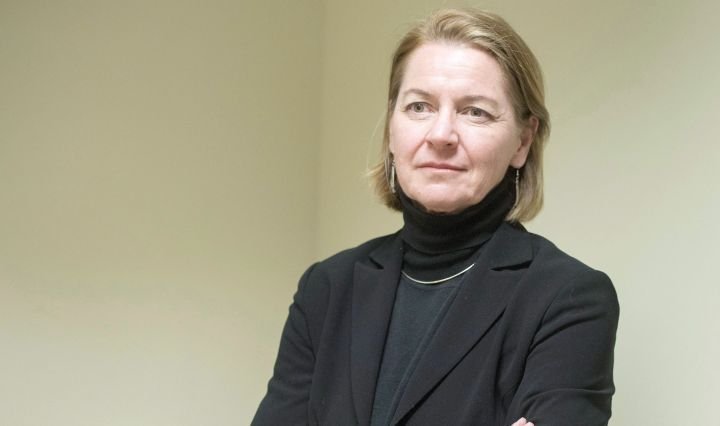
Martha Hall Findlay
Businesswoman and former Member of the House of Commons of Canada
17
APPEARANCES
12
PODCASTS
Nov 2, 2026


Colin RobertsonHOST
Where could a common statement of principles like we're proposing actually change behavior? And what would give it credibility when a company's deciding what to invest in, for example?

Martha Hall FindlayGUEST
Well, I think, so first I'm, I just, I just want to say I'm super pleased to have been able to be a part of this.
Martha Hall FindlayGUEST
And I, you know, happy to sign on because it was just such an impressive piece of work, but really we all know who put the, the, the effort into it.
Martha Hall FindlayGUEST
I, I think it, people will make decisions about investment based on harder, clear understandings of the rules, right? So people would have been more inclined to invest in Canada under a NAFTA then of course USMCA, KUSMA, with an understanding that there really were rules that would be adhered to in terms of free flow of goods.
Martha Hall FindlayGUEST
So invest in Canada, invest in Mexico, know that you're going to be able to access the US market.
21 MINS LATER
Colin RobertsonHOST
And this being the kind of main objective of one of our last papers, so please speak to that if you like.
Martha Hall FindlayGUEST
It's high, but the Senate one has been around for decades, right? And Albertans have a reason to be concerned.
Martha Hall FindlayGUEST
Alberta has four seats, right, compared to many, many, many more for other parts of the country.
Martha Hall FindlayGUEST
One of the things that wasn't on necessarily the ballot, but I think should have been, was can we engage in some discussions on electoral reform? Because in most cases, a general election in Canada is decided before the Albertans have finished voting.
Martha Hall FindlayGUEST
This is an actual allocation of seats that means that Albertans just don't, or BCers, have that much voice.
6 MINS LATER

Steve PaikinHOST
difficulty she finds herself in now is that if she uses the strong support for no in the referendum 10th question as sort of a pretext to kick all the separatists out of her party, because, you know, with the notion that you lost and we're going to continue with a pro-Canada party, can she ever win the premiership again? If they lose and set up their own party, Martha, then what?

Jeyan JeganathanHOST
But help us understand how much of a role did Carney have in sort of getting his message delivered to Albertans?
Martha Hall FindlayGUEST
The biggest role he played was in coming out near the end to just encourage people to get out to vote.
Martha Hall FindlayGUEST
I think because there's a view that in Quebec in the 95 referendum, there was an awful lot of outside of Quebec people.
Martha Hall FindlayGUEST
You know, people going to the rallies, people from different parts of the country going in buses.


Dalton McGuintyMODERATOR
I
Martha Hall FindlayGUEST
So for those of you, Dalton did mention the report that the School of Public Policy did this summer.
Martha Hall FindlayGUEST
It was done at the behest of the government of Alberta because, frankly, there were a lot of numbers being thrown out, a lot of numbers that were being thrown out based on not much at all.
16 MINS LATER
Dalton McGuintyMODERATOR
How are we perceived?

Steve PaikinHOST
Knowing what you know about Alberta and the rest of Canada, which scenario do you think is more likely?
Martha Hall FindlayGUEST
So I refrained from that kind of comment while we were doing the report.
Martha Hall FindlayGUEST
And we felt it was just really important for the credibility of the report for us to be able to say, look, we're just we want to see what the numbers look like.
Martha Hall FindlayGUEST
But I have to tell you, there is no way this is a nice, quiet, easy divorce.
Steve PaikinHOST
So as you're trying to figure out, if, for example, we do divorce, and you've got to figure out, you know, Is 10% of the national debt Alberta's responsibility? Or conversely, does Alberta actually own 10% of every Canadian forces base in the country? Do you have to put all of those different inputs into your calculations to figure out those numbers?


Iain DaleHOST
Why is it in Canada's interest to go down this path of closer relationships with the EU?
Martha Hall FindlayGUEST
Well, first, I find interesting your commentary about, oh, wonder if the UK should consider this.
Martha Hall FindlayGUEST
But in a world of such uncertainty, this is honestly about far more than just Trump.
Martha Hall FindlayGUEST
You know, people have said you're doing this to, you know, Carney's doing this to antagonize Trump.
Colin RobertsonHOST
... trust, you know, that will come back, but trust may come back under a new administration, but something is certainly shaken.
Martha Hall FindlayGUEST
Well, something has, has certainly been shaken dramatically by Donald Trump, but I would say some, I would say some businesses are recognizing, um, and needing to do what Tom just described, and I totally support the America Plus.
Martha Hall FindlayGUEST
It, we, we can't change our geography, so we are going to be engaged with the United States whether [laughs] we like it or not, but it's a hugely important part of our economy.
Martha Hall FindlayGUEST
The plus piece is you don't give up the one, you just enhance and you build and you do even more for Canadian prosperity with other countries, and I, so I totally support that.
Martha Hall FindlayGUEST
The, some of, some coun- some companies, some businesses, and frankly some politicians too, I think are making the mistake of blaming Trump for this.
Martha Hall FindlayGUEST
It was Barack Obama who was very loudly doing buy American, right? Um, both Barack Obama and Joe Biden said no to the Keystone Pipeline, right? So this is a problem that is American.
Martha Hall FindlayGUEST
You all know, you know, our, our colleague and, and my colleague at the school, Carlo Dade, and the new North America Initiative really doing some unprecedented work in trying to determine what Americans on the ground really feel.
28 MINS LATER
Colin RobertsonHOST
the choices but I thought, you know, again, you, you can't do it all, but if you had to do the priorities.

Martha Hall FindlayGUEST
How does that happen? Well, I moved schools and I was very fortunate to have attended a school in Toronto that really took curriculum seriously and just did some really amazing stuff.
Martha Hall FindlayGUEST
You know, if we have an opportunity, the school had started a couple of years before I was able to attend.
10 MINS LATER


Martha Hall FindlayGUEST
Quebec has always, you know, threatened separation and they've gotten better, you know, arrangements from Ottawa.
Martha Hall FindlayGUEST
I'm a little worried that there's going to be a sense of, The more, you know, angry Albertans have have done that, that that now that's why Ottawa was paying more attention to Alberta and why we're, you know, I don't I actually don't see that.
Martha Hall FindlayGUEST
What I see is much more related to what's been happening in the United States.
Martha Hall FindlayGUEST
And the fact that Alberta and Saskatchewan actually are quite different from Ontario and Quebec, for example, in the fact that we have resources that the United States needs.
Doug FordSOUNDBITE_SPEAKER
I feel some days that I'm standing alone protecting Canada, and I need everyone else to get on side.
Martha Hall FindlayGUEST
Quebec has always, you know, threatened separation and they've gotten better, you know, arrangements from Ottawa.
Martha Hall FindlayGUEST
I'm a little worried that there's going to be a sense of, The more, you know, angry Albertans have have done that, that that now that's why Ottawa is paying more attention to Alberta and why we're, you know, I don't I actually don't see that.
Martha Hall FindlayGUEST
What I see is much more related to what's been happening in the United States.
Martha Hall FindlayGUEST
And the fact that Alberta and Saskatchewan actually are quite different from Ontario and Quebec, for example, in the fact that we have resources that the United States needs.
Doug FordSOUNDBITE_SPEAKER
I feel some days that I'm standing alone protecting Canada, and I need everyone else to get on side.


Falice ChinHOST
First, I want to hear from you, what do you make of the tripartite agreement revealed last week? Because you recently came out and called for Pathways to be postponed.
Martha Hall FindlayGUEST
Yes, and, and the context there is that, um, I was at Suncor, I was the chief sustainability officer at Suncor when the bright idea of the Pathways Carbon Capture project, uh, was born, and was very much involved as one of the architects of the whole project.
Martha Hall FindlayGUEST
And I can go into detail about why I felt that that was the right thing to do at the time, 'cause we all did.
Martha Hall FindlayGUEST
But in recent years, and certainly more recently with, uh, what's happened with Donald Trump, now twice, the, uh, Russian invasion of Ukraine, now twice, obviously a whole lot of other geopolitical challenges going, uh, going on around the world, Canada has finally, it feels, woken up to what we need to do from an economic reality, a national security reality perspective.
Martha Hall FindlayGUEST
And at the same time, the rest of the world is focused on a whole lot of other things other than climate right now as well.
Martha Hall FindlayGUEST
when we came to realize that Canada needed to spend billions of dollars in terms of our e- you know, economic diversification, in terms of national security, we're not...
7 MINS LATER
Falice ChinHOST
What do you make of that part of the carrot embedded in the imperfect deal you've, you've described?


Martha Hall FindlayGUEST
Like, "We actually wanna be part of the United States, right? And if we do that, then there are a whole lot of other factors involved." So I, there's, there's anticipation by some.
Martha Hall FindlayGUEST
Um, without question, the uncertainty is a problem for business, one way or the other.
Martha Hall FindlayGUEST
It was threats of a Quebec referendum that caused the Bank of Montreal to move its headquarters to Toronto, right? So business, b- there's a lot of uncertainty, regardless of which way the referendum goes, but I, I do think if it's closer than people think, it'll be, it will be hard to heal from that.


Jennifer KeanCORRESPONDENT
They have large farms producing a record-breaking amount of milk, and Martha Hall Findlay says, you know, Canada is right next door.
Martha Hall FindlayGUEST
And for American producers, that's really frustrating, [laughs] right? You're, you know, a dairy farmer in Wisconsin, and you have a market right to the north of you that could be lucrative, but you're, you, you can't have any access to that.
Jennifer KeanCORRESPONDENT
And Martha Hall Findlay is worried that that means we've sort of got one hand tied behind our back, right? If supply management is off the table, what does that mean for everything else?
Martha Hall FindlayGUEST
Well, that puts the bee farmers, that puts the auto sector, that puts steel alum- puts everybody.
Martha Hall FindlayGUEST
It puts them, uh, on their, on their heels because y- y- they are actually, um, on the table.
Martha Hall FindlayGUEST
Well, look, the MOU was with the province of Alberta, not with a lobby.
Martha Hall FindlayGUEST
I think this is a fantastic development in the relationship between the federal government and Alberta, and frankly, I think all provinces, because it shows a willingness on the part of the federal government to work with provinces.
Martha Hall FindlayGUEST
You know, I just, I find it, Canada has set goals for a variety of things in the past.
Martha Hall FindlayGUEST
But, you know, when we set those goals, we were part of what felt like a global consensus, you know, the Paris Accord.
Martha Hall FindlayGUEST
But I tell you, you know, it's 2026 and the world has changed so dramatically.
7 MINS LATER
Jeyan JeganathanHOST
I am curious if that is part and parcel with sort of the conversations that are happening right now.

Martha Hall FindlayGUEST
For Premier Eby to get up today, I think it was just earlier today, and accuse Mark Carney of catering to, I think the quote was, separatists and a separatist premier, only puts fuel on the fire here.
Martha Hall FindlayGUEST
And for those of us who take real pride in being Canadian and want to make sure we stay together, it was inappropriate, completely inappropriate, not helpful.
Martha Hall FindlayGUEST
Um, there's some pretty big projects that have benefited and continue to benefit BC TMX Trans Mountain expansion, which by the way, now the premier seems to be supportive of, um, relies on Alberta oil.
34 MINS LATER

Jim CsekHOST
It's tough, right? If you're sitting in the boardroom, and especially if you're an international company, like many of these are now, and they can say, well, where do we deploy this capital?


Matt GallowayHOST
Does this deal that will be signed later today give oil and gas companies the certainty they've been looking for when it comes to carbon policy and therefore potentially signing on to build a pipeline?
Martha Hall FindlayGUEST
I mean, this, this MOU, this arrangement with the federal, uh, government and Alberta is historic.
Martha Hall FindlayGUEST
Um, it, for a whole lot of reasons, I, it, it's, it's, uh, a really good thing to see move forward for national unity, but also to be able to, uh, to, to do our part in terms of energy security globally.
Martha Hall FindlayGUEST
Um, but y- y- you know, in, in Canadian history, we've never done a major, as, as they call them [laughs] national built, national, uh, uh, nation-building projects without significant federal-provincial collaboration and without significant private and public financing collaboration.
Martha Hall FindlayGUEST
Um, there's no question the private sector is very keen to see this go ahead and very keen to see, uh, the options for a pipeline, um, but it's chicken and egg.
Martha Hall FindlayGUEST
You can't, you, you can't have the p- the, the energy producers go ahead and spend billions of dollars to increase production if they don't know that they can have access to the West Coast.
Martha Hall FindlayGUEST
I mean, we've been so complacent for at least a quarter of a century, I think more, not just because of geopolitics, our economic, our productivity numbers, like, we're just not, we've been complacent.
Martha Hall FindlayGUEST
And we started to become more aware of some of these challenges on the economic front when Donald Trump got elected and the whole tariff thing.
Martha Hall FindlayGUEST
But we are a very attractive slice of meat in a sandwich that is bordered by the Russians in the north and the Americans on the south.
10 MINS LATER