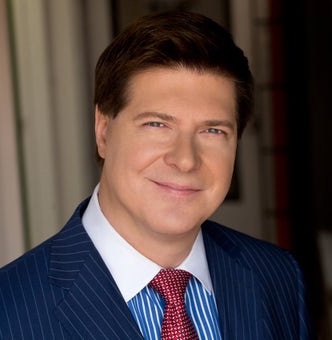
Mark Smith
Senior Economist at ASB Bank in New Zealand, frequent business commentator on Newstalk ZB and RNZ.
20
APPEARANCES
7
PODCASTS
Oct 12, 2026


Mark SmithGUEST
Well, we looked at the seven elections, so obviously different, different periods, and also looking at, you know, consumer spending, investment, house sales, a whole bunch of things.
Mark SmithGUEST
And but generally the evidence does suggest that while there are some slight differences, for example, the GFC and COVID, there was, uh, obviously quite a lot of difference there.
Mark SmithGUEST
The general trend is that activity is actually stronger before elections rather than after.
Mark SmithGUEST
So rather than delaying decisions, uh, firms and households just get on with it.
Mark SmithGUEST
And also looking at consumer spending, investment, house sales, a whole bunch of things.
Mark SmithGUEST
But generally, the evidence does suggest that while there are some slight differences, for example, the GFC and COVID, there was obviously quite a lot of difference there.
Mark SmithGUEST
The general trend is that activity is actually stronger before elections rather than after.

Mark SmithGUEST
Well, we looked at the seven elections, so obviously different, different periods, and also looking at, you know, consumer spending, investment, house sales, a whole bunch of things.
Mark SmithGUEST
And but generally, the evidence does suggest that while there are some slight differences, for example, the GFC and COVID, there was, uh, obviously quite a lot of difference there.
Mark SmithGUEST
The general trend is that activity is actually stronger before elections rather than after.

Mike HoskingHOST
Okay, do you soak up, and this is the key to the headline I guess, are you soaking up, is the 20,000 just soaking up those who want it, or is it making a material difference, and if it isn't making a material difference, how long before it does?
Mark SmithGUEST
The encouraging thing with yesterday's data was it shows that the demand for labour is still there.
Mark SmithGUEST
If it was not for the Middle East conflict, the economy would be absolutely booming and jobs growth would be much stronger.
Mark SmithGUEST
But this really suggests that the unemployment rate, the direction from here will be downwards.
Mike HoskingHOST
Where's Auckland, by the way? I couldn't find Auckland's number at the engine room of the economy.
Mike HoskingHOST
Okay, do you soak up, and this is the key to the headline I guess, are you soaking up, is the 20,000 just soaking up those who want it, or is it making a material difference, and if it isn't making a material difference, how long before it does?
Mark SmithGUEST
The encouraging thing with yesterday's data was it shows that the demand for labour is still there.
Mark SmithGUEST
If it was not for the Middle East conflict, the economy would be absolutely booming and jobs growth would be much stronger.
Mark SmithGUEST
But this really suggests that the unemployment rate, the direction from here will be downwards.
Mike HoskingHOST
Where's Auckland, by the way? I couldn't find Auckland's number at the engine room of the economy.


Ryan BridgeHOST
I mean, is this 2020 hindsight all very well to look back now, but at the time it was hard to see, or should they have seen? A
Mark SmithGUEST
You know, what did we want to avoid? And it was a pronounced period of deflation, so they went the other way.
Mark SmithGUEST
Unfortunately, the global economy and the New Zealand economy as well proved to be more resilient and adaptable than initially thought.
Mark SmithGUEST
The amount of stimulus was put in place not only by the Reserve Bank but also the Treasury as well was absolutely massive.

Ryan BridgeHOST
So over e- I mean, is this 2020 hindsight all very well to look back now, but at the time it was hard to see, or should they have seen it?
Mark SmithGUEST
You know, what, what, what do we want to avoid? And it was a pronounced period of deflation, so they went the other way.
Mark SmithGUEST
Um, unfortunately, um, the global economy and the New Zealand economy as well proved to be more resilient and adaptable than initially thought.
Mark SmithGUEST
The amount of stimulus that was put in place, not only by the Reserve Bank but also the Treasury as well, was, um, was ex- absolutely, uh, massive.
Ryan BridgeHOST
I mean, is this 2020 hindsight all very well to look back now, but at the time it was hard to see, or should they have seen it?
Mark SmithGUEST
You know, what did we want to avoid? And it was a pronounced period of deflation, so they went the other way.
Mark SmithGUEST
Unfortunately, the global economy and the New Zealand economy as well proved to be more resilient and adaptable than initially thought.
Mark SmithGUEST
The amount of stimulus was put in place not only by the Reserve Bank but also the Treasury as well was absolutely massive.
Mike HoskingHOST
So you're, you're as far as I can work out, you're reasonably bullish at 0.3. Where do you get that from?
Mark SmithGUEST
Basically the economy is extremely uneven, but in terms of the, the drivers really the good sector, so construction sector activity rose pretty strongly for the quarter.
Mark SmithGUEST
Also export activity as well was very strong, and we had a strong, uh, quarter for the primary sector as well.
Mike HoskingHOST
Is, is that the last piece of the puzzle if the job ads are up and jobs move, plus we've got growth, plus we've got exports, we're done and we're back to what you would loosely remember those days call normal?
Mike HoskingHOST
So you're, you're, as far as I can work out, you're reasonably bullish at 0.3. Where do you get that from?
Mark SmithGUEST
Basically, the economy is extremely uneven, but in terms of the, the drivers, really the good sector, so construction sector activity rose pretty strongly for the quarter.
Mark SmithGUEST
Also, export activity as well was very strong, and we had a strong, uh, quarter for the primary sector as well.
Mike HoskingHOST
Is, is that the last piece of the puzzle? If the job ads are up and jobs move, plus we've got growth, plus we've got exports, we're done and we're back to what you would loosely remember those days call normal?
Ryan BridgeHOST
So that's in nominal terms before we get back to where we were in 2021, right? What about in real terms? What about taking into account inflation?

Ryan BridgeHOST
So that's in nominal terms before we get back to where we were in 2021, right? What about in real terms? What about taking into account inflation?
Mike HoskingHOST
So explain to me when you talk about this as being led by incomes, what is happening to my income that I'm suddenly going to go out and start firing up the housing market?
Mark SmithGUEST
So what we're really looking at is more of an income-led expansion, and that's why it's going to be more gradual.
Mark SmithGUEST
Essentially, what we're looking at are things like housing affordability is less of a challenge than it was a few years ago.
Mark SmithGUEST
And places like Christchurch, that is a real example of what affordable housing can do.
Mark SmithGUEST
So basically, the c- c- about half of the consents being issued are basically, uh, sort of, you know, your, your apartments, non-standalone housing, and that's really where, where people wanna live, and it's really where people can afford to live as well.
Mark SmithGUEST
So, you know, the old model where we had a quarter acre section with a house, that is sort of gone now, and people are now sort of adapting to the new, new reality, which is basically, um, asset prices reflecting what the income generation capacity can do.
Mark SmithGUEST
So we're talking really sort of moderate increases in house prices rather than the boom and bust cycles of old or-
Mike HoskingHOST
-none would be more engrossed than your particular government and country because the machinations I would, uh, imagine are enormous.
Mark SmithGUEST
[lips smack] Yeah, I think it's really interesting at the moment, um, not only because of the very powerful rise of the far-right leader, Roberto Menacci, who's got about 7% of the popularity at the moment, but he, he is also, uh, up against the Deputy Prime Minister, Matteo Salvini, the head of the League, who described the AfD win as an extraordinary success, and he called it all about democracy.
Mike HoskingHOST
So what you're telling us, and this is interesting, what you're telling us, the days of double digits are gone, but we can see, fingers crossed, some reasonably steady ongoing growth.
Mark SmithGUEST
So the reason why things got so h- hot there was basically interest rates were at record lows, population growth was very strong, and buyers didn't have much choice.
Mark SmithGUEST
Those things have flipped around, so that trend decline in interest rates over the last 30 years, that looks to run out.
Mark SmithGUEST
Uh, but we did see things like international airfares going up, so there's a lot of volatility i- in those figures.
Mark SmithGUEST
But really in a broad sense, what we are seeing now is a lot of those sort of cost increases from the Middle East are now sort of turning around and starting to decline, and that's really welcome news for consumers.

Mark SmithGUEST
What will happen will be inflation did go well above $100 a barrel back in April.
Mark SmithGUEST
So what will happen is w- we will see inflation pick up in the very short term, but as the, as the price of oil falls to around 70 to $80, which is our expectation, that's where w- we will see inflation cool from there.
Mark SmithGUEST
So really what the inflation t- spike does is, uh, it sort of, what it does is create a lot more cyclicality in the inflation numbers.
Mark SmithGUEST
But looking at the medium term outlook, really what lower and more stable oil prices does suggest is that medium term inflation will be lower.
69:49
Now, um, [lips smack] is it a slam dunk, do you think, for next month, or is it gonna be a close vote?

Mark SmithGUEST
Yeah, what will happen will be inflation did go well above $100 a barrel back in April.
Mark SmithGUEST
But as the price of oil falls to around $70 to $80, which is our expectation, that's when we will see inflation cool from there.
Mark SmithGUEST
So really what the inflation spike does is it's sort of what it does is create a lot more cyclicality in the inflation numbers.
Mark SmithGUEST
But looking at the medium-term outlook, really what lower and more stable oil prices does suggest is that medium-term inflation will be lower.
2:12
Now, is it a slam dunk, do you think, for next month, or is it going to be a close vote?

Mark SmithGUEST
What will happen will be inflation did go well above $100 a barrel back in April.
Mark SmithGUEST
So what will happen is w- we will see inflation pick up in the very short term, but as the, as the price of oil falls to around 70 to $80, which is our expectation, that's when w- we will see inflation cool from there.
Mark SmithGUEST
So really what the inflation t- spike does is, uh, it sort of, what it does is create a lot more cyclicality in the inflation numbers.
Mark SmithGUEST
But looking at the medium term outlook, really what lower and more stable oil prices does suggest is that medium term inflation will be lower.
2:04
Now, um, is it a slam dunk, do you think, for next month, or is it gonna be a close vote?