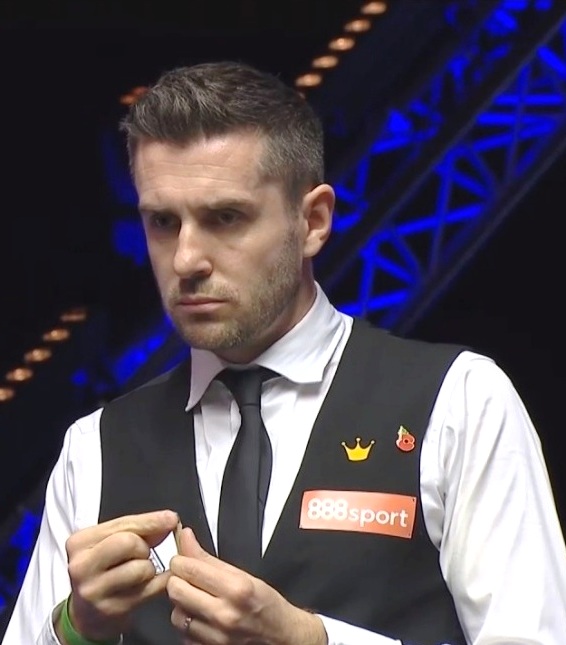
Mark Selby
English snooker player
15
APPEARANCES
11
PODCASTS
Nov 20, 2026


Mark SelbyGUEST
In terms of sovereignty and then specifically around nickel in terms of seizing the moment that we have today, I think it's first important to give people the context of where we've come from as an industry in terms of seeding that sovereignty.
Mark SelbyGUEST
So sovereignty one, in terms of headquarters and capital allocations, I joined the mining industry as part of the senior management team.
13 MINS LATER

Jeyan JeganathanHOST
Mark, what are your thoughts on that? What does Canada need to do to sort of keep that value chain here?
Mark SelbyGUEST
So, you know, we're utilizing actually existing technology that had been used for 50 years and just applying it to the unique nature of our deposit that we have so we can generate nickel products in Timmins and we can take our iron chrome magnetite and convert it into a steel product.
Mark SelbyGUEST
The other benefit of the type of nickel deposit we have is our ability to store carbon.
Mark SelbyGUEST
So any of the CO2 generated from those processes can be stored and create a low to potentially zero carbon products in that space.
Jeyan JeganathanHOST
How long did these relationship building negotiations take and how did you start them?

Mark SelbyGUEST
So in terms of why it's important to not only Canada, but the entire world, nickel production historically, for those who have some exposure to mining, think about Sudbury as being sort of the ground zero of mining.
Mark SelbyGUEST
And unfortunately, most of that nickel comes with a very large environmental footprint, safety footprint.
Mark SelbyGUEST
Literally everything you think in terms of a negative impact, a big portion of this production has.
10 MINS LATER

Na'im MerchantHOST
Walk us through that arc, right? Like how did carbon mineralization enter the Crawford conversation early on? And then how did it go from a demonstration to an integrated part of the main project proposal that ultimately just unlocked new avenues of funding to commercialize? Sure.
Matthew GordonHOST
But, right, why don't we kind of start off with what's happening with nickel price, what's happening in the nickel
Mark SelbyGUEST
I think the key thing here is in terms of price versus fundamentals, you know, I think we were approaching a pretty big disconnect to the upside.
Mark SelbyGUEST
So, you know, LME prices, since we last talked, where they popped up over $17,000, they've now slid back down to $16,000, which is kind of the bottom end of the range that we've been in for the last decade.
Mark SelbyGUEST
And again, it's all speculation around, is the government going to give lots of RKB that mine and Wida Bay mine is reopening? And the unfortunate part is the government yet hasn't come right out and said, this is the number.
Mark SelbyGUEST
The reality is though, is like ore production is down year over year, pretty meaningfully.
5 MINS LATER


Tom HeintzmanHOST
Can you explain to our listeners the role that electricity plays in your process and also how your access to electricity was enabled?
Mark SelbyGUEST
So in terms of the opportunity to have access to relatively low cost, low carbon power is something I think in Canada we take for granted.
Mark SelbyGUEST
The reality is, is if you look at these 80 or so different regions in the world that do significant mining, there is probably only a dozen or so that do have that relatively low carbon, low cost value.
Mark SelbyGUEST
grid availability of power and why that's important for an operation like Crawford.
Mark SelbyGUEST
Most of the large scale projects today, we're not finding great big high grade deposits anymore.

AntonioHOST
Where are you? Jokes aside, where are you from originally, Mark? How'd you find your way to the industry? Tell me more about that background of yours.
18 MINS LATER
AntonioHOST
was it was it just the grade i mean did they miss miss it under the musket there or was it just kind of you know the 0.22 nickel that you have was and and the recoveries i think 41 was just not enough for them at the time

Mark SelbyGUEST
So, you know, that's, you know, the, the, the, the challenge here is, is to get that spotlight, you know, on these metals.
Mark SelbyGUEST
That's why, you know, we saw in the rare earth space, uh, last summer, right, the US government tossed some big dollars at, at a handful of projects, you know, and then we saw, you know, that entire, the entire sector re-rate.
Mark SelbyGUEST
I mean, don't, uh, you know, but that money, it's not a question of if, it's just a question of when, and governments always take longer than you would like to take them.
5 MINS LATER
Matthew GordonHOST
Can you actually break down that capital stack in terms of the debt equity, quasi-debt, whatever, however you think it comes in?
Mark SelbyGUEST
Yeah, no, for us, I mean, in terms of scale, I mean, I think, you know, the point that Ingo made is really, really key.
Mark SelbyGUEST
These are not complicated laterite projects that didn't work out so well last generation.
Mark SelbyGUEST
And, you know, we're operating, you know, they're much higher grade, but operating at a smaller scale with the high grade.
Mark SelbyGUEST
We're at the other end where we're We're a lower-grade deposit, but we're just operating at the right scale that makes the cost work.
Mark SelbyGUEST
I think the key piece here is, given the nickel risk that's there, you have to make sure that the other risks involved in your project are relatively low.
5 MINS LATER
Matthew GordonHOST
Was it or was it just something he just needed to do anyway? Did it lead to any access to additional cash?
Mark SelbyGUEST
And the big, you know, sort of this week's been pretty quiet, but there's one very important piece of news.
Matthew GordonHOST
And how does that affect companies like yourself? I mean, are you kind of stress testing any part of your own planning as a result of this? Because I think most of the markets when you say, well, okay, they're sticking to the guns, they seem to be serious about this one, but it's kind of, you know, very much a case of, you know, show me, don't tell me, isn't it?

Mark SelbyGUEST
only in terms of, well, we're not going to build this downstream plant or that downstream plant.
Mark SelbyGUEST
But again, the challenge with the Indonesians is they had given such generous tax holidays around getting this investment into the country in the first place that a lot of these plants don't actually generate a lot of revenue for the country.
Mark SelbyGUEST
With these new measures in place and higher ore prices and so forth, Indonesians are far better off than another Chinese controlled processing plant in the country.
5 MINS LATER
Matthew GordonHOST
What's driving that? And what does that tell you in terms of optionality for a company like Canada Nickel further down the line?

speaker_0HOST
Um, tell me about it.
Mark SelbyGUEST
Um, so the theme was once upon a time, and, um, my love of nature, uh, really started with me going camping when I was a little, little lad.
Mark SelbyGUEST
So that, that love sort of working with nature and being amongst it is kind of really important.
Mark SelbyGUEST
Um, and then also the structures in the garden are, are sort of reminiscent of using pioneering techniques from-
speaker_0HOST
It is beautiful, and it's got a, a, a natural look to it.
Mark SelbyGUEST
And so what was interesting is in conversations with traders, producers, You know, it's very clear that that, you know, we saw that big drop, you know, almost 10% in ore grades last year, you know, 7 or 8% drop.
11 MINS LATER


Mark SelbyGUEST
Um, and on one hand, [laughs] I have a heart for these places to be reached as well.
Mark SelbyGUEST
And I think recognizing the challenges of starting a church plant small anyway, if we were then to move in a completely different, into a completely different situation socially, uh, which we wouldn't have been used to, that would have perhaps been an- another step-
12 MINS LATER


Michael McCraeHOST
uh you've had a significant support from the canadian government uh talk about how that piece works with your financing and what is the piece that you're going to need to fill or what is it going to need to uh to uh fill in
Mark SelbyGUEST
yeah we ended up 2025 and started 2026 um you know with some tremendous uh government momentum so we're named to the major projects office uh in in november had minister hodgson come to site um you know a great press conference got to tour the site posted this wonderful video on social media all social media feeds you know really highlighting the strengths of the project in the province we had minister lecce and minister peary come to site um in january and then we were referred to the 1p1p which is the expedited permitting process for Ontario.
Mark SelbyGUEST
You know, having that, you know, that very clear government recognition has been, you know, we were already well down the path and doing well, you know, with a number of different, you know, consumers, industry participants, other governments.
Mark SelbyGUEST
In terms of the financing stack, this is one of the things with critical minerals projects here in Canada.
Mark SelbyGUEST
We qualify for a 30% investment tax credit, which effectively gives us 30 cents of free cash on every dollar we invest.


Ben MulroneyHOST
And Mark, how does the People's Choice Award work? I think a lot of people are wondering, do you have to have seen the film in order to vote?
Mark SelbyGUEST
yes actually that's a great question ben you know there a lot of people were were trying to be helpful and messaging me saying i want to vote for your film and i said i appreciate that but it's not going to count all the tickets through tiffer through ticketmaster they know who attends and you know while i appreciate you know communities rallying around the film if a film gets 10 000 votes but only 1800 people see it uh everyone knows something is up right And so they have a very fair way of doing it.
Mark SelbyGUEST
And this way, a film that plays in a smaller venue has just as much of a chance of winning the People's Choice Award as a film that plays a larger.
Ben MulroneyHOST
But I have to assume you guys have been working overtime even after the film was finished, right?