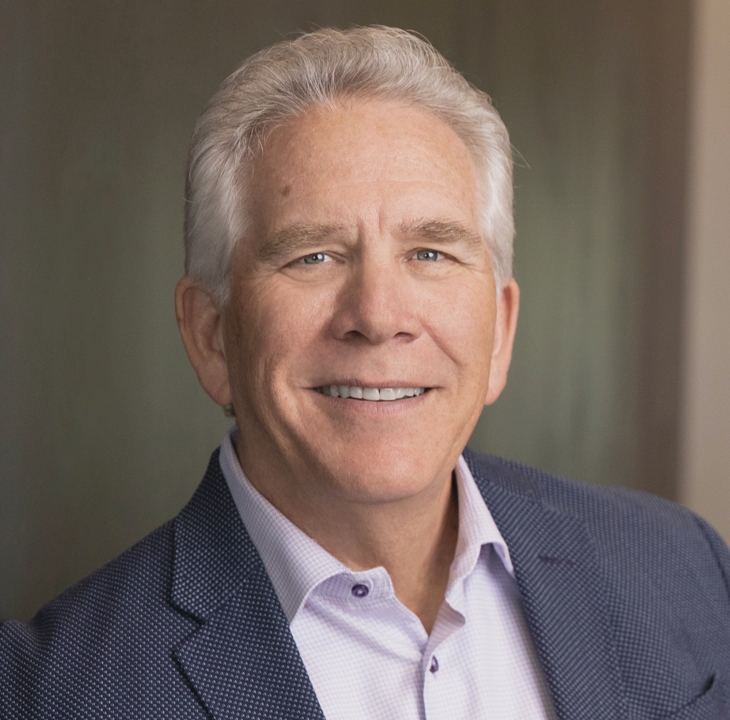
Mark McClain
Co-founder and CEO of SailPoint (NYSE: SAIL), the identity security company, and chairman of the Austin Technology Council.
10
APPEARANCES
8
PODCASTS
Nov 18, 2026


Joe PardavilaHOST
Why do so many security programs still put much of their attention and budget on the front door?

Mark McClainGUEST
So the metaphor there, just to make sure everybody's tracking with us, Joe, is, and if anyone's ever been to an office building, you're from New York, you know, you get this, right? When you go into any kind of a substantial office building anywhere, but boy, it's everywhere in New York, you go through this.
Mark McClainGUEST
You go in, you pull out your license, you show it to the guard, he checks you in.
Mark McClainGUEST
authorization another part of the security landscape which is where we really focus is once you get checked into the building where can you go that's authorization meaning if you take it now out of buildings back into technology you know in buildings it's can you go to this floor can you go to this room on that floor can you get in the server closet can you get in the safe if you're in a bank you know those are all authorization questions you were authenticated at the beginning At the front door, you're really Joe.
11 MINS LATER


Mark McClainGUEST
Well, we have a simple little three-part metaphor we like to talk about, a three-part kind of mantra, which is discover, govern, and protect.
Mark McClainGUEST
The biggest problem companies have today is they literally don't know how much of this is out there in their environments, right? They've got their employees using ChatGBT or Clot or various tools and agents that are being given to them by the big software vendors like Salesforce and ServiceNow, and these are good things.
Mark McClainGUEST
But the organization is responsible for keeping things under control and safe, don't even have a good inventory, don't have a good visibility across everything they now have in their environments.
Mark McClainGUEST
So they've got to discover, they've got to find all these things, and they're going to have to continuously find them because these agents are going to keep coming into the environment.


Marley KaydenHOST
So at what point does securing these AI agents become the larger business opportunity than simply securing human identities?
Mark McClainGUEST
Absolutely, the sheer volume and number of agents will, no doubt, non-human identities and agents in particular will outnumber human identities.
Mark McClainGUEST
We see that, if not already true, rapidly evolving to be true in almost every company we deal with.
Mark McClainGUEST
What we think is kind of unique from our perspective, though, is that people often lose sight of the fact that these agents are going to be directed by humans for the foreseeable future.
Mark McClainGUEST
And why do I say that? Well, there's the co-pilot style, which we all understand, which is very directly tied to me.
Marley KaydenHOST
What is putting SailPoint's identity intelligence directly into the SOC change for the security team? And also, is this a broader signal of your strategy going forward to become part of the overall cybersecurity platform rather than operating as a standalone identity product?


Sid TrivediHOST
What got you excited about working with private equity versus venture capital and continuing to raise multiple rounds?
Mark McClainGUEST
Yeah, no, I'll go ahead and tell the story as honestly as I can, because what happened was I mentioned we thought this would be the same story as Waveset.
14 MINS LATER
Sid TrivediHOST
How are you adapting SailPoint's architecture and your team's mindset to govern AI that can think on its own, that can reason on its own, rather than just managing static human credentials, something that you've been doing for quite a while now?
Marley KaydenHOST
Do you think this is an industry-wide sentiment issue, something specific to the identity security space? What are investors missing here, specifically when it relates to SailPoint?
Mark McClainGUEST
It's a great question, Marley, and I can honestly tell you we talk about that some ourselves, as you might imagine.
Mark McClainGUEST
One is, while we were public for almost five years, from 2017 to about 2022, we went private with Toma Bravo and then reemerged as a public company in February of this year.
Mark McClainGUEST
And I think part of what you see in a quote risk-off environment and some core investors are taking kind of a risk-off approach is new issues are often one of the things that gets pulled back on because it's considered riskier.
Marley KaydenHOST
Do you think that the market is undervaluing the recurring revenue companies like SailPoint, given the valuation pressure that we've seen since, as you mentioned, you are considered a newer to market since the IPO was just three quarters ago now?


Kelly EvansHOST
So do you have a level of sophistication to potentially bring to the subject matter here or to your government clients and trying to make sure that information stays safe? on secure devices or where it's supposed to or with the identities that it's supposed to?
Mark McClainGUEST
I don't want to wade in where I'm not an expert, Kelly, but what I can tell you is there's a couple of things that are germane to what we do about this story.
Mark McClainGUEST
One is, you know, there's a concept you may have already heard called shadow IT, which is that there's a lot of systems sometimes that aren't officially approved by the folks that control the technology.
Mark McClainGUEST
In this case, it was the non-approved tech system, right? The shared tech system signal, nothing against signal, but I don't, I think that was approved for some of these kinds of communications.
Kelly EvansHOST
It must say something that they, you know, usually we have this stereotype, private equity comes in, they bring in their own leadership and management, and they didn't do that in this case.

Paul SweeneyHOST
Mark was first asked whether SailPoint's IPO meshes well with the company's long-term vision.
Mark McClainGUEST
Well, I think in general, we've tried to stay focused as a business on building great business with our customers and winning in the market.
Mark McClainGUEST
In some ways, what happens in the financial ownership of the business matters a lot, but it doesn't actually affect our day-to-day lives, if you will, in finding and and securing customers and making them successful.
Mark McClainGUEST
We do think, though, that the IPO gets us back out in the public eye a little more.
Mark McClainGUEST
The importance of what we do and what's called identity security is raising an awareness and importance to the large companies all around the world that we typically serve.


Sonali BasakHOST
What would you say to people that are looking to go public right now? Is it a good time? Is the window really small, frankly?
Mark McClainGUEST
I will give you a little perspective that, you know, everybody's got their view of what's happened, even in our case, for about a week now, right? I mean, we priced kind of between 19 and 21 on the cover of the S1.
Mark McClainGUEST
We raised the filing range from 21 to 23 and priced at the high end of that range and then upsized our offering.
Mark McClainGUEST
So we did a lot of things that kind of said we weren't set up for a big run up.
Mark McClainGUEST
We were focused on getting out at the right price in the market to kind of balance two things, frankly, right? TOME BRAVO, OUR PRIMARY OWNER, WANTS GOOD LIQUIDITY OUT OF THE DEAL AND WE WANT TO SET OURSELVES UP FOR LONG-TERM MARKET SUCCESS WITH A LOT OF THE SAME LONG-TERM INVESTORS THAT OWNED SALEPOINT FOR FIVE YEARS IN THE MARKET BEFORE.

Katie GreifeldHOST
Do you think that your debut may encourage some of your peers to come out of the pipeline and test the public markets?
Mark McClainGUEST
Well, I think in general, we've tried to stay focused as a business on building great business with our customers and winning in the market.
Mark McClainGUEST
In some ways, what happens in the financial ownership of the business matters a lot, but it doesn't actually affect our day-to-day lives, if you will, in finding and securing customers and making them successful.
Mark McClainGUEST
We do think, though, that the IPO gets us back out in the public eye a little more, the importance of what we do and what's called identity security.
Mark McClainGUEST
is raising an awareness and importance to the large companies all around the world that we typically serve.


Carl QuintanillaHOST
Why you felt this was a good move and how you would characterize the overall window right now?
Mark McClainGUEST
it's a great question we're very privileged to be one of the first tech ipos obviously in 2025 to open on nasdaq and it we're hopeful it's going to go well obviously and and i think if you look at that there is a lot of companies who i think are interested in getting back into the public market setting i think there's a lot of things that that does it gives you some credibility you you're held accountable to those public investors to talk about where you are in the market and your progress and i think we're very confident that we can continue to deliver very good results And it also signals some of the competitive landscape where you are and how you're doing.
Mark McClainGUEST
We've kind of been focused as a business, I like to say, always on doing what we need to do to build a great company.
Mark McClainGUEST
When we first went public, I kind of developed a famous little saying, every second you spend looking at the stock price, you're not helping the stock price.
Mike SantoliHOST
What have you found to be kind of investors' key themes in terms of what they're asking you about, what they're looking to try to capitalize on in terms of the overall industry trends? And really, what are you seeing in terms of the selling market right now for your services?