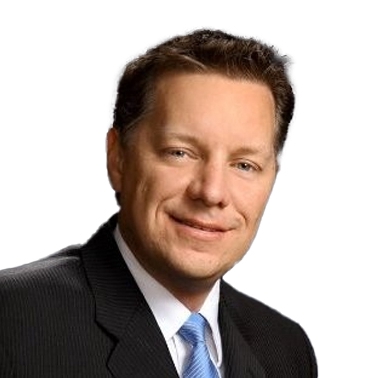
Mark Kreitzman
Chief Cyber Evangelist and General Manager at Efani Secure Mobile, and host of the Efani Features Podcast, focused on SIM swap and mobile identity theft protection.
12
APPEARANCES
12
PODCASTS
Nov 3, 2026


Mark KreitzmanGUEST
you know, your landlines, your mobile numbers, your emails, they're all being profiled to you.
Mark KreitzmanGUEST
And there are AI tools out there where you can say, okay, go and take a look at this person.
Mark KreitzmanGUEST
And it'll get like your brothers and sisters and parents' phone numbers and emails as well.
Mark KreitzmanGUEST
And And an example of this is a guy wanted to show me, he wanted to demo a simple AI sales lead tool to me.
6 MINS LATER

Cole FrenchHOST
Now, are there other sort of free things that people could do, you know, start doing 10 minutes from now? Or, you know, what do you guys do to help protect folks from SIM swapping?

Mark KreitzmanGUEST
AT&T hired me out of my master's program and they waited for me for nine months.
Mark KreitzmanGUEST
So I got lucky out of a decent sized class where they picked me and said, we'll wait for you.
Mark KreitzmanGUEST
And And I had been a coder in college, and that's how I put myself through college.
7 MINS LATER

Cody JohnstonHOST
So to that point, can you tell the audience a little bit more about Afani, how it does things differently?

MilouHOST
And so after everything had happened and you had figured it out, did you have any recourse or what were your next steps?
Mark KreitzmanGUEST
Yeah, the recourse, that's a great question because that's when I discovered the arbitration clauses.
Mark KreitzmanGUEST
And At the time, in terms of money, what it was stolen from me, I had 2.2 Bitcoin stolen from me out of my Coinbase account.
Mark KreitzmanGUEST
And so it was like a week later, I just went out and bought another Bitcoin.
Mark KreitzmanGUEST
And so it wasn't this feeling of like, okay, this is like, and I, and I had no idea.
9 MINS LATER
BrianHOST
Is that what you're talking about? Or are you talking about making obfuscated even further than that?

Mark KreitzmanGUEST
And so I had built up, say, around 30,000 followers on social media and 25,000 downloads on the app.
9 MINS LATER
101:40
Now, can you explain what Ifani does to protect people? Is it part of the network? Is it a network? To help our listeners understand, where does Ifani fit in to help us with something like that?

Mark KreitzmanGUEST
They'd go and get their garbage and open it up and look for mobile phone bills and could use that.
Mark KreitzmanGUEST
But at this point, and I've put a couple of videos out on this over the last 18 months, data privacy in the US is dead.
Mark KreitzmanGUEST
Everybody listening to this has been breached 10, 20, 30 different times and breached in a way that we don't have control over it.
Mark KreitzmanGUEST
there's not really much you can do because it's like government organizations get breached hospital systems get breached uh travel agencies get breached and then of course most people will voluntarily give up their information so they sign up for like free ai tools or um There's all kinds of free tools that people volunteer their information out on.
8 MINS LATER

Brandon KriegerHOST
Now, one of the questions I made some notes here, just one of the things I was thinking about, Why is mobile phones right now the biggest security risk? Why do you think that


Mark KreitzmanGUEST
Because I started to think about what happens if I go to bed at 10 p.m., my mobile account's taken at 11, and then they port it back at 5 a.m.
Mark KreitzmanGUEST
So if I woke up at 3 a.m., 5 a.m., 7 a.m., the first thing I do is grab my phone.
25 MINS LATER


David RedekopHOST
SS7, talk to us about how it is that we simply cannot shake that protocol completely.
Mark KreitzmanGUEST
It was signaling, whenever you called an 800 number, or when you called somebody, it was basically just a signaling to tell the networks how to connect the path together.
Mark KreitzmanGUEST
But the problem was, is that The protocol grew and it was being used all over the world, but it wasn't built with security in mind and it wasn't encrypted.
Mark KreitzmanGUEST
And so you couldn't just wake up one day and just change it because then all of a sudden the whole world could not communicate with each other.


Manoj TandonHOST
Tell us how you got not only into cybersecurity, but how did you get into this whole space to begin with, you know, this and became an entrepreneur? We'd like to get a little bit of background.
Mark KreitzmanGUEST
I was one of those lucky people where my next door neighbor, my best friend's father bought the first Apple computer that had come out as a little kid typing on it and typing, you know, basic code out of out of that was in a insert in one of the computer magazines to create a game.
Mark KreitzmanGUEST
I've never really taken like computer classes, but I can program and I've Put myself through college programming, writing in like four different languages as a consultant while I was going to school.
Mark KreitzmanGUEST
Put myself through the bachelor's and master's by programming, even though I didn't end up with a computer science degree.
18 MINS LATER

speaker_2NARRATOR
portability project.
Mark KreitzmanGUEST
So at one point in time, up until the early 90s, when you bought an 800 number, you were stuck at whatever carrier you bought it from or leased it from.
Mark KreitzmanGUEST
So if you got it from AT&T, you couldn't switch it over to Verizon or T-Mobile.
Mark KreitzmanGUEST
So as part of the breakup, 800 portability was one of the things that was required by the FCC, meaning that if you had an 800 number from, say, Verizon, or WorldCom or whoever you're leasing it from at that time, if you got a better rate, you could switch it over to AT&T or switch it over to Verizon because basically they have monopolies on the 800 numbers.
Mark KreitzmanGUEST
So I was assigned as one of two people to control SS7, what they called SS7 translations, which was all these commands that you would put into the SS7 network.
23 MINS LATER


Chris JohnsonHOST
But I wanted you to keep going, but I just want to throw that in there because I think you're also talking in some respects about all of those things are now a constant noise, even if we're not paying attention to them anymore.
Mark KreitzmanGUEST
Yeah, and my experience has been is when a company tries to roll out security measures, people spend more time trying to figure out how to get around them.
Mark KreitzmanGUEST
Now, in terms of what Afani does and why we're necessary and why the carriers can't do this is, first of all, why it's needed.
Mark KreitzmanGUEST
And so what people kind of forget about the fact that they get secure phones, no matter how secure that phone is, they secure their operating system, they have VPN and antivirus, and they might have an MDM attached to their company, and they could invest all they want in securing that phone.
Mark KreitzmanGUEST
And the problem is with a SIM swap is that when a SIM swap is when a nefarious person gets your mobile service, to stop pointing at your phone to pointing to the SIM or eSIM over in the hands of the phone of that nefarious person.
7 MINS LATER


Omar ElattarHOST
I think a lot of business owners and people with a lot of assets to protect will find it interesting at every level.
Mark KreitzmanGUEST
And it's because it started out with multiple tragedies that happened to two different people and that's how we met.
Mark KreitzmanGUEST
So to the back story of how it happened for me is I was driving to visit my parents.
Mark KreitzmanGUEST
And I was talking to my father because I was on my way to visit my parents and my phone just cut off.
6 MINS LATER

Mark KreitzmanGUEST
And in fact, the latest cold storage wallet I set up was a seedless solution.
7 MINS LATER

Natalie BrunellHOST
For those who are not familiar with Afani service, can you talk about it and how it adds these layers of protection so that people aren't at risk of SIM swaps and other hacks?