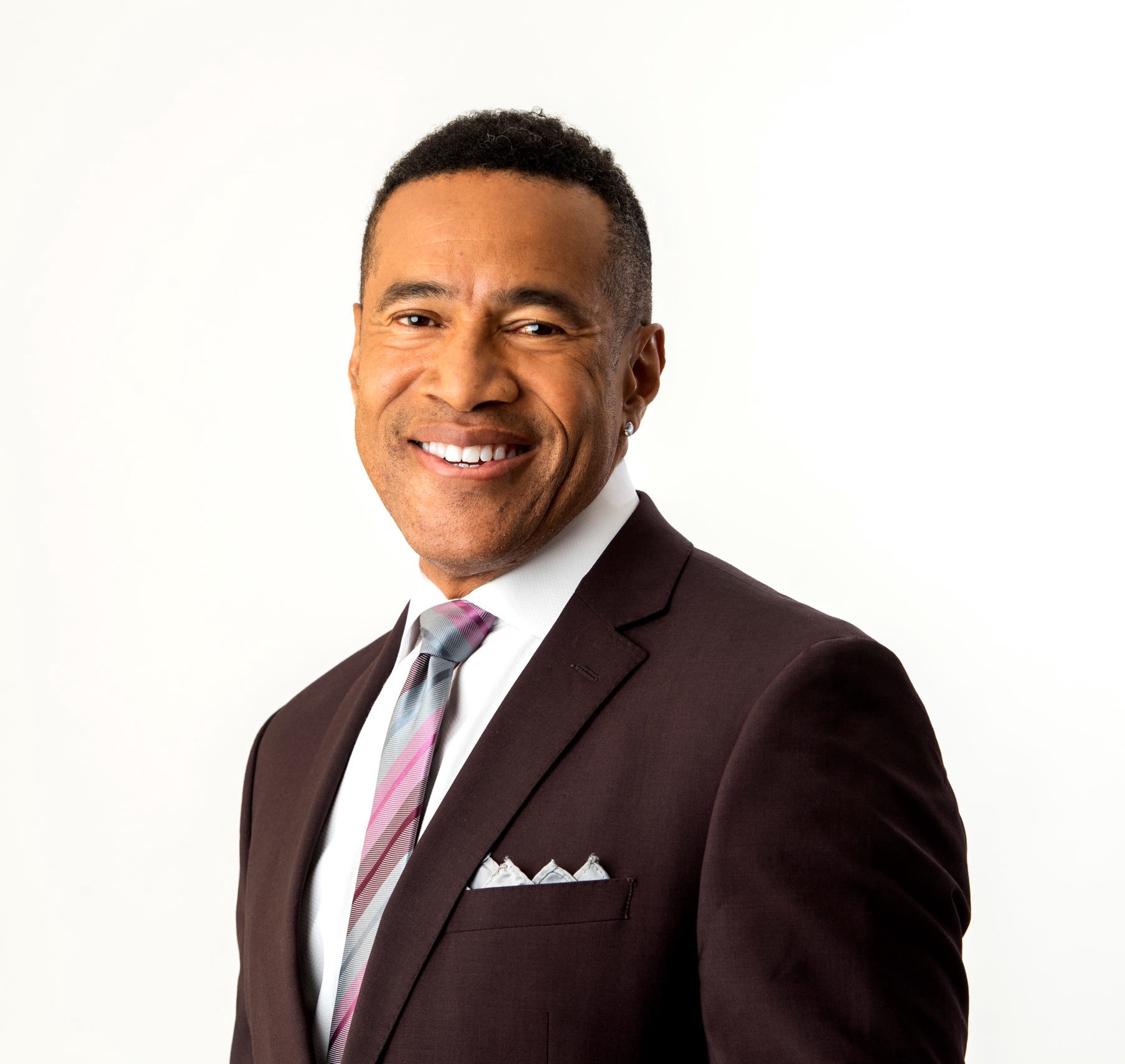
Mark Jones
Canadian sports commentator
24
APPEARANCES
7
PODCASTS
Oct 21, 2026


Laura RiceHOST
What do we know about how affordability and the cost of living might have influenced voters in the RGV?

Mark JonesGUEST
Well, that's having a massive impact, and that's probably the principal driving force for why people who voted for Donald Trump, thinking he was going to deliver economic prosperity, but who now see themselves as worse off than they were a year ago, have switched their vote back to a Democratic candidate.
Mark JonesGUEST
We found that over half of likely voters in Texas 15 say they are worse off today compared to one year ago.
Mark JonesGUEST
And 90% of Pulido voters say that they're worse off compared to De La Cruz voters who are more of a mix.

Mark JonesGUEST
debates?Well, I think strategically campaigns are realizing that it's often not in their best interest if they have an advantage or if it's even close to give their rival a platform.
Mark JonesGUEST
So the candidates who are ahead in the polls and see themselves as having an advantage view a debate as only giving a platform to their less well-known rival and allowing them to potentially have a game-changing moment as- and s- and change the status quo.
Mark JonesGUEST
And then in a few cases you have people that are simply not very good on the debate stage.
Mark JonesGUEST
For instance, Ken Paxton, in theory, since he's trailing James Talarico in the polls and Talarico is willing to, uh, uh, have a debate, might benefit from it were he not, not very good at debating, uh, as well as probably not wanting to expose himself to a host of very uncomfortable questions, which would be tough to avoid during a debate.
8 MINS LATER

Mark JonesGUEST
A significant proportion of those voters are either voting for Talarico or they're planning on staying home this election.
Mark JonesGUEST
So that's one big area, Latino voters who are going back to more traditional levels that we've seen in Texas.
Mark JonesGUEST
Instead of the 55/45 that we saw for Republicans back in 2024, it's dropping to the more traditional 60/40, 60% for Democrats, 40% for Republicans.
Mark JonesGUEST
And then the other area is a group of Republicans that are a minority in the party, the moderate Republicans.
McGraw MilhavenHOST
How does Talarico overcome and finish, go to get to the finish line where Beto O'Rourke couldn't?
Mark JonesGUEST
The ability for Republicans to more or less unilaterally push policy through would be limited or pretty much ended.
Mark JonesGUEST
It would also be, I think, a potentially devastating impact for national Republicans' hopes of being relevant on the national stage.
Mark JonesGUEST
If Texas is in play in presidential elections and Republicans can't rely on its 40 electoral college seats—and that's going to be more after 2030— then it's really tough mathematically to think of a scenario where outside of a really weak Democratic candidate or a very difficult scenario for Democrats in terms of the economic context for Republicans to win a presidential race, and similarly if Republicans don't have the ability to draw the maps in Texas to give Republicans a boost in the U.S. House seats, then it's also tough to imagine Republicans actually winning getting majorities in the U.S. House barring exceptional

David BrownHOST
Mark, we've been talking about what a Democratic governor would mean for Democrats and Republicans, but what about ordinary Texans? What do you think would be the first tangible differences people might actually notice in their daily lives, and realistically, how long before such changes might actually happen?
Mark JonesGUEST
Well, a lot would depend on what type of governor we would have with Gina Hinojosa.
Mark JonesGUEST
Would we have someone who tries to steer to the center and make coalitions and build coalitions with Republicans? Or it would be the diehard progressive who we'd be seeing voting in the Texas House for the past decade, who's always one of the 10 most liberal members of the House.

Craig CohenHOST
Uh, what, what do you make of just the fact that he is making so many repeat trips here? What, what does that say?
Mark JonesGUEST
Well, I, I think in the case of Ken Paxton, he- it's a recognition that he broke the ra- Senate bid by, or the Senate contest for Republicans, and Republicans want him to try to fix it, or he's going to try to fix it.
Mark JonesGUEST
And, and while Paxton may complain about DC running his campaign, uh, when he decided to go to London with his paramour to celebrate the Fourth of July, um, you know, during a time where people are concerned about affordability, he probably gave up any ability to control his own destiny.
Mark JonesGUEST
Uh, but, you know, I think for Trump, there's a sensation that, yeah, he owns Paxton, and if Paxton loses, he- Trump is going to get most of the blame.
7 MINS LATER
Craig CohenHOST
Uh, is a Fort Bend County specific survey instructive when it comes to those statewide races?
Mark JonesGUEST
The real question is the Senate, and the Senate is looking increasingly like it's going to go, uh, Democratic.
Mark JonesGUEST
I'd say there's probably a three out of four chance today that Democrats take control of the Senate, with the only question being is it a 51 to 49 majority, 52, 48, 53 to 47, et cetera.
Mark JonesGUEST
And that's where Texas plays a role because Texas is part of that calculus that gets Democrats to, say, 52 or 51.
Mark JonesGUEST
And in the back of all Democrats' mind is they really don't wanna be at 51 because that 51 includes John Fetterman from Pennsylvania, and they fear, fear that there's a risk that he could effectively flip and caucus with Republicans, thereby denying them a majority.
Mark JonesGUEST
So they'll feel much more comfortable at 52, and right now it looks like they're going to get there.
David BrownHOST
Uh, since people are using that term tsunami, blue tsunami, what would actually constitute a political, uh, earthquake, let's, let's change the metaphor, in Texas? Uh, Democratic senator, Democratic governor, several congressional pickups? How would you define that?

Angela KochergaHOST
well is there any policy or a discussion of a policy to govern the use of ai and campaign advertising
Mark JonesGUEST
Senator Brian Hughes of Mineola drafted Senate Bill 751 back in 2019, which expressly prohibits these types of ads 30 days prior to the election.
Mark JonesGUEST
There also are federal requirements that you disclose who's doing the ad and in terms of funding.
Mark JonesGUEST
But in Texas, there is no restriction on these ads up until 30 days prior to election day.
Mark JonesGUEST
And even after the 30-day window has started, it's not entirely clear if they apply to federal elections or not.
Angela KochergaHOST
Well, where and how are these AI-generated materials getting out there? Social media, network TV? And are they carrying some sort of notice that it's AI?
Craig CohenHOST
Mark, is that how you read it? Is this a sign of some leaks, some concerns for the GOP? Or is it now this is just a way to gain some attention and some money towards the election?
Mark JonesGUEST
In past years, past midterms, when you have an unpopular president in the White House, candidates from their party competing in competitive House districts or competitive Senate races often distance themselves from the president.
Mark JonesGUEST
I remember Greg Abbott once, back even 2018, I think, left the country when the president, I think, went to Israel at one point when President Trump visited to avoid being sort of next to him.
Mark JonesGUEST
But the reality is in the current Republican Party, it's so associated with Trump and virtually all of these candidates are so tied to Trump that you really have a difficult time credibly distancing yourself from the president.
7 MINS LATER
Craig CohenHOST
How does any of this work? How do voters have any idea who it is they're supposed to vote for?
Mark JonesGUEST
In Wisconsin, I guess Thanksgiving is safe because a democratic socialist, Francesca Huang, who in the past had some doubts or concerns or issues and potentially talked about banning Thanksgiving, lost narrowly to David Crowley, a progressive, but not as far to the left as her.
Mark JonesGUEST
In Minnesota, Peggy Flanagan, though, who's not a Democratic Socialist but is much more progressive than Angie Craig, a congresswoman who she ran against, won the Democratic primary for Senate there.
Mark JonesGUEST
Pretty well set to win in November, although she does face former NFL sideline reporter Michelle Tafoya, who is a really strong candidate for Republican, so she might have some possibilities.
21 MINS LATER
Mark JonesGUEST
So with the president, you never know if they're going to be implemented until the day comes for them to be implemented.
Mark JonesGUEST
But in the short term, it'll be a rise in prices for imported goods from Canada.
Mark JonesGUEST
And that's been the major impact of tariffs because for companies actually to respond to, say, start producing the things that we presently import, requires certainty about what the rules of the game are going to be for the medium to long term.
Mark JonesGUEST
And if there was one thing with the Trump administration that's very clear is rules can change at a moment's notice.
Mark JonesGUEST
So companies that might, in theory, benefit from higher tariffs on Canada in terms would need to invest in factories and production lines.
Craig CohenHOST
Will any of the high court's decisions this term have reverberations in the final four months of the midterm elections?
Mark JonesGUEST
I think there's one on campaign finance where the court struck down any restrictions on parties giving as much money as they want to candidates.
Mark JonesGUEST
So up until now, there have been restrictions on how much parties can actually directly give to the individual candidates, much like restrictions on the amount that individuals can give to individual candidates.
Mark JonesGUEST
Now... a donor can give $1,500,000 to a party, and that party can turn around and send it straight to the candidate, and that's perfectly legal.
Mark JonesGUEST
And that's important for campaigns because while super PACs under the Citizens United decision have been able to do whatever they want and spend millions and millions of dollars, they technically can't coordinate with the candidates.
Mark JonesGUEST
They can't get the same deals for television advertising that the candidates can get, and the candidates prefer to have actual control over money their campaign, as opposed to having super PACs out there on the edges doing it.
Mark JonesGUEST
This will allow billionaires and millionaires to give money to parties with instructions.
10 MINS LATER
Craig CohenHOST
Mark, particularly maybe here in Houston, because of course we've had the state-appointed board and state takeover of Houston ISD, and maybe this is going to be seen as another example of, well, this is state encroachment into what should be local decisions.
Craig CohenHOST
Why, Mark, in light of that, is that point just not clear to proponents of the SAVE Act, or is it that they don't see that as a barrier?
Mark JonesGUEST
Well, I think a lot of it has to do with a focus and something of an obsession with election fraud.
Mark JonesGUEST
And there's a belief that's been fueled by the president particularly, but also by other Republicans, that there's widespread election fraud occurring throughout the country, that you have millions of people who aren't citizens who are registered to vote.
Mark JonesGUEST
And while there is some election fraud, it isn't at the massive scale that would require or essentially justify making such a large wholesale change in terms of how we register to vote.
Mark JonesGUEST
If you think it's difficult now, getting the birth certificate together, getting a marriage license together.
Mark JonesGUEST
Those are things that are difficult and have to be done in person in places like Texas and would definitely have a negative impact on people's ability to cast a vote and to essentially exercise their right of suffrage.
7 MINS LATER
Craig CohenHOST
Uh, and, uh, that, that was one of the questions coming into this, and, and I imagine a question that will be asked following this, is whether or not it should give a city like Houston any pause in the future about any major event, and what guarantees, what negotiations they are or are not in a position to make.
Mark JonesGUEST
So, like, Chicago is a good example of a city that had the option of hosting World Cup matches and said no once they looked at the financial agreement.
Mark JonesGUEST
I, it definitely will, especially after this, uh, World Cup, where at least all signals are that the revenue that fans are bringing in, people traveling here are bringing in, is not near what even was, was closely projected, where even there you're probably breaking even or doing a little better.
Mark JonesGUEST
But we're looking at hotel reservations, uh, thus far, and the lodging industry here in Houston, they at least at the present time are not seeing any, uh, they aren't seeing the reservations or the demand that they thought they were going to receive, and that's not a good signal for the City of Houston if the goal is to at least recoup the money that was invested.
14 MINS LATER
Craig CohenHOST
What, what is the latest on efforts to, to reach some sort of deal between the two?
Mark JonesGUEST
Well, every time we seem close, something occurs, a Black Op helicopter gets shot down, Israel, uh, s- bombs parts of Lebanon or attacks Iran.
Mark JonesGUEST
But at the end of the day, we're in a situation where we don't seem all that much closer to a truce, and that then will continue to fuel this high inflation in terms of gas prices.
Mark JonesGUEST
Well, first, California has an absolutely dreadful s- uh, electoral system in terms of, uh, counting of ballots.
Mark JonesGUEST
But ballots can be accept- or will be accepted up to seven days after Election Day if they're postmarked.
Mark JonesGUEST
As a result, we get this huge backlog of ballots that will take over a week to get counted, so it may be for some of these closer races it'll be this time next week on Houston Matters where you'll be talking about who actually is in first and second place in some of these competitive contests, like, uh, the governor's race, where there's still a possibility that S- Tom Steyer could, uh, leapfrog, uh, Steve Hilton.
Mark JonesGUEST
It's unlikely to a- leapfrog Xavier Becerra, part- because most of the votes that come in later tend to be more Democratic.
Mark JonesGUEST
Having the endorsement of President Trump, as well as having far more financial resources than Kaine did, really helped seal the deal for her.
Mark JonesGUEST
Coming from a March 1st round, when the election was relatively close, Mueller won, but only by the mid-single digits.
Mark JonesGUEST
This is, I think, a good election for Republicans because while District 9 leans heavily Republican, it is the one congressional district in the Houston metro area that is somewhat up for grabs in the fall.
Mark JonesGUEST
And having Mueller as the Republican nominee makes it far more likely that Republicans will be able to hold on to that seat, given that she has much more crossover appeal than Briscoe Cain has.
Angela KochergaHOST
Why is this getting so much attention and how close do you think it will be?
Mark JonesGUEST
Well, it's getting quite a bit of attention, first and foremost, because it's the most expensive primary in U.S. history.
Mark JonesGUEST
We're over $150 million by now on TV ads alone, and President Trump's weighed in.
Mark JonesGUEST
Democrats believe that if Ken Paxton, the deeply flawed GOP candidate with more political dirty laundry or personal, financial, legal dirty laundry than pretty much anyone.
Mark JonesGUEST
If he's the nominee, Democrats think they have a realistic probability or possibility of winning in Texas.
Angela KochergaHOST
Where does that runoff stand and why is this a top race to watch? And I guess it's a two-parter because we have runoffs on both sides of the aisle.
Craig CohenHOST
A- and, uh,It is really that close in terms of the runoff itself based off of, uh, polling that you conducted for the University of Houston, right?
Mark JonesGUEST
So we also found in a UH Hobby School poll a few weeks back, uh, we found that Cornyn w- trailed Paxton by three points, but that's also effectively a statistical dead heat.
Mark JonesGUEST
Uh, so we not only have a very close race for US Senate, uh, or the GOP nomination in the US Senate right now, but as we look towards the fall, at least at the present time, a very close race then between whoever comes out of the GOP primary victorious, Ken Paxton or John Cornyn, they're facing a tough battle against Democrat James Talarico in November.
Mark JonesGUEST
Well, there you have on the Democratic side, uh, Annise Parker, uh, who is a former mayor of Houston, controller, city council member, running a strong campaign.

Mark JonesGUEST
Uh, and, uh, it actually took me a long time to, to calm down, to, um, really, uh, emotionally, mentally, uh, de-escalate, and I actually slept for, like the best part of the next day.
Mark JonesGUEST
And then I had two weeks off work where I was, um, resting and really not doing anything, could barely get out of bed.
Mark JonesGUEST
I s- went up and spent some time just to get away from the house and everything, um, you know, with my parents on the Central Coast, and so I, you know, slept in the spare room, and my mom looked after me again, which was kind of delightful looking back on, but actually, again, a, a really incredibly humbling moment.
Mark JonesGUEST
I remember sort of staring at the ceiling thinking, "I'm back home again." Like, "I've failed," you know? "How did I get here?" I then began to start seeing medical professionals.
Mark JonesGUEST
I, I didn't, I didn't go to hospital because I started to find myself in, in a relative state of regulation, but I knew that I was depressed.
Mark JonesGUEST
And, um, actually, one of the things that many people who go through this experience is extreme sensitivity to light and sound.
Mark JonesGUEST
Well, so in the 9th District, that's where we have Alex Miller and Briscoe Cain in a runoff.
Mark JonesGUEST
Uh, she, uh, finished first in, back in March by 5%, so she's been able to sort of increase that lead a little bit.
Mark JonesGUEST
But once again, that's a very low turnout district, and so it, who wins it is going to be the person who can mobilize their supporters to actually get out and vote.
Mark JonesGUEST
Well, Indiana was an interesting case because there you had Republicans in the State Senate block Donald Trump's, uh, attempted redistricting plan for Indiana, which would have eliminated the one Democratic seat that remains there.
Mark JonesGUEST
Trump then vowed revenge on those, uh, Republican incumbents, and of the seven of them that Trump went after, five have lost, one won, and one is hanging with a margin of, uh, uh, essentially a lead of three votes out of about 12,000, with still a few votes to come in.
Mark JonesGUEST
So Trump by and large was successful, and that will send a chilling effect across for Republicans across the country because it, it indicates that in spite of Donald Trump's lower approval ratings at the national level among all Americans, among Republican primary voters, he still is very popular, and if you cross him, as these Indiana state senators did by blocking his proposed redistricting plan, uh, it can have negative consequences for you in the primary.
Mark JonesGUEST
In this case, five of them will not be returning to office almost exclusively because they, uh, opposed Donald Trump on this issue.
12 MINS LATER
Mark JonesGUEST
Well, they aren't good for the president, and they're a real liability, as Renee mentioned, for Republicans as we approach November.
Mark JonesGUEST
Uh, with Donald Trump having record for him low approval ratings, that will resonate negatively for Republican candidates from Maine to California and make it all the more difficult for Republicans to retain control of the US House, which I think now is a, probably a lost cause for the Republican Party unless something changed dramatically.

Mark JonesGUEST
We do notice it in the world, don't we? I mean, the prevailing anxiety I think you talk about is quite profound, and it-Seems to me it involve lo- lots and lots of levels.
Mark JonesGUEST
You know, its apparent manifestation in terms of AI or AGI is largely at this point a projection, isn't it? We're projecting our fears.
Mark JonesGUEST
Now, there are some people who are really working with the powerful tools who are giving us cause to project our fears.
Mark JonesGUEST
I mean, what are we to make of it all, guys? It's very confusing, isn't it? Um, I myself have overcome my resistance to AI, not directly, but, you know, I've looked at ...
19 MINS LATER
Laura MatsueHOST
So can you just describe that a little bit for people who are new to that concept?
Craig CohenHOST
This far out, without yet knowing if Cornyn or Paxton will face Talarico in November, do polls like this matter very much?
Mark JonesGUEST
But it's difficult to really replicate the conditions that we're going to have in October and November today, in part because voters aren't thinking as much about that election, especially, say, the Texas Tribune poll, which is of registered voters, not likely voters, whereas the prior poll was, uh, the Warford Poll, was of likely voters.
Mark JonesGUEST
The other is we haven't seen a barrage of negative attack ads against the different candidates.
Mark JonesGUEST
So we haven't seen, say, Democrats spend $100 million telling everybody about all of the political baggage, ethical baggage, legal baggage, financial baggage that, say, Ken Paxton has.
Craig CohenHOST
... situation." But there's a difference between temporary and extraordinary, right?

Blake MurphyHOST
So when we look at six regulars being out of the lineup for the Kings, who are the young guys who have taken most advantage o- of those extra opportunities the last few weeks?
Mark JonesGUEST
Well, I think the overwhelming prevailing storyline of the year as it pertains to the young guys and their, uh, subsequent progress and improvement, the headliner has to be Maxime Renauld.
Mark JonesGUEST
You know, 42nd pick, second round, uh, four-year player out of Stanford, uh, leads all rookies in the NBA in double doubles, um, has really benefited from, uh, the tutelage of, uh, you know, Sabonis when he's around, but even more so, Russell Westbrook.
Mark JonesGUEST
Uh, you'll see it tonight, um, you know, with, with Russ coming off ball screen action, and they play out of the pocket so well.
Mark JonesGUEST
And even a lot of times when DeMar DeRozan has the ball, uh, Matt, you'll notice this too, on the left block, when he, they run that cross-screen action, DeMar gets it on the r- uh, left block, and he'll take a couple dribbles and draw two.
7 MINS LATER

Matt BonnerHOST
Having guys of that character who will still stick to their processes, their routines, as if they were gonna make the playoffs is important to set that example for the younger guys, for sure.


Ian RyanHOST
(inhales sharply) How do you see that one playing out? Have Liverpool got the ability to still, obviously he's under contract, but to keep him there or do you think his wish for, for wanting football elsewhere and obviously to get weighed in essentially, do you think that will end up coming out on top and he will move on?
Mark JonesGUEST
(clicks tongue) I think that's, th- this is gonna be the thing that determines what comes next and, um, in terms of...
Mark JonesGUEST
Yeah, Diaz, it's not that he wants to leave, it's that he wants a new contract and those, those things are, are, you know, not, not the same.
Mark JonesGUEST
And so we're in a situation now where I think it's a real test of everything Liverpool do behind the scenes, the, the culture around the club, everything that you've seen that has been so important in the last few years going back to the previous manager.
Mark JonesGUEST
'Cause how many times in these sort of situations have you seen player goes on strike, player says something in the press? Diaz has always struck us as a very hard-working, very, you know, uh, dedicated player.
9 MINS LATER
Ian RyanHOST
Do you see him being the main focal point now for Liverpool in terms of that center half position?