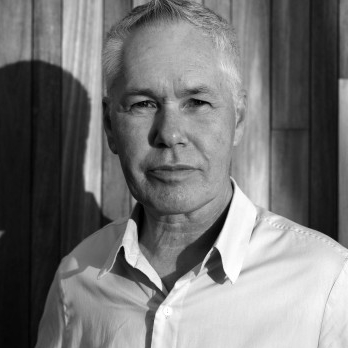
Mark Cully
Economist and author of "Waves of Plenty: Immigration and the Making of Australia"; former chief economist of Australia's immigration and industry departments and Fair Work Commission expert panel member.
8
APPEARANCES
8
PODCASTS
Oct 27, 2026


David ThomHOST
And how do you think each of those policy changes have changed our culture along the way?

Mark CullyGUEST
The way I... talk about this in the book, I have this idea that I borrowed from Alfred Deakin when he was the Attorney General talking about the Immigration Restriction Act and the use of that act to exclude people from coming.
Mark CullyGUEST
There's a lot of talk about who gets kept out because of the fence, but maybe less talk about who gets helped to come in through the gate.
Mark CullyGUEST
So what we see is Almost all of the people who received assisted passage, and there's about three and a half million of them from 1830s until the late 1970s.
8 MINS LATER

Mark CullyGUEST
But the other two channels, which added together, comes to a large number, and I'll mention that in a moment.
Mark CullyGUEST
Uh, working holiday makers, initially designed to allow young people to travel in Australia and do work incidentally.
Mark CullyGUEST
It's now very much a scheme that's anchored around providing a regular workforce for the horticultural industry and to a certain extent, hospitality, and people can now come for three years as a working holiday maker, and the numbers who are coming through as working holiday makers are very large.
Mark CullyGUEST
But they are insubstantial compared to by far the largest group, international students, which got close to 800,000 people who were resident in Australia just ahead of COVID.
7 MINS LATER


Mark CullyGUEST
The gold rush in New South Wales began first, but the Victorian gold fields had much greater seams of gold than in New South Wales.
31 MINS LATER


Alan GamlenHOST
But then also, wa- walk us through the main stages of, uh, of the history that you tell and why you've chosen that, that particular periodization.
Mark CullyGUEST
There was a bit of enthusiasm for evidence-based policymaking, and there was also a bit of a push on in the public service to bring in, uh, people who did not have public service experience.
28 MINS LATER
Alan GamlenHOST
Um, of all the historical periods that you've covered, which is most like the present, and how do you think that understanding that other historical period can help us to understand the present?


Alan KohlerHOST
Tell us what happened there and, and why it happened, and did that result in, uh, foreign students becoming the largest part of Australia's migration?
Mark CullyGUEST
The history of, of, uh, foreign students coming into Australia is very interesting.
Mark CullyGUEST
Uh, during the nineteen fifties and sixties, Australia had the Colombo Plan, uh, which gave scholarship places to, uh, young people from Malaysia, uh, Indonesia, Ceylon, and so on.
Mark CullyGUEST
There were two reports that were commissioned by the Hawke Government about, about overseas students in nineteen eighty-three.
Mark CullyGUEST
One of them, uh, was done by a chap called Goldring, and it was commissioned by the education and immigration ministers to investigate whether there ought to be full fee-paying, uh, overseas students and allowance for that.
Mark CullyGUEST
He said that the, the kind of soft diplomacy, the cultural exchange that comes from overseas students cannot be underestimated, and we shouldn't turn this into something transactional.
6 MINS LATER
Alan KohlerHOST
Uh, they're all in favor of, uh, big Australia, aren't they? I mean, and to what extent did lobbying by the universities and farmers influence migration policy?


Paul BarryHOST
Um, in the 1840s, people were saying, "No more convicts." We've said no more lots of other things since then, haven't we?
Mark CullyGUEST
Uh, we've, we said, "No more convicts," uh, "No more Chinese," uh, "No more South Sea Islanders." We've said no to, uh, no to boat people.
Mark CullyGUEST
So the, the, the White Australia Policy in its formal sense lasted from 1901 on through to 1973, uh, so that's a terrifically long period of time, and I, I think the period from 1947 onwards can broadly be characterized as one of nation building.
Mark CullyGUEST
I, I have this- What economists call a thought experiment, uh, right in the opening introduction of my book to say, "Imagine that that post-war immigration boom hadn't begun.
Mark CullyGUEST
What, what would Australia look like now, um, if that hadn't happened, and we'd basically had been in the same circumstance that we were in before World War II, where, where net migration was basically zero?" And I say, "Well, we- we'd probably look a little bit like Sweden." Um, so we were the same si- Australia was the same size as Sweden in, at the end of World War II, and it's now two and a half to three times larger than Sweden.

Mark CullyGUEST
Uh, I think that's exactly right, and I, I do use that, uh, use that characterization in the, in the book.
Mark CullyGUEST
D- So what happened in, uh, eight- progressively over the 1820s and then into the 1830s was the explosion of, uh, the wool industry.
16 MINS LATER
Paul BarryHOST
And in your view, is the miracle of Australian migration still working? Is it, you know, is it despite the, the problems that people have with it at this precise moment?


Mark CullyGUEST
And the idea was that there would be gentleman farmers from the upper and middle classes of Britain would run these farms with their something approaching slave labor.
Mark CullyGUEST
And – At that time, we had a couple of industries that really took off whaling and then sheep, sheep initially for meat and then sheep for wool.
Mark CullyGUEST
on the squatting runs to manage the sheep, to do the shearing, to load up the wool onto trays and get them to Sydney and take that wool over to the UK.
17 MINS LATER