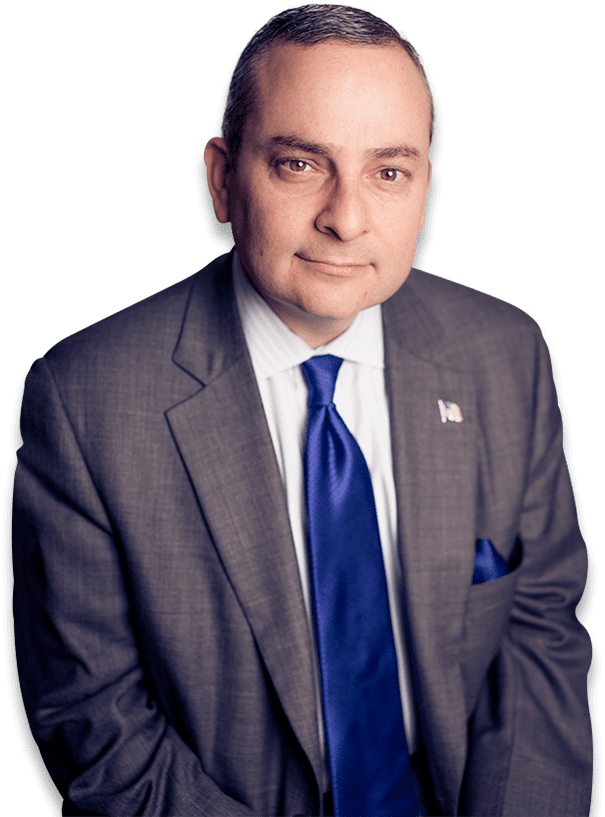
Mark Bederow
Attorney
6
APPEARANCES
4
PODCASTS
Sep 11, 2026

speaker_11ADVERTISER
so

Mark BederowGUEST
the judge brought up each juror individually swore them in under oath and basically said i tell you what the law is are you going to follow it yes or no i'm paraphrasing clearly And each juror under oath said, I will follow the law.
Mark BederowGUEST
And then what did the judge do next? He reread the law of reasonable doubt, which, by the way, is a gift to a defendant in a criminal case.
29 MINS LATER
speaker_16ADVERTISER
Collect it.


Brian EntinHOST
What about this latest motion by Reddington that was just filed, renewed motion for required finding of not guilty, that talks about the jurors and it being 11 to 1, but also talks about there just being a lack of evidence? What's going on there? Exactly
Mark BederowGUEST
And, you know, a lot of people have very strong opinions about him one way or the other.
Mark BederowGUEST
But I can tell you just as a lawyer, he has a rare level of zealous advocacy for a client, including a client who, by all accounts, is about as unsympathetic as it gets when you factor in the conduct of what's happening here.
Mark BederowGUEST
This motion is essentially asking the court to enter a judgment of acquittal because the evidence that was presented, there's no reasonable basis for a jury to have concluded of proof beyond a reasonable doubt.
13 MINS LATER
Brian EntinHOST
I'm just wondering, do you think he was purposely not defending himself? for a while, like thinking about something with a new trial or like, was there a strategy behind that?
Brian EntinHOST
Where do you think things will sort of stand with the jury when they go into deliberations?
Mark BederowGUEST
You never know, certainly in a case like this where the liability is not really the issue.
Mark BederowGUEST
So it really is purely how do jurors react with the concept that she did that but may not be criminally responsible.
Mark BederowGUEST
It is worth noting, and this is important, that a jury, when they do get the case, they will be instructed about the possibility of not guilty by reason of mental disease or defect and what that means.
Mark BederowGUEST
So the jury would know that if they believe that Clancy is not guilty by reason of insanity, for lack of a better term.
Mark BederowGUEST
that she would be hospitalized, that that's certainly favorable to the defense.
19 MINS LATER
Brian EntinHOST
Like, do you really need to do this? Like, it was kind of, it was one of the moments I kind of doubted him a little bit, like, I didn't


Mark BederowGUEST
New York, uh, has very double jeopardy statutory laws that are much more protective of defendants than the US Constitution, and they have protections in place which say you can't try him even from a different sovereignty if there are, already was a prosecution.
Mark BederowGUEST
And in this case, the argument is that he pled guilty to possessing a firearm and using it with the intent to kill Thompson, which he admitted doing, and which is clearly the murder charge in New York.
Mark BederowGUEST
And the defense is going to argue, and I think very credibly so, that it's the same, uh, it's the same incident.
Mark BederowGUEST
And in order to get by that statutory double jeopardy protection in place in New York, the DA would have to argue that the statutes at play, the state murder statute on one hand and the federal stalking statute on the other, um, address very different harms, and that they have to be very different evils that the statutes try to address.
5 MINS LATER
Mark BederowGUEST
But when you factor in all the aggravating circumstances here, uh, you mentioned it earlier, I mean, this was a cold-blooded killing, uh, with stalking and predatory behavior.
Brian EntinHOST
do you think we'll see any criminal charges like maybe of people we don't even realize because if the way they thought you know whether it was racial or misogynistic whatever impacted the way cases were handled Isn't that criminal?
Mark BederowGUEST
I mean, you have to start with the premise that as offensive as this is, it's not a crime to be a racist or an anti-Semite, even for a public servant.
Mark BederowGUEST
So really, it becomes potentially criminal if this leads to evidence which shows that they actually took steps to violate someone's rights based upon their race, color, creed, almost in violation of their right to due process, their right to equal protection under the law.
Mark BederowGUEST
And if you see provable circumstances in which Proctor, Goode, or anyone else took actions that unfairly prejudiced a criminal suspect, and violate and intentionally violated their civil rights and constitutional rights in doing so, again, for race, color, religion, whatnot, then that very much could be a federal civil rights crime under 18 USC 242. which is just the civil rights federal statutes that you saw used, for example, like in the Rodney King case all those years ago.
Mark BederowGUEST
That was obviously a violation of King's civil rights when they were beating him and kicking him with sticks.


Peter TragosHOST
But just reading it and putting your lawyer hat on, do you think a lot of this was done for public consumption to really hate Michael Proctor and Good? Um, or do you think they're really gonna be able to use most of these text messages in the civil lawsuit here?
Mark BederowGUEST
Again, anything which would go to credibility, especially in the form of investigative bias based on certain groups.
Mark BederowGUEST
And, and obviously, at the misogynist things that were said certainly relate to a bias against Karen.
Mark BederowGUEST
As well as we know from the trials, Proctor made direct statements about her and, and what he thought about her.
Mark BederowGUEST
And I think they're gonna certainly be allowed to argue that that could have colored his investigative competence or his investigative intent to, to do something nefarious.