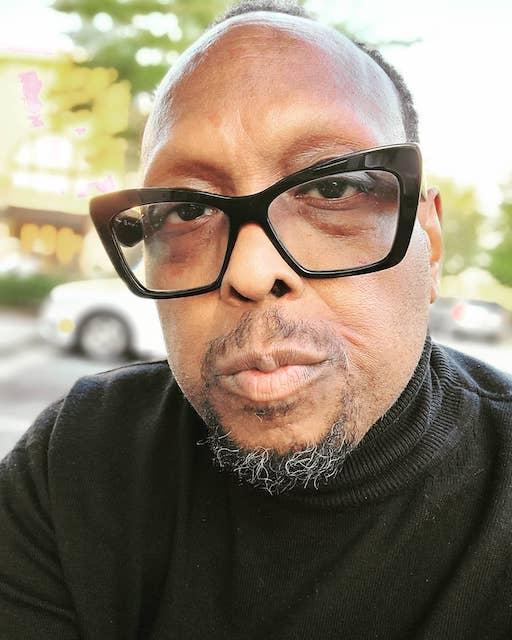
Mark Anthony Neal
Author
6
APPEARANCES
6
PODCASTS
Oct 1, 2026

0:42

So like, what do you make of all this? What do we do about it? And like, what is your book? How can your book help us get there?

Mark Anthony NealGUEST
I think we have tried, America has tried, to raise generations of warriors, if you will, to be on the front lines of American imperialism.
Mark Anthony NealGUEST
So what we have done is raise two or three generations of men in America who don't know how to be human, who don't know how to lead into full range of who they are.
Mark Anthony NealGUEST
We've been socialized to show up only certain kinds of ways, anger, rage, the ability to follow directions, right? You know, things like vulnerability, are made fun of at the highest levels.

Mark Anthony NealGUEST
My first therapy appointment was surprising to me, because it dispelled all the myths [laughs] of what I thought therapy would be like.
Mark Anthony NealGUEST
My therapist, um, who was a younger Black woman, um, really wanted to get a sense of how my emotional mind worked, what my emotional life was, what were the things that motivated me in my everyday life to be the person that I was.
Mark Anthony NealGUEST
What that first session revealed to me, and why it was so important for the five years that I stayed in therapy, was that it gave me an opportunity to talk to someone about what was going on in my life without the fear of judgment.
Mark Anthony NealGUEST
Uh, I think my sense of therapy prior to that point in time was that the therapist sat there in judgment of you, to tell you what you did wrong, what you're doing wrong, what you should do right.
Mark Anthony NealGUEST
It was never that, you know? It- our conversations were never prescriptive.
17 MINS LATER

speaker_4UNKNOWN
Mm-hmm
Mark Anthony NealGUEST
On the ground fatherhood was really different, and my daughters were two very different daughters, and it took...
Mark Anthony NealGUEST
It took me learning how to listen to them and father really based on their needs as opposed to what my expectations were as a dad.
Mark Anthony NealGUEST
What I thought society needed from me as a dad, and particularly as a Black dad, I had to be able to be flexible enough to hear them, to show up in the ways that they needed to show up, even if I was uncomfortable in those roles.
speaker_15UNKNOWN
Uh, what roles were you uncomfortable in, and what roles came more naturally to you?
Mark Anthony NealGUEST
You know, when I think about my own dad, right, he didn't talk much, but, you know, I, I always listened to him, right? You know, he...
Unknown podcast
The Harlem Renaissance
Jun 18 · 43m

Don WildmanHOST
How so? How did political ideas weave into this cultural and, and artistic reality?
Mark Anthony NealGUEST
We have to [laughs] you know, talk about how important a figure he was as an intellectual, you know, beginning with his study of the Philadelphia Negro in the late 1890s.
Mark Anthony NealGUEST
He, of course, publishes The Souls of Black Folks, which began as a collection of essays that appeared in The Atlantic.
Mark Anthony NealGUEST
This idea that with the new century, post Plessy versus Ferguson, that Black folks would begin to not only use their physical and artistic tools, but the intellectual tools to think about a way out of the conditions that they were in.
Mark Anthony NealGUEST
So Du Bois, the creation of the NAACP movement, which then creates the creation of the NAACP.

Don WildmanHOST
How so? How did political ideas weave into this cultural and artistic reality? It's
Mark Anthony NealGUEST
We have to... talk about how important a figure he was as an intellectual, beginning with his study of the Philadelphia Negro in the late 1890s.
Mark Anthony NealGUEST
He, of course, publishes The Souls of Black Folks, which began as a collection of essays that appeared in The Atlantic.
Mark Anthony NealGUEST
This idea that with the new century, post Plessy versus Ferguson, that black folks would begin to not only use their physical and artistic tools, but the intellectual tools to think about a way out of the conditions that they were in.
Mark Anthony NealGUEST
So Du Bois, the creation of the Niagara Movement, which then creates the creation of the NAACP.

Mark Anthony NealGUEST
... you know, whether it was mental illness, dude just lost his mind for a moment.
Mark Anthony NealGUEST
We needed to sit, I needed to sit with the idea that in these cases, there were children that lost their lives.
Mark Anthony NealGUEST
Whatever choices Mr. Fairfax made or, or the guy in Lu- in Louisiana made, w- w- we have to sit with the violence against those women and children first.And I think too often because he was a prominent Black man, and we're overly protective, I think, as a community, as a culture, about what befalls prominent Black men, right? Uh, because and somehow we think in protecting and, and creating a context to understand them, it's, it's a more of a benefit to our community, to the race.
Mark Anthony NealGUEST
I think in leading with that, we miss fundamental issues around violence against women, the role of patriarchy and misogyny and sexism in our lives, and how violence against Black women becomes an afterthought.
Mark Anthony NealGUEST
I think about, for instance, in, in a separate space, when we see young white women who are killed by folks who are immigrants, and how that bubbles up to a national conversation because it's connected to this larger discourse about immigration in the country.
26 MINS LATER
B.A. ParkerHOST
But from what you've seen of situations like this before, what could healing look like?