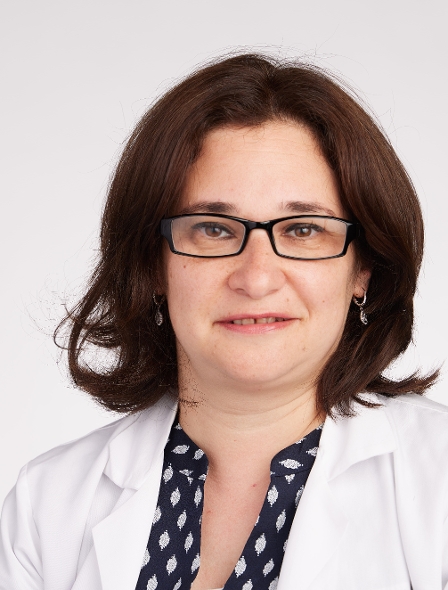
Marina Kremyanskaya
2
APPEARANCES
2
PODCASTS
Oct 5, 2026


Marina KremyanskayaGUEST
[gentle serene music] Marina Kremenskya, and I'm at Icahn School of Medicine at Mount Sinai in New York.
Marina KremyanskayaGUEST
[gentle serene music] Polycythemia vera is a chronic, uh, blood cancer, um, that is pretty rare, though we see a lot of it here at Mount Sinai.
Marina KremyanskayaGUEST
Um, and what happens with PV, as we call it, is that, um, there is, uh, increased abnormal production of red blood cells.
Marina KremyanskayaGUEST
So there is too many red blood cells that are being produced, and that is inappropriate.
Marina KremyanskayaGUEST
Um, and the complication of that is that, um, patients are at higher risk for blood clots.

Ken MillerHOST
So for the patient with a higher burden disease, where on one hand you're treating their symptoms, just like you described, what treatment is there now? What is the state of the art for treating patients with more advanced disease? I'd love some examples from your clinic.
Marina KremyanskayaGUEST
So this is actually the part that's really exciting right now because we have new treatments.
Marina KremyanskayaGUEST
This is not that long ago because I haven't been in practice that long.
Marina KremyanskayaGUEST
And I've gone through this where a patient with systemic mastocytosis, we're treating them with medications that, again, are nonspecific for this.
Marina KremyanskayaGUEST
So we used to treat patients with hydroxyurea just to try to decrease the burden of the disease.
13 MINS LATER
Ken MillerHOST
How's their quality of life? And when you think about your team of clinicians you work with at a large center, what are some of the needs that patients have that I'm sure you do your best to try to help them with?