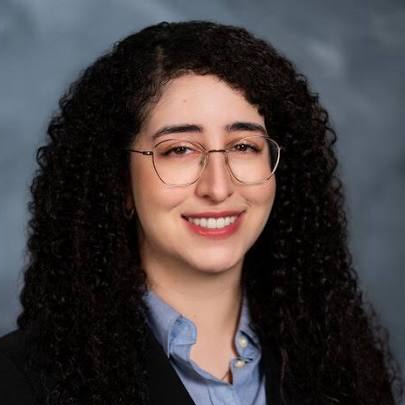
Marina K. Ibraheim
Marina K. Ibraheim, MD, is a dermatologist and dermatopathology fellow at UCSF who contributes to DermSurgery Digest's "At the Microscope" dermatopathology podcast.
2
APPEARANCES
1
PODCASTS
Oct 16, 2026


Ashley ElsensohnHOST
Um, so today, again, we're gonna work through the pathology, the terminology, and, um, kind of that tricky scenario of what exactly a basosquamous cell carcinoma is, and what we should be looking for when we encounter one of these tumors on our Mohs slides.

Marina K. IbraheimGUEST
from the Journal of the American Academy of Dermatology, published in two thousand and nine.
Marina K. IbraheimGUEST
Initial definitions for this tumor suggested that it served the spectrum between basal cell carcinoma or BCC and squamous cell carcinoma or SCC.
Marina K. IbraheimGUEST
Though with time, this term came to refer to a very particular type of tumor.

Marina K. IbraheimGUEST
I'll be reviewing a clinical and biological review of keratoacanthoma by Tissek et al.
Marina K. IbraheimGUEST
from the British Journal of Dermatology, published in 2021. keratoacanthoma or KA, and squamous cell carcinoma or SCC, often are difficult to distinguish from each other clinically and microscopically.
Marina K. IbraheimGUEST
Distinguishing between these two entities is of importance as their biological behaviors are dissimilar.
Marina K. IbraheimGUEST
SCC, which comprises up to 50% of all cutaneous malignancies, is associated with UV exposure, immunosuppression, HPV infection, long-standing wounds, and immunotherapy exposure.
Marina K. IbraheimGUEST
SCC metastasizes in 4-6% of patients, but if high-risk sites are involved like the ear or the lip, the rate may leap up to as high as 30%.