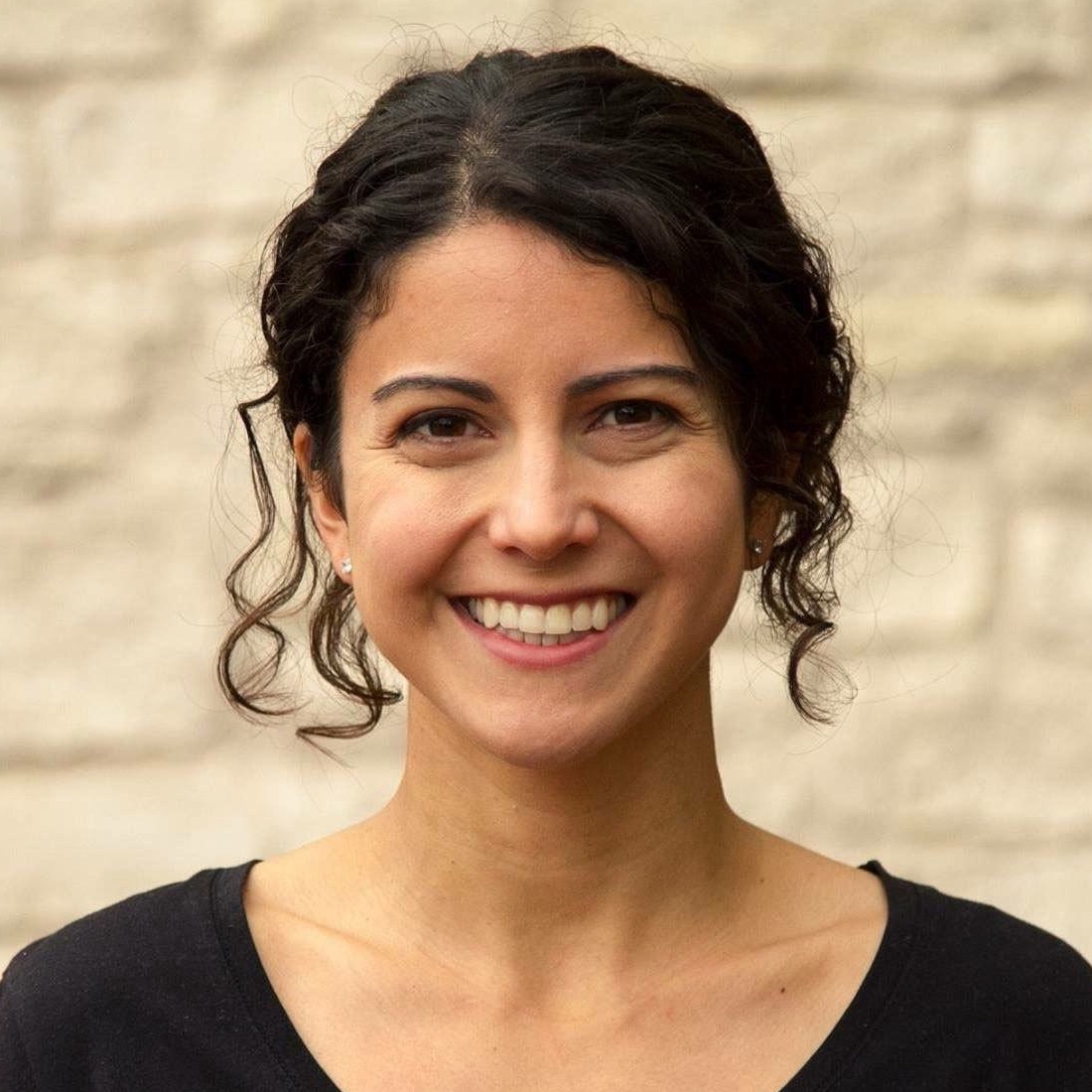
Maria Gallucci
Award-winning Denver-area REALTOR® at Compass, founder of Uptown Realty Group/Gallucci Homes, and bestselling author of "Raised in Silence" about growing up as a CODA (Child of Deaf Adults).
7
APPEARANCES
7
PODCASTS
Oct 2, 2026


Maria GallucciGUEST
I think, um, for me growing up, because we were always stared at, and so I think that's where I would like to minim- or I try to do that.
Maria GallucciGUEST
Even now I get very un- uncomfortable when, like, people stare or whatever because that's how it was as a, as a child because people are actually looking at you because you're signing, which is a completely different, like, language.
Maria GallucciGUEST
And so, um, and so for me, I feel like I did f- feel bad that we, that we, w- we could hear, and I think that's where my empathy c- comes from because I never want anybody to feel le- less than ever.
Maria GallucciGUEST
And so I felt like so- sometimes my parents may have felt like that because they did have, um, a hearing, like, a h- hearing loss, and so, and, and we, we can hear.
Maria GallucciGUEST
And so for me, it, it made me feel, like, guilty or bad that we had our hearing and they didn't, and so it's just a different, like, perspective of it.
Maria GallucciGUEST
But it's not that they're losing anything because they're gaining, and they...
Michael CoxenHOST
I mean, s- so is there anything, like, you believed about your parents as a child that maybe you see completely differently now as an adult?


Maria GallucciGUEST
But if we all, like I was saying, just try, then, I mean, we could all try together, I think.


Maria GallucciGUEST
Yeah, so I was just in the car going with them to what I thought was just a real estate closing.
Maria GallucciGUEST
And you can tell my parents, of course, we can all read, but it's different when something's actually explained to you in your language.


Jeremy ShapiroHOST
Tell us about how that shaped your approach to communications and some of these high stakes negotiations as you're representing your buyers and your sellers.
Maria GallucciGUEST
So for me, it was more than just words because I'm constantly watching body language, expressions, and just the way that the deaf and hard of hearing community, they communicate basically.
Jeremy ShapiroHOST
Now, when you became in this unique position of not just finding a really beautiful and wonderful and rewarding niche, but also being in a place of like a trusted advisor for the community, did that end up in any way, like sort of boxing you in or limiting some of your growth by being so dialed into your niche?


Maria GallucciGUEST
so that is the cover and that is actually my son designed that and the publishing house said that they a lot a lot of authors always submit their own covers and they never accept them because they want to design it themselves and mine was the first one that they've ever accepted and that is actually my son on the cover as well so it says death so this is how you say death from the ear to the mouth and the rose covering the death side is a reminder that hearing hearing one way experience or like you'll hear what one way to experience the world and when one sense is limited like being deaf or hard of hearing the others become stronger and so that allows people to connect communicate and and navigate in meaningful ways so that was the rose and then the color on the deaf side on the the rose side is the vibrant colors that represents the richness of the Deaf culture, connection, community, and the beauty of the world that is overlooked.
Maria GallucciGUEST
And then the Eyes Hidden, it covers, it symbolizes that you can't identify somebody's story just by looking at them.
Maria GallucciGUEST
And so that could be Deaf hard of hearing, LGBTQ+, or living with a disability or carrying experiences that aren't visible.
Maria GallucciGUEST
And then the mostly black and white, the black and white design reflects how many people see the world through a limited view and lens when it comes to inclusion and belonging.
Maria GallucciGUEST
And so the color breaking through represents what become possible when we just choose curiosity and understanding and connecting over assumptions.
43 MINS LATER

Maria GallucciGUEST
Traditional steelmaking is very polluting primarily because it uses coal in its furnaces, lots of coal at very high temperatures.
Maria GallucciGUEST
In terms of greenhouse gas emissions, steelmaking accounts for about 9% of all emissions globally.
Maria GallucciGUEST
Usually if there's a steel mill in a state, it's one of the biggest, if not the biggest sources of air pollution.
Maria GallucciGUEST
What Hyundai is proposing to do, initially it will use natural gas in its iron making furnace and electricity in sort of the second steel making furnace.
Bob PavlovichHOST
Maria, what happens next? When will we know if this plant is really living up to the environmental goals it's setting?


Joe GoldbergHOST
And I'm just so interested in knowing what are the bridge techniques to communicate between two worlds? And also, how are you able to communicate that in a book, a one-dimensional book?
Maria GallucciGUEST
I think that it bridges for me, like at a young age, I still remember that I was the bridge between my parents with the doctor's appointment, the teachers and everyday conversation.
Maria GallucciGUEST
And at the at the time, I didn't really have like words for it, but going through the process and seeing that.
Maria GallucciGUEST
So for me, I explain the stories within the book, just explaining how you can be more inclusive.
6 MINS LATER

Al WarrenHOST
So in essence, what do you hope people get out of the book? You know, when they read it and stuff, what are you hoping that they achieve from this?