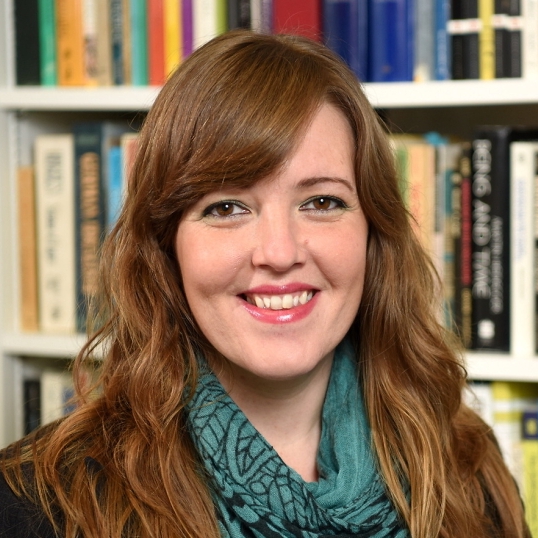
Maria Balcells
Associate Professor of Philosophy at Bucknell University specializing in philosophy of time, metaphysics, and philosophy of science.
1
APPEARANCES
1
PODCASTS
Sep 19, 2026


Maria BalcellsGUEST
thinking about manifest versus scientific image sidesteps the Kantian noumena versus phenomena issue because even science is couched in our human concepts, right? And so I don't see, I think it's useful to keep them separate in some ways.
Maria BalcellsGUEST
and see how the one may answer the common person's regular phenomenology, but that's going to, over time, be infected in many ways by the scientific dialogue as science becomes more widespread and part of the common knowledge, right? So you brought up two kinds of experiences, which I think it's important to separate, the idea of the direction of time or the asymmetry between past and future, and then the passage of time.
Maria BalcellsGUEST
And I agree that the idea of the passage of time as an experience is a very elusive thing.
Maria BalcellsGUEST
And I think a lot of it comes from taking, say, a scientific model perhaps even inherited from Newton's idea of absolute time as this thing that itself kind of unfolds.
1 HR LATER
Leila DevachiGUEST
Do you want to start with the first question? I think you should start with the most recent