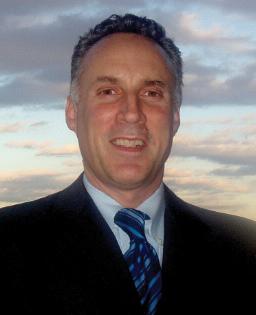
Marc Chandler
Writer
7
APPEARANCES
4
PODCASTS
Nov 14, 2026


Marc ChandlerGUEST
You know, before I got involved in the markets in graduate school, I studied American history.
Marc ChandlerGUEST
And my master thesis was on Frederick Douglass, who, as you know, was a slave who escapes from slavery into the North, and he becomes an abolitionist.
Marc ChandlerGUEST
He took that abolitionist, that sort of religious call for virtue, if you will, and turned it into a political process.
16 MINS LATER


Cory FleckHOST
Mark, where do you think the Fed does stand, though? What's your prediction here? Are we going to get a hike in December? And is there any chance that the Fed could do nothing next year or even completely switch course and start cutting rates?
Marc ChandlerGUEST
Yeah, I think after, you know, we had such a surprisingly good U.S. jobs report today on not only did we create 165,000 jobs, more than twice what, say, the Bloomberg median forecast was, unemployment rate actually fell.
Marc ChandlerGUEST
And so I think that unless there's some other big shock between now and a month from now, that the Federal Reserve is going to raise interest rates.
Marc ChandlerGUEST
And to me, what that partly means is that Next week's CPI doesn't really matter so much.
Marc ChandlerGUEST
To me, the key phrase that might be capturing some of what Chairman Warsh is bringing to the table is the accumulation of information.
Marc ChandlerGUEST
That phrase means that the Fed is data dependent, but not data point dependent.
Marc ChandlerGUEST
And so I think after the strong jobs report that the Federal Reserve cannot but help to hike interest rates in December.
Cory FleckHOST
Do you see that changing now that Trump might not be able to take such a hard stance with everybody?
Cory FleckHOST
So how do we need to take it away? It seems like we're a long way off of rate cuts rather than the world we're in right now of rate hikes.
Marc ChandlerGUEST
I don't think there's any major central bank talking about cutting interest rates.
Marc ChandlerGUEST
And there I'd say that, at least for the Federal Reserve, what we've seen happening is that the market has really scaled back a little bit how aggressive it was.

speaker_3NARRATOR
Hmm.
Marc ChandlerGUEST
And this, so you can see what's happening, different location, different church, different moral values, beginning of really working class neighborhoods.
Marc ChandlerGUEST
And it comes from, so even then we had the surplus in the agricultural sector.
Marc ChandlerGUEST
And now what I think what Charles Conan did was he found that not only had a surplus in the food stuffs, factory goods, but capital itself was in surplus.
Marc ChandlerGUEST
And that's what I really spent a lot of time in the book doing, is looking at that surplus of capital.
Marc ChandlerGUEST
Because it's one of those things, I think, where you can tell people on Wall Street that there's too much of anything, but not too much money.
19 MINS LATER
speaker_3NARRATOR
Yeah.
Cory FleckHOST
So do you have any insights on who is in the bond market holding these auctions up and keeping, let's say, rates from just screaming up to like 6%?
Marc ChandlerGUEST
It's a good question, like who's buying? But we did see good buying, as Shad had mentioned, at this week's coupon sales by the U.S.
Marc ChandlerGUEST
It was indirect bidders, non-bank, non-U.S. banks, non-primary dealers buying those bonds.
Marc ChandlerGUEST
We know that central banks, building reserves have not been big buyers of treasuries.
9 MINS LATER


HarryHOST
Yeah, Marc, what's your input on the, what we'd like to see out of Japan?
Marc ChandlerGUEST
Well, I, I... what I see happening is really since the intervention, uh, back in late July, that the odds of a September rate hike in Japan have increased.
Marc ChandlerGUEST
So for example, uh, on the thirty-first, at the end of July, the swaps market was pricing at about 10 basis points of a hike.
Marc ChandlerGUEST
But in my work, I find that as much as I understand the logic, Japan has one percent interest rate.
Marc ChandlerGUEST
Uh, most of the rest of the world, leaving aside Switzerland, has higher interest rates.
7 MINS LATER
HarryHOST
What are your views in, in the fifty-five years, um, since we've, you know, um, we disbanded with, uh, Bretton Woods and, um, uh, if you can sum it up within a couple of minutes, how the world's changed, the financial world's, uh, changed to the better or, or detriment since, uh, since the, uh, the announcement.
Marc ChandlerGUEST
I think that the criticism that some people had that he would be some kind of puppet for the Trump administration, he repeatedly talked about and generally seemed committed to price stability.
Marc ChandlerGUEST
And in the current environment, price stability, which he acknowledged we've missed for five years, he's committed to that.
Marc ChandlerGUEST
And so that helped cast his to frame his comments in a more hawkish direction, even though he really played down the use of forward guidance.
Marc ChandlerGUEST
And this forward guidance has come often from the Federal Reserve Statement, which, as you mentioned, was rather terse, but it did move to neutrality, which is why several Fed officials had dissented.
Cory FleckHOST
But Now, if we have a new era, as you mentioned, with Warsh, do you think that means kind of shifting from what was helicopter money, Ben, and cargo plane, Jay, with the money to more of a tightening cycle overall?