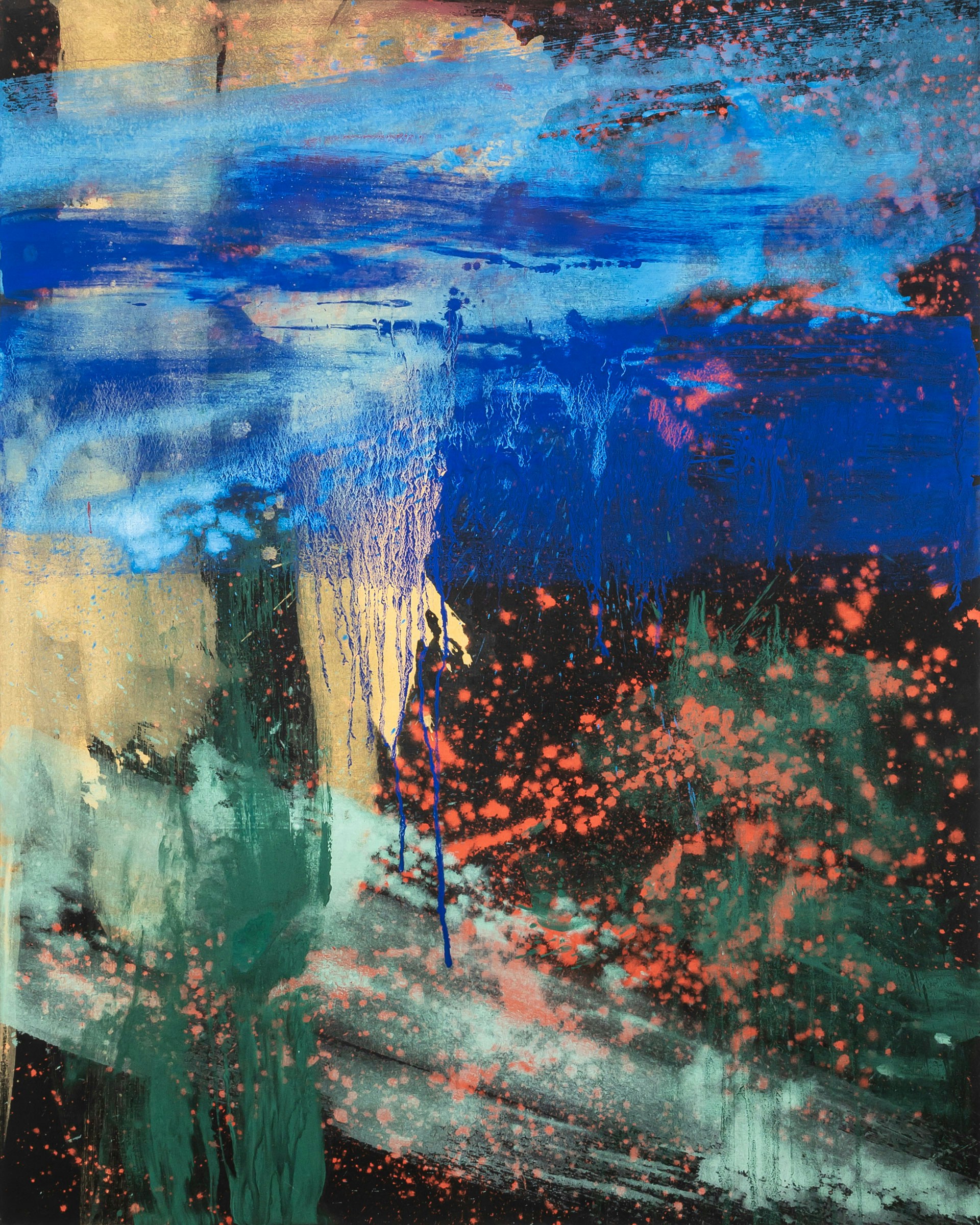
Makoto Fujimura
American artist
4
APPEARANCES
4
PODCASTS
Sep 14, 2026

JontyHOST
I wonder if you wanted to talk a little bit about the position of an artist in spaces that are so adversarial as they are today, particularly around issues of justice.

Makoto FujimuraGUEST
And, you know, this is, this came out of years of experiencing culture wars in America.
Makoto FujimuraGUEST
And first, I want to kind of peel back and talk about resistance as an artist.
Makoto FujimuraGUEST
And it's a word that we use have a framework, maybe an assumption of what that is.
Makoto FujimuraGUEST
But for an artist, you know, we use this thing called resist, which is a mask that you put on a canvas or paper which creates a negative space.
25 MINS LATER
JontyHOST
How might a society look if we made it just, and maybe even through resistance in the artistic sense? How would it look in a kintsugi? So what you're talking

Brian BeattyNARRATOR
Um, so that's so powerful.

Mako FujimuraGUEST
And, uh, it, it flows out of this venerable, uh, tradition of tea, uh, tea ceremony of Sen no Rikyū in particular, who, um, in sixteenth century Japan, during a, uh, feudal war time, uh, established this, uh, way, path of, uh, peacemaking through, uh, the very heightened, uh, ritual of, of tea, serving tea, uh, to the very powerful.
Mako FujimuraGUEST
And out of that aesthetic came out this notion that something that has been broken, something that is rusting away or worn, uh, thin are more beautiful because they are, uh, have gone through this journey.
Mako FujimuraGUEST
And, uh, and so when, uh, teaware inevitably breaks in a earthquake-prone co- ne- uh, Japan, um, the family of tea masters will often keep the fragments for several generations, uh, before they give it to a Japan lacquer master.
Mako FujimuraGUEST
And Japan lacquer is, uh, made from, uh, urushi, uh, which is from poison sumac.
18 MINS LATER


Makoto FujimuraGUEST
And if you were to ask people in the art world, artists and gallery folks and museum curators, what beauty is, you're going to get also 100 different answers.
Makoto FujimuraGUEST
And in the 90s, I remember when I had my first show in New York, and I was told, explicitly by many people, not to use the word beauty.
Makoto FujimuraGUEST
They felt that there was injustice going on in some philosophical level, but also in terms of what beauty has become cosmetic, superficial, imperialistic kind of tone.
Makoto FujimuraGUEST
And so when I speak about this in this book and other books, that when I began my career, it was important to define From the perspective of Japanese tradition, which has a different Eastern way of pursuing beauty, has a little bit of a different pathway, especially in Japan.
38 MINS LATER

Cherie HarderHOST
One is from David Miller, who asks, Mako, how do you verbally and visually in your paintings translate your work, which is Christian and infused with Christian motivation and worldview, to a secular, non-religious people? And then Alexandra Davidson asks, which of your works has inspired the most conversation or even collaboration across disciplines in the justice, beauty, and new creation participation? And if there is one, why you think that has been the case?


Josh CarrollHOST
So how is God bringing you together in that tov aspect of redemption and relationship?
Makoto FujimuraGUEST
Yeah, and it, um, it is, it is seemingly from the outside, right? I'm an artist.
Makoto FujimuraGUEST
And then because of that, she was perfectly, uh, prepared to do this really hard work of bringing justice into, um, this horrific, um, issue of human trafficking and so forth.
Makoto FujimuraGUEST
Um, and the work that we have, we feel we have both been called to do, which is to advocate for tov, [laughs] you know? Um, I am doing it as an artist by creating, uh, art and then, um, perhaps inviting, um, people into that conversation, which in contemporary art world and in the church, it's, it is categorized, fragmented into, into these spheres, uh, that, um, you know, people don't necessarily connect these two, uh, streams.
Makoto FujimuraGUEST
But for us, it was k- a very natural way that we related to each other to understand what we have been doing.
Makoto FujimuraGUEST
And it just turns out that, um, that in both of our lives, I was seeking justice through my work, and Hyejin was seeking beauty through her work.
23 MINS LATER