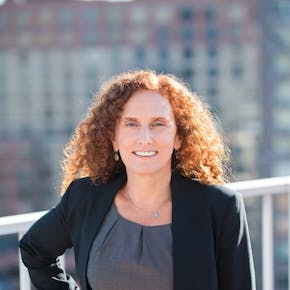
Maia Szalavitz
American reporter and author
5
APPEARANCES
5
PODCASTS
Jul 30, 2026


Maia SzalavitzGUEST
Okay, so Synanon was a cult that sold itself to the American public as a treatment for heroin addiction.
Maia SzalavitzGUEST
And when it was started in the '50s, it was believed that there was no cure for heroin addiction, and nobody ever got better.
Maia SzalavitzGUEST
The guy who founded Synanon, Chuck Dederich, he didn't think AA was tough enough on people, so he basically twisted the 12 steps into, you know, the first step is about you're powerless, right? So we will make you powerless.
20 MINS LATER
29:56
And so if your kid really is having problems, I mean, what should parents do?


Sandeep KaushikHOST
Where does this movement, where and why does this movement originate and who are its initial experts?
Maia SzalavitzGUEST
And I sort of start because I had to start somewhere with the Dutch who a guy named Nico Adrians, who was an injection drug user himself.
Maia SzalavitzGUEST
And there was a very deadly, unusually deadly hepatitis B outbreak in the city of Rotterdam in the early 80s.
Maia SzalavitzGUEST
And he, having injected drugs himself, knew that people prefer to use clean needles.
Maia SzalavitzGUEST
You know, there was a myth I had to fight constantly in the 80s that like, oh, addicts are these horrible, scummy people, but suddenly it's peace and love when it comes to needles.
15 MINS LATER

David HydeHOST
You know, how many kids are going to learn how to read in that situation? So I'm kind of wondering about, is this the limits of the analogy in some ways? Is there any role for coercion when it comes to dealing with both things like school as well as drugs?


Maia SzalavitzGUEST
So I think, you know, I called my book Unbroken Brain because we have this idea that addiction breaks your brain, the drugs hijack your brain.
Maia SzalavitzGUEST
There's all this, like, stuff that is wrong with you, and I am not saying that addiction is not a problem.
Maia SzalavitzGUEST
What I am saying is that what seems to happen in the brain during addiction that causes the actual addiction is that you fall in love with a drug or an activity rather than a person, and there's a specific set of changes that occur in your brain when you fall in love or when you have a kid, and those changes are meant to focus your priorities on either the partner or the child or both, depending on what's going on.
Maia SzalavitzGUEST
Like, when you are parenting or, um, you know, uh, being in a relationship, you have to persist despite negative consequences, right? And addiction's described as, it's defined as compulsive behavior despite negative consequences.
Maia SzalavitzGUEST
But, you know, if you're gonna be in love or you're gonna have a kid, you're gonna deal with all kinds of crap all the time.

2:44

What actually happens in your brain when you're addicted to a subt- substance, and what happens when you withdraw from it?
Maia SzalavitzGUEST
So I think it's important first to like get some definitions down because a lot of people are kind of confused about what addiction is.
Maia SzalavitzGUEST
And the most commonly accepted definition is that addiction is compulsive drug use or other behavior that occurs despite negative consequences and that continues despite negative consequences.
Maia SzalavitzGUEST
So the, um, withdrawal part, like a lot of people want to sort of emphasize that, but you can have withdrawal without addiction and addiction without withdrawal.
Maia SzalavitzGUEST
Um, so in the past, addiction was sort of defined as like sort of physically needing a substance to avoid withdrawal, and what that meant actually was that crack was not addictive because basically, when you quit, like alcohol or benzodiazepines or opioids, you get really physically ill.
14 MINS LATER

Tiffany ReeseHOST
I had the honor and privilege to interview advocate and expert Maia Szalavitz, author of Help at Any Cost.How the Troubled Teen Industry Cons Parents and Hurts Kids, whose research documents an even broader picture of the devastating realities of the systemically abusive so-called troubled teen industry.
Maia SzalavitzGUEST
I am Maia Szalavitz, and I got interested in the troubled teen industry because I had an addiction myself in my late teens and early 20s.
Maia SzalavitzGUEST
I avoided treatment because I had read that it was about attacking and breaking and humiliating you.
Maia SzalavitzGUEST
Frankly, I was terrified of people and had difficulty socializing, and that was why I used drugs.
Maia SzalavitzGUEST
So the idea that treatment was going to be sort of relentlessly social and attacking, I was just like, "Well, that's just gonna make me use more." I eventually did get help and avoided most of that confrontational and humiliating stuff.
Maia SzalavitzGUEST
During my active drug use, I was reading the New York Times Magazine and I saw a profile of this place that was probably one of the things that made me scared to get treatment because it was lionizing people who were screaming at children, and it was residential in the sense that people didn't live in their own home.
Maia SzalavitzGUEST
They lived in the home of another parent in the program, and they were often locked into their bedroom at night.
8 MINS LATER
Glad RagsSOUNDBITE_SPEAKER
What are some of the long-term side effects that survivors have shared with you?