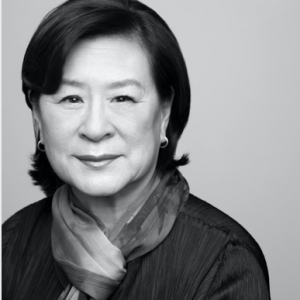
Mae Ngai
American historian
5
APPEARANCES
4
PODCASTS
Sep 24, 2026


Amy GoodmanHOST
As we go into, uh, this 250th anniversary of the birth of the United States, can you talk about that history? What form the exclusion has taken? Um, are, are there moments where, uh, xenophobia recedes and where it, like this moment today, um, uh, s- to say the least, rears its ugly head?

Mae NgaiGUEST
You know, all the discussion we're having right now about the 14th Amendment is really important for us to remember because it is, uh, the importance of it is that it broke the tie between citizenship and race, and it laid the possibility, indeed the principle, that America is a multiracial democracy, not just for white people, not just for whites and Blacks, but for all people, and that is the legacy of the Civil War and the 14th Amendment.
Mae NgaiGUEST
Now, what happened, though, after the f- ratification of the 14th Amendment is that there were moves, uh, in the South to retake the South for white supremacy, and this was by and large supported by the Supreme Court in many decisions that eviscerated the meaning of citizenship for the freed Black people.
Mae NgaiGUEST
And this, as we know, culminated in 1896 with the Plessy decision, which created the legal fiction of separate but equal and enshrined segregation into the Constitution.
Mae NgaiGUEST
Now, Wong Kim Ark, the decision that upholds birthright citizenship, is just two years after, three years after Plessy.
Mae NgaiGUEST
And as the Supreme Court eviscerated the 14th Amendment for Black people, it also upheld Chinese exclusion laws, laws that refused naturalization to Chinese people, uh, laws that said Chinese could be deported without any due process whatsoever.
Amy GoodmanHOST
As we wrap up, Professor Ngai, the significance of, uh, who, uh, Norman Wong's grandfather was, and as we move into July 4th, as everyone is celebrating history, what that history is all about.
Amy GoodmanHOST
As we go into, uh, this 250th anniversary of the birth of the United States, can you talk about that history? What form the exclusion has taken? Um, are, are there moments where, uh, xenophobia recedes and where it, like this moment today, um, uh, s- to say the least, rears its ugly head?
Mae NgaiGUEST
You know, all the discussion we're having right now about the 14th Amendment is really important for us to remember, because it is, uh ...
Mae NgaiGUEST
the importance of it is that it broke the tie between citizenship and race, and it laid the possibility, indeed the principle, that America is a multiracial democracy, not just for white people, not just for whites and Blacks, but for all people, and that is the legacy of the Civil War and the 14th Amendment.
Mae NgaiGUEST
Now, what happened, though, after the ratification of the 14th Amendment is that there were moves, uh, in the South to retake the South for white supremacy, and this was by and large supported by the Supreme Court in many decisions that eviscerated the meaning of citizenship for the freed Black people.
Mae NgaiGUEST
And this, as we know, culminated in 1896 with the Plessy decision, which created the legal fiction of separate but equal and enshrined segregation into the Constitution.
Mae NgaiGUEST
Now, Wong Kim Ark, the decision that upholds birthright citizenship, is just two years after, three years after Plessy.
Amy GoodmanHOST
As we wrap up, Professor Ngai, the significance of, uh, who, uh, Norman Wong's grandfather was, and as we move into July 4th, as everyone is celebrating history, what that history is all about.


Ian MastersHOST
But that's not necessarily an aberration because this general seemed to take pleasure in rounding up what he called wetbacks and sending them back to perish in the deserts of northern Mexico.
Mae NgaiGUEST
President Trump is very fond of citing General Swing for his so-called Operation Wetback, which summarily deported over a million mostly Mexican farm workers in the border area in the mid 1950s.
Mae NgaiGUEST
Now, what they never tell you is that that was not, well, it was cruel, of course, it was cruel and heartless and done for political reasons, just like Trump's interests lie in the same.
Mae NgaiGUEST
But what he doesn't tell you is that the campaign only lasted for about a year and they could not sustain it.
Mae NgaiGUEST
And after about a year, the number of removals went back down and it kept going down because the deal that they made with the growers was that they would let so-called wetbacks or so-called illegal migrants come in and they would legalize them to be legal farm workers.
8 MINS LATER
Ian MastersHOST
Still, I mean, do you think that the country's turning away from the kind of celebration of hatred that accompanied Trump and MAGA? Is it possible that they've just gone too far, killing people in the streets of Minneapolis?

Amy GoodmanHOST
So how does this happen? How does it start? Um, if, uh, I were a naturalized citizen w- I get a, um, a notice that I am going to lose my citizenship?
Mae NgaiGUEST
Um, DHS or Citizen, uh, Immigration Services cannot unilaterally revoke your citizenship.
Mae NgaiGUEST
They have to go to a U.S. attorney.... uh, and they, the U.S. Attorney's Office has to file a la- a suit, a civil suit in federal court, and it has to go before a judge.
Mae NgaiGUEST
And let me say, Amy, the grounds to denaturalize a citizen are very, very narrow, very narrow indeed.
7 MINS LATER
Amy GoodmanHOST
What exactly is the Diversity Visa Program, what's called a Green Card Program, and what would it mean?