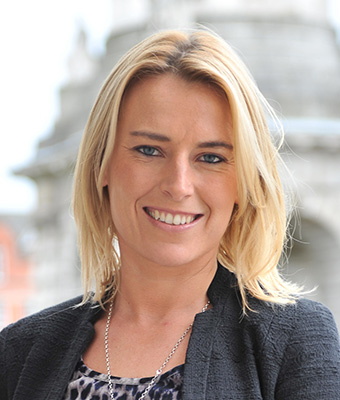
Lynn Ruane
Irish Politician
3
APPEARANCES
3
PODCASTS
Sep 14, 2026


Lynn RuaneGUEST
Yeah, I suppose, God, how you paint that picture is very different depending on what age you are when you're looking at it.
Lynn RuaneGUEST
But I suppose growing up in the 80s in Talla, I had quite a nice, stable household in terms of, you know, two parents, working class, came from poverty and we had enough to get by.
Lynn RuaneGUEST
But their experience as grown up, they had very little school, no school when it came to my dad, really.
Lynn RuaneGUEST
My dad grew up in a tenement in Ushers Quay in Dublin's inner city and my ma grew up ten of them, ten siblings, in a small house in Finglas.
Lynn RuaneGUEST
But real work or family, even though there was still hardship, they kind of... had some sense of what they needed to do to kind of make sure that we had some level of predictability within the house.
19 MINS LATER


Tony GrovesHOST
Can we talk a little bit about that kind of trauma-informed lens? Because it's become a cliche where politicians like to say it, but they don't really want to either resource or talk about what it actually means.
Lynn RuaneGUEST
But also understanding it like trauma informed can probably maybe sometimes, maybe it can sound a little bit soft or something like it's a soft, fluffy thing.
Lynn RuaneGUEST
It means that you're working with people who have carried huge pain and that pain can manifest in a way that may even make you uncomfortable sometimes.
Lynn RuaneGUEST
sometimes behaviors may make you uncomfortable and we need to remember that people are people they're not behaviors and if we can see past behaviors that may be a manifestation of trauma of adverse childhood experiences of experiences of violence through either systemic violence or violence within the community the home the etc and you have to be able to see past the behavior and see the person And, you know, I know I probably don't get seen very much as somebody that's very Christian, but I look a lot at saints who practice radical compassion and radical forgiveness, and that's why she was known as a saint.
Lynn RuaneGUEST
And I think anybody who wants to work in services with people need to be able to expand their empathy and compassion to people that their behaviours also make them uncomfortable because we can, with the right support, interrupt what trauma can look like in families.
Lynn RuaneGUEST
Trauma can be very quiet, it can be the person sitting in their room and never leaving it because they feel isolated or paranoid, or trauma can manifest its way in a very aggressive manner, in rages, in having meltdowns and having all of those things.
Tony GrovesHOST
How have you felt responding, the responses being from the state and the policing authorities?


Lynne RuaneGUEST
So we'll look for a national family, independent family advocacy service because we know that addiction ripples right out across families and whole communities.
Lynne RuaneGUEST
There's also some really strong recommendations in there on what is a program in the prisons, which is called the CAR program.
Lynne RuaneGUEST
We know that up to 75% of people within prison report having some form of issue with substance use.
8 MINS LATER