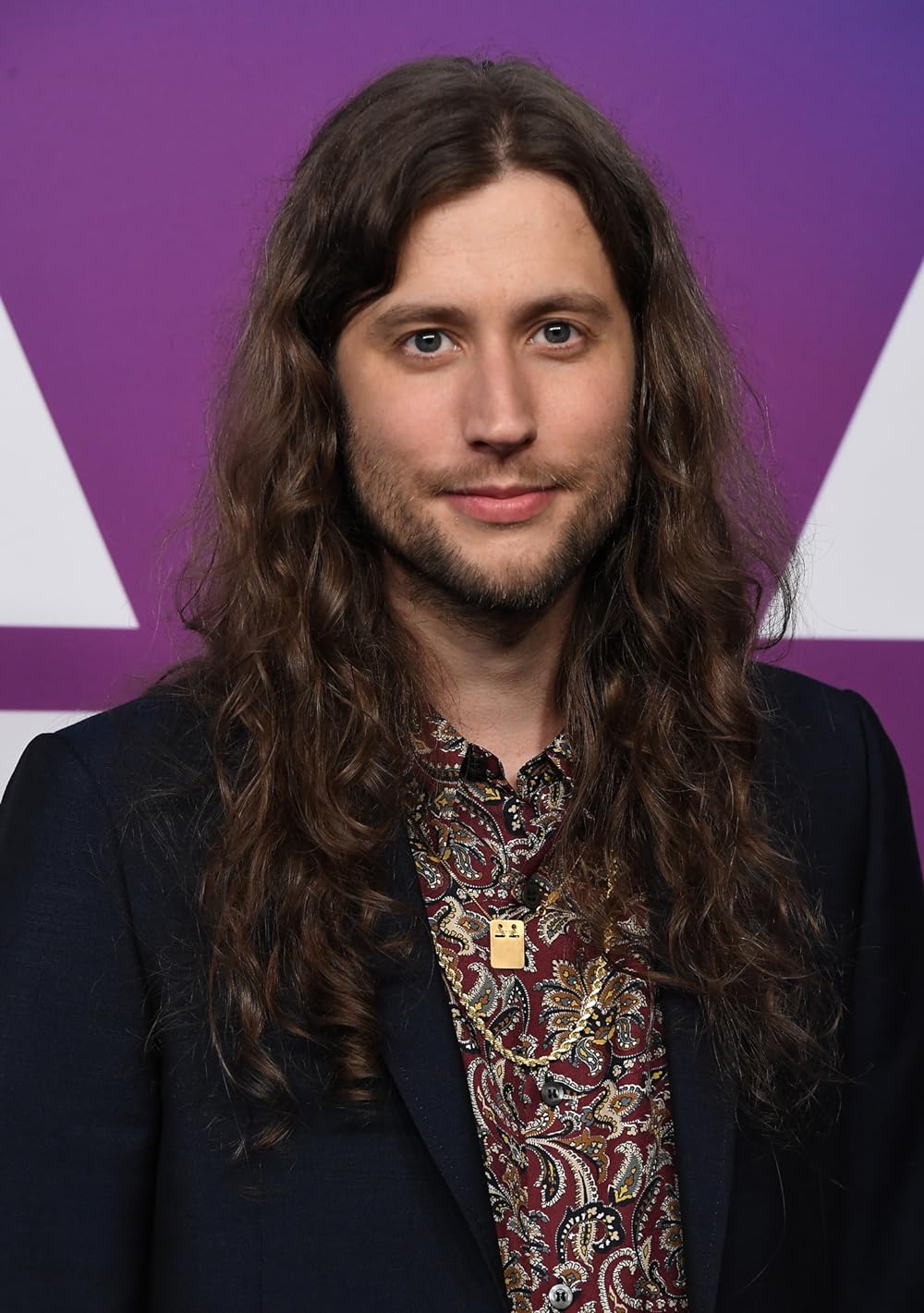
Ludwig Göransson
Swedish musician and composer
8
APPEARANCES
8
PODCASTS
Oct 11, 2026


Lane FlorsheimHOST
Can you tell me about some of them and the research that went into making and using them?

Ludwig GöranssonGUEST
Um, you know, I w- I would say it's, it was one of the things that Chris Nolan was, was very interested in.
Ludwig GöranssonGUEST
What we know from that era, uh, you know, the, the Bronze Age, is very limited, but, but there's some paintings of, of these ancient instruments like the, the aulos.
Ludwig GöranssonGUEST
And, and also in, in the actual Odyssey You know, the, the, the, the, the s- the, the lyre is, is part of the Odyssey as well.
Ludwig GöranssonGUEST
The, the pluck of the, the pluck of the bow sounds like the pluck of the, of the lyre.
Lane FlorsheimHOST
Are you journaling and writing things down, or are you just, you know, kind of taking time to contemplate or [laughs]...

Ludwig GöranssonGUEST
This is our third movie together, and everyone, uh, you know, is completely different from the one we did before.
Ludwig GöranssonGUEST
And on this one, he want, you know, he obviously wanted to give the audiences something they never experienced before, and that was kind of his first words in terms of when it came to me, like, not using the traditional orchestra that we heard in these type of movies before.
Ludwig GöranssonGUEST
And, you know, go on your own journey, finding musicians, travel around the world to, uh, you know, different, distance places and find, uh, musicians and artists to collaborate with, and that's kind of what I did.
Ludwig GöranssonGUEST
Through research and through also just kind of closing myself off for, for quite some time and, and just going to the studio and, and just having fun, which is always how I like to start projects.
Ludwig GöranssonGUEST
And I, I just, in the beginning, I just surrounded myself with, with, uh, bronze instruments, you know, like bronze gongs and cymbals and, and scrap metals, and try to write music, uh, unconventional music, uh, on these instruments.
Ludwig GöranssonGUEST
Um, so that's how it started, and then that grow into, you know, these bigger, larger compositions.


Sarah WoloskiHOST
Uh, what was different about, uh, coming from the TV space into, you know, telling the story as a film?
Ludwig GöranssonGUEST
Um, well, I feel like the way that I always thought about it, and Jon too, was, was we always kind of thought about it as a cinematic story.
Ludwig GöranssonGUEST
And the amount of time and love that, that we put in this eight years ago, which is kind of, kind of feels crazy to say it was eight years ago.
Ludwig GöranssonGUEST
Um, and so then going back to this universe now, eight years later, um, I just, you know, it was kind of like meeting, you know, one of my best friends again because I just love it so much.
Ludwig GöranssonGUEST
So being able to have all this time, you know, when you work on a feature and s- and with a movie like this, you have more time.
Sarah WoloskiHOST
Were there any specific, like, instruments or, uh, unconventional inspirations you were thinking about as you were working on this?

Ludwig GöranssonGUEST
So it was so nice to reunite with, with Jon and, and to, like, go back into this universe because I love this so, so much and love the music and the theme so much.
Ludwig GöranssonGUEST
And the time we spent on it, you know, in the beginning, like, was really, you know, it was for th- this film.
Ludwig GöranssonGUEST
No, I, you know, playing, playing, like, the recorder's still there, you know.

Devin CohenMODERATOR
Uh, what was different about, uh, coming from the TV space into, you know, telling the story as a film?
Ludwig GöranssonGUEST
Um, well, I feel like the way that I always thought about it, and Jon too, was, was we always kind of thought about it as a cinematic story.
Ludwig GöranssonGUEST
And the amount of time and love that, that we put in this eight years ago, which is kind of, kind of feels crazy to say it was eight years ago, um, and so then going back to this universe now eight years later, um, I just, you know, it was kind of like meeting, you know, one of my best friends again because I just love it so much.
Ludwig GöranssonGUEST
So being able to have all this time, you know, when you work on a feature and s- and with a movie like this, you have more time-
Ludwig GöranssonGUEST
time-You know, the scenes are longer, it's a bigger scope, bigger movie, you know.
Devin CohenMODERATOR
Were there any specific like instruments or, uh, unconventional inspirations you were thinking about as you were working on this?


Christopher NolanGUEST
And there's a neurosis to the sound in a way that I think fits the highly strung intellect and emotion of, of Robert Oppenheimer very well.
Ludwig GöranssonGUEST
Luckily for me, my wife, Serena, is a violinist, so I was excited about that fact, too, that this is something that we could collaborate on together.
Ludwig GöranssonGUEST
We were in here recording all these kind of different glissandos and different types of horror effects, stacking violins on top of violins and, and reversing it and just throwing ideas around.
Ludwig GöranssonGUEST
And then, and Serena had to leave in, like, 30 minutes, so I was like, "Okay, well, right before you go, like, let's just record this." I had this really simple melody that I just wanted to try, and it's, like, six notes.
Ludwig GöranssonGUEST
I had a baseline under it, and she just played it without any vibrato, kind of sounding very fragile.
Ludwig GöranssonGUEST
I sent that to Chris and, and immediately he was like, "That's the Oppie theme." [instrumental music]

Ludwig GöranssonGUEST
[instrumental music] So Chris called me one day, he's like, "Hey, can you write a 30-minute courtroom trial piece of music?" And I was like, "Okay." [laughs] Chris just had an idea of scoring that scene like an action movie, and I thought that was something very interesting.


Amy PoehlerHOST
Can I geek out with you for a second on three films: Fruitvale, um, Black Panther, and Sinners? When you think of those three films, what instrument comes up in your mind first for each?
Ludwig GöranssonGUEST
I was, like, R- I knew how much Lo- Ryan loved the guitar, you know? And, and I guess I never really thought about why he loves the guitar, and I never understood why he loves it until, like, we started working on Sinners.
Ludwig GöranssonGUEST
And I was like, I understand, like, okay, well, his uncle, you know, was a bla- a great blues, um, um...
Ludwig GöranssonGUEST
And obviously, in blues music, guitar is the, the, the main instrument, right? So, so Ryan kinda grew up listening to that music, and it's always been in, in his, in his, in his bones and in his mind.


6 MINS LATER