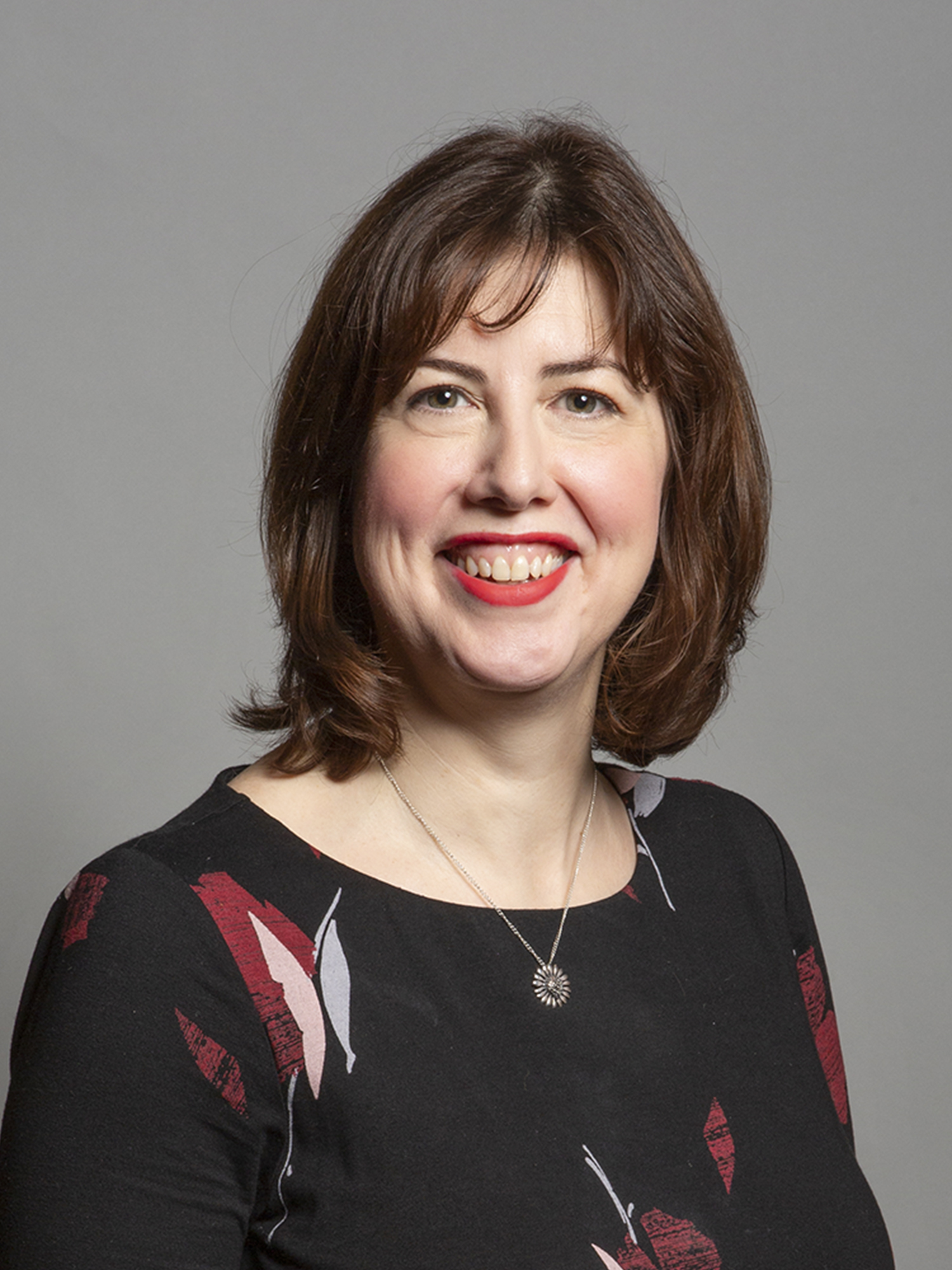
Lucy Powell
Secretary of State for Education of the United Kingdom
10
APPEARANCES
8
PODCASTS
Sep 4, 2026


Lucy PowellGUEST
Well, look, I mean, I think these were very serious film that I saw some very serious allegations arising out of it.
Lucy PowellGUEST
I think it's right that they've stood down because I think their position were untenable from what I saw from from the footage that we've seen.
Lucy PowellGUEST
It looks to me like a clear breach of electoral law in trying to foster a donation on behalf of somebody else through somebody else.
Lucy PowellGUEST
That in itself is a breach of electoral law, which is why we've written to the police about that.
Lucy PowellGUEST
And this is a pattern of behavior, really, isn't it? You know, this is the second time the police are already investigating a very similar case.
Lucy PowellGUEST
A new level one qualification that's a stepping stone, a foundational qualification in English and maths, which, um, I want to work with employers so that it's really got credibility with them, that they appreciate that a level one English and maths, uh, would give the-- a young person the foundational, um, understanding in numeracy and literacy that they need to go on to do something like a construction apprenticeship or a health and social care apprenticeship or, or many other, uh, pathways that at the moment are often closed to them without having that, what we call a pass or a good pass in GCSE English and maths.
Lucy PowellGUEST
It's obviously having a devastating effect on those individuals that not just their wellbeing, but their self-confidence, and that is not what an education system should be about.
Lucy PowellGUEST
It should be about giving young people the confidence and the passports to continue learning, to continue training, and to feel confident and valued in what they do.

Nick FerrariHOST
What, what are the difference in cultures that we're experiencing, do you imagine?


Matt ChorleyHOST
Now, under the plans you're talking about today, you actually want fewer people following in your footsteps or the Prime Minister's footsteps, fewer people going to university.
Lucy PowellGUEST
And look, I wanna be really clear that, you know, for ordinary working class kids or, you know, middle class or any, any, uh, class of, of kids, you know, going, going to university is, is, is a fantastic achievement and, and a, can be a real route to a, a life of being better off and a life of, of learning and all of those opportunities as well.
Lucy PowellGUEST
What we're talking about today is that because our... for a whole host of different reasons, how schools are measured, how they're accountable, you know, what's, what the curriculum is on offer, what exams are on offer, um, you know, the pathways and the experiences of people kind of in education, a whole range of i- reasons why the, the, the academic route, if you like, has been much more the focus of our education system, and it has left some behind in it.
Lucy PowellGUEST
That's why we've got over a million young people now not in education, uh, or training or employment.
Lucy PowellGUEST
And having that offer of s- the same quality, the same esteem, uh, you know, pathways straight into employment-


Trevor PhillipsHOST
What are you thinking of? We're in earthly paradise and you're getting rid of him.
Lucy PowellGUEST
And look, it's two years this weekend, isn't it, since that historic and seismic general election victory.
Lucy PowellGUEST
in the time since that election, lifting children out of poverty, as you say, bringing rail back into public ownership, giving people the right to sick pay on day one, increasing wages, stabilising the economy, getting waiting lists down in the NHS, a huge amount we can be proud of in that time.
8 MINS LATER
Trevor PhillipsHOST
Why would Mayor Burnham be wrong and Prime Minister Burnham be right about putting number 10 north in Manchester?


Matt FordeHOST
So why do you think Labour has lost support in the last two years? And, um, in terms of sort of where it's gone and, and why.
Lucy PowellGUEST
I mean, I think there are some changes that are happening in politics anyway, um, because of what I say.
Lucy PowellGUEST
And we saw, in the 2024 election, we saw, we saw a big fracturing on the kind of right of politics.
Lucy PowellGUEST
So Reform took big chunks out of the Tories after they'd been in power for a long time, and we benefited from that in the 2024 election, winning seats all over the country-Um, that we wouldn't normally expect to win because the right block, if you like, fractures and we sort of come through the middle.
Lucy PowellGUEST
And now we're seeing a fracturing on the kinda left block of politics, um, as well, and where, you know, the, the, maybe the parties of the right form who are now the dominant ones on the right are benefiting from, from that too.
43 MINS LATER
Matt FordeHOST
Given the rise in inequality, why isn't Labor talking more about tax rises, wealth taxes on millionaires and billionaires?


Lucy PowellGUEST
Well, look, I mean, I think the, the, the reasons for that decision and the, the reasons that I stand by because I, I, I accept collective responsibility in these things and collective decision-making.
Lucy PowellGUEST
The worry, the worry was not necessarily about this particular by-election, but the subsequent by-election that therefore would be required for the Greater Manchester Mayor.
Lucy PowellGUEST
And I think what we can all sort of take, uh, this weekend is that perhaps we don't want that many by-elections going forward because it is a challenging sort of time for us.
Lucy PowellGUEST
But, but what I would say is, look, let's, let's look at why Andy Burnham is, is particularly popular because he is particularly popular, um, here in Greater Manchester and, and across the, the North because I think people, uh, do see in him someone who is on their side, someone who is delivering, um, those Labour values and those Labour policies like more social housing and better buses, more job opportunities, um, uh, especially for young people.
Lucy PowellGUEST
And, um, and we have to, to draw on that, make use of Andy Burnham, but also draw on that and reflect on how we could do that better nationally and better as a government.
Lucy PowellGUEST
And, and I know from talking to Keir many, many times over recent weeks before this by-election, um, um, since that that is something he is very focused on, on doing, on how we can give a, a much clearer account of ourselves and be much clearer and define ourselves by whose side we're on and, and, and which vested interests we are taking on in order to, to deliver for ordinary people across the country.


Jon SopelHOST
So, the economy is not growing, taxpayers are paying more, and there is no attempt to cut down the- the kind of ballooning welfare bills either.
Lucy PowellGUEST
Well, th- the stagnant growth we've seen over, uh, the last, uh, 15 years, you know, that- that is gonna take a while to turn around.
Lucy PowellGUEST
But the OBR, you know, they make these forecasts and they usually have to end up revising them up as they have done, uh, for the short-term, uh, growth in their latest, uh, forecasts.
Lucy PowellGUEST
They- they haven't costed in, you know, lots of measures that we've already, uh, taken and that we are taking to increase, uh, growth.
Lucy PowellGUEST
I mean, under the Tories by the way, welfare spending ballooned at the same time that child poverty, uh, went up massively as well because, uh, they were constantly chasing in the welfare system that we had and the- the economy that we had, uh, in the past and that we're trying to change, we are spending a lot of money dealing with the- the symptoms of a broken economy and not its root causes.

speaker_8UNKNOWN
But you want, but you want Keir Starmer to change policies.
Lucy PowellGUEST
What I've been saying is I will make sure that the, the, the views of party members more broadly, you know, the communities that we're here to represent, that those broad voices in the Labor movement, which actually have always been heard at the top of the party, we've now got this sort of narrower and narrower group think, if you like, that's happening, and that's where wrong turns happen, and that's where mistakes happen.
Lucy PowellGUEST
We're at our best when we really represent that, those broader voices, and I think, uh, that's what I can bring to the table.
Lucy PowellGUEST
How is this gonna go down? How is this gonna speak to the story that we're trying to tell about the country and how we're trying to change it, and make sure that those political conversations always happen? Which, yeah, you know, if you want to talk about the Tony Blair, John Prescott era, Tony Blair also had a very plural cabinet for the whole time that he was prime minister.
Lucy PowellGUEST
He had Clare Short, Robin Cook, John Prescott always in his, in his cabinet apart from when they changed and sat-
6 MINS LATER
speaker_8UNKNOWN
And how do you pay for that? What, what, what are, where's, where do you think the-

Lucy PowellGUEST
But, look, I think we've got to accept, obviously, that immigration needs to be controlled.
Lucy PowellGUEST
People want to see a fair and controlled immigration system and that we can control our borders, who's in, who's out, how people are being dealt with when they are here, um, what we can cope with, what we can't cope with.
Lucy PowellGUEST
The fundamental reason that over the last 15, maybe 40 years, that people in this country have felt worse and worse off and that their lives have been more and more of a struggle, they've had less and less money in their pockets, is not because of immigration.
Lucy PowellGUEST
It's because we've fundamentally got problems in our economy and trickle-down economics hasn't worked.
Lucy PowellGUEST
And Nigel Farage is the author of trickle-down economics so he doesn't wanna have that conversation.
John HarrisHOST
I don't like the country we're becoming." And someone from the left will sort of pat them on the head and say, "I know you mean that, but what you really mean is you'd like your wages to go up and you'd like more housing." And they'll say, "Well, I'd like those things as well, but you are gonna have to deal with what I have to say about immigration." Isn't there a danger in what you're talking about, that you say, oh, this immigration talk is just on the surface, really, and we have to get what's under it? And actually, it's the, it's the immigration talk itself as much as anything that needs dealing with?

Lucy PowellGUEST
Well, I mean, look, I'm very much working class roots in that sense, you know, where my, my mum is the daughter of Irish immigrants, you know, my dad, uh, grew up in a, a, a, a broken household really, in a two up, two down with an outside toilet, and went to grammar school.
Lucy PowellGUEST
We didn't have an awful lot when we were growing up, but they are that journey, their life is that journey of social mobility.
17 MINS LATER

Nick RobinsonHOST
He says, "Few in Labour's ranks more accurately represent the dismissiveness and elitism towards concerns over multiculturalism that have turned off so many former Labour voters." He thinks, crudely, he thinks you don't get it.