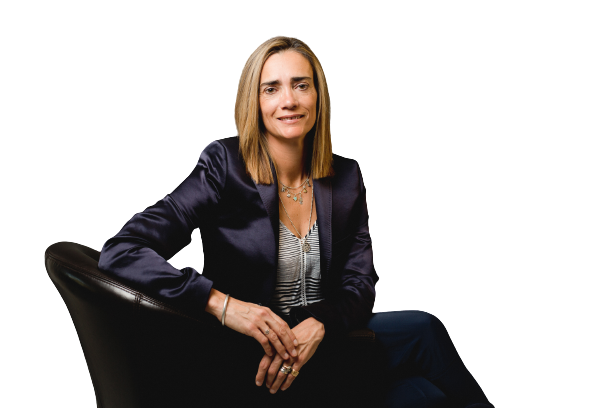
Lucy C. Hone
Researcher
8
APPEARANCES
8
PODCASTS
Aug 17, 2026

Lucy HoneGUEST
As a resilience researcher, I think this is the aspect of resilience that fascinates me most, is that when I'm running resilience training and we're running a workshop or a master class or something, what we're trying to do is to get people to focus all of their attention on the things that they can change and somehow accept the things they can't change.
Lucy HoneGUEST
And it's all about, you know, attention, focus, is it helping or harming you, the emotional agility, and the psychological flexibility.
Lucy HoneGUEST
But the really big challenge for all of us, the big philosophical, existential crisis that is at the core of humanity, is that we have no control over anything.
Lucy HoneGUEST
We do have control over some things, but we live in this world there where, you know, I can say goodbye to my daughter one Saturday morning and drop her off at the netball courts, and seven hours later, there's a policeman standing in front of me telling me she's dead.
8 MINS LATER

Dan HarrisHOST
Will I ever be happy again? G- Given what you've been through with your mom, with your brother, and of course with Abby, yeah, how do you answer that question?


Perlina LauHOST
Can you give just a couple of examples of what some of those really simple or ordinary things are that can help people to get back on track?
Lucy HoneGUEST
And when I'm working with people, they often say to me, you know, I can't accept this.
Lucy HoneGUEST
And I will say to them, you're on one of my grief courses, or in this case, you've bought the book.
Lucy HoneGUEST
And what I want you to understand is that acceptance is different to coming to terms with, which is a much longer process.
11 MINS LATER
Perlina LauHOST
Where are you now in terms of navigating that 12 years on? In your TED Talk, you know, you talk about suddenly being on the other side and having sort of to take your own advice, and you didn't really like it.


Lucy HoneGUEST
I mean, in many ways it's great for me to be able to talk about her because I wanna keep her memory alive.

Luke DarcyHOST
Lucy, you've just written in How Will I Ever Get Through This? about what you call NDLs, which can you explain that and why in some ways the research tells you they're almost even more traumatic and harder work to get through?

Kevin MillerHOST
So I love, and we'll get into that or we can now, but those types of losses, do you see that we often don't give ourselves enough credit to the pain that we feel in regard to a loss that we don't tend to think of as tangibly of a loss as like a loss of a death of a loved one?
Lucy HoneGUEST
I mean, that is exactly why I ended up writing my new book, How Will I Ever Get Through This Book? Because I...
Lucy HoneGUEST
too, had kind of fallen into the trap of thinking that we only grieve death losses.
Lucy HoneGUEST
So after our beautiful daughter, Abby, was killed a long time, 12 years ago now, you know, so I can talk about it.
Lucy HoneGUEST
I think people are sometimes surprised that I talk about it kind of reasonably, objectively, dispassionately, you know, sometimes I cry, sometimes I don't.
37 MINS LATER
Kevin MillerHOST
My concern is, is the bigger consequence, again, I'm asking for your input, the meaning that we make around it.


Lucy HoneGUEST
Um, right at the beginning we put any semblance of routine that we possibly could into our days, which was very much based on what we'd learned from the earthquakes.
Lucy HoneGUEST
So having lived through the earthquakes, I had seen the way the kinda standard policy was to get the schools back up and running as soon as possible to enable people to put some kind of semblance of normality back into their lives.

Lucy HoneGUEST
But it was our heavy lifting, our job to really start to rebuild a world, not completely from scratch 'cause some things were still true.
Lucy HoneGUEST
You know, if you feel like your assumptive world has been smashed apart, hold on to what is still true.
Lucy HoneGUEST
And then in time I used to think of every little insight, uh, little aha moment, something I would learn or some practice I would bring into my life that helped me navigate that appalling process.
Lucy HoneGUEST
I would think of them as those little pieces of jigsaw that were slowly coming into my world and rebuilding it, rebuilding the coherence and the fuller picture and some kind of new world order.


Dom HarveyHOST
How, how do you, n- not you specifically, but anyone, how do you not let, like, a dramatic life event like that just completely consume you?
Lucy HoneGUEST
Um, so anybody who's listening who's been through a major life event will be familiar with the fact that in the immediate aftermath, particularly if it is sudden and traumatic, you have what we call intrusive rumination, meaning that you just cannot stop thinking about it.
Lucy HoneGUEST
I would think about Abby every single second of my waking hours for, I'm delighted to say, I can't remember how long now, but for a long time.

Lucy HoneGUEST
So I think that is part of all of this, isn't it? That-What I understand, um, is that when you have these big life events and you get your diagnosis or someone walks out the door who wasn't meant to have gone um, your assumptive world comes crashing down.
Lucy HoneGUEST
So the assumptions you have made about how your life should be, other people should behave, and how the world should work are all suddenly, someone's put a wrecking ball to them.
Lucy HoneGUEST
And over time our job, what happens, and this i- is literally what you can see in the research, but I can, I see this in my own research, in the conversations that I've had with people and the stories that they've shared with me, that over time, and it takes time as you come to terms with it, what you are doing is rebuilding your new assumptive world, which is basically your set of core beliefs about how you should work, the world should work, other people should work, and you rebuild it into a new operating system that is fit for purpose now that you know this thing to be true.
11 MINS LATER