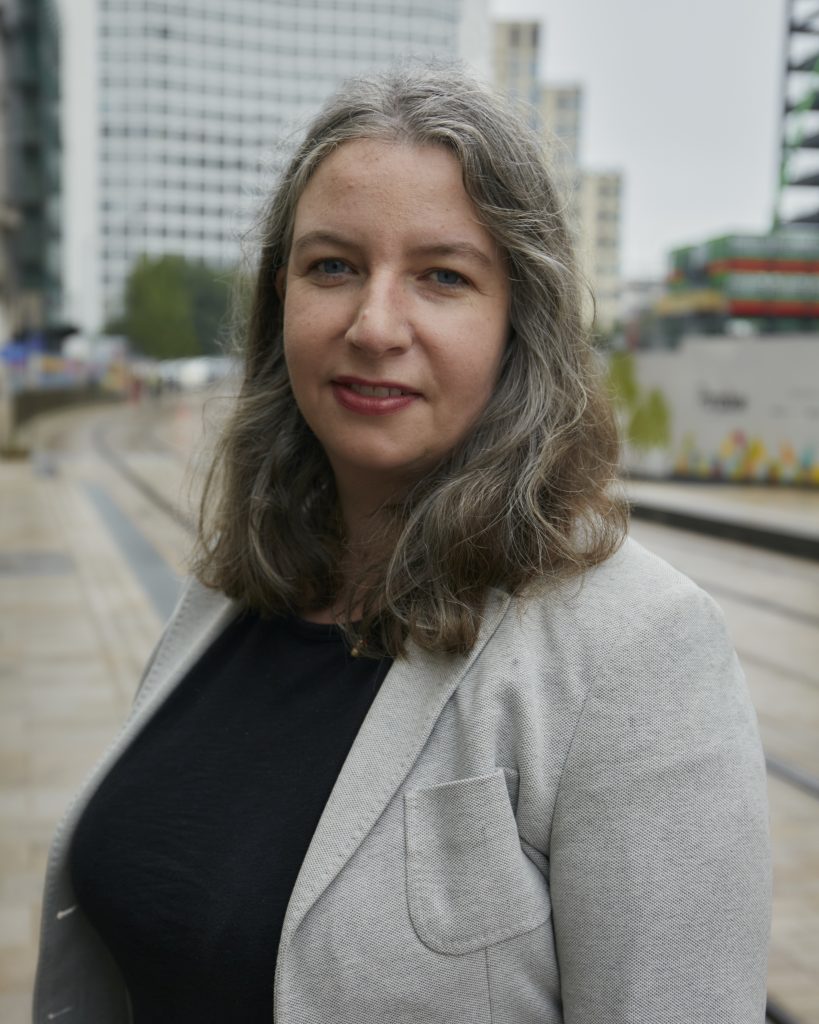
Lucy Easthope
Adviser
8
APPEARANCES
7
PODCASTS
Oct 25, 2026


Lucy EasthopeGUEST
So for me, the place I always started with light, so the idea of a lamp or a torch, I tend to dissuade against candles.
Lucy EasthopeGUEST
One of the things I love about the socials at the moment, people are coming over to sort of talk about things that they've found work in power and water outages, so maybe filling your bath.

Paddy O'ConnellHOST
And interesting there that you remind us that if you're not used to using camping gas, use it outside if you can rather than in.


Sean LayHOST
But tin food wasn't so long ago that most people had tin food and quite a lot of it.
Lucy EasthopeGUEST
And I think that's one of the big things I've been interested in this week with the reaction to the messaging is that this isn't something new or something being sort of thrust on us.
Lucy EasthopeGUEST
The BBC, I read an article recently and they used the term people have been mentally disarmed by a sort of relatively peaceful existence.
Lucy EasthopeGUEST
And where we find, so what we find with the preparedness guidance is that the UK is wildly behind other places.


Osher GünsbergHOST
And I really wanted to play you this because it's fascinating to hear what happens when a family operates in a particular way when they genuinely accept that tomorrow arriving and all of them being there tomorrow is not guaranteed.
Lucy EasthopeGUEST
Personally, what I always am very motivated by, and I deliberately started When the Dust Settles with my own child activism, you know, being 11 and realising that the state has got this very wrong situation.
Lucy EasthopeGUEST
There's a wonderful group that meets in North Kensington called the Futurehood Children, which are aged 5 to 11.
Lucy EasthopeGUEST
You know, you end on a hopeful note, you calibrate what the children can cope with, but you answer their questions.


Lucy EasthopeGUEST
What May has come out really of all of the questions of the book festivals and other great events that I did when my memoir came out, which is called When the Dust Settles.
Lucy EasthopeGUEST
And it's about a life working in real extremis at times of when train crashes and explosions and things have happened.
Lucy EasthopeGUEST
It's taught me a lot about what true resilience is, but also about that difficult trajectory of living alongside turmoil.


Lauren LaverneHOST
And why is that your passion? You've described that as almost a spiritual experience for you.
Lucy EasthopeGUEST
When I started working in this field, uh, the personal effects had only just started being protected.
Lucy EasthopeGUEST
There was some new legislation in America to protect the items recovered from things like air disasters and bomb explosions.
Lucy EasthopeGUEST
They were just starting to, to develop what I've called in my writing an ethic of care around them.
Lucy EasthopeGUEST
But still, if you didn't get there early enough, they would go into bins and skips.
Lucy EasthopeGUEST
And for a lot of the kinds of incidents that I was working on, there would not be a body to return or a whole body to return, but there would be, uh, what I've called the furniture of self, uh, from the wonderful Kai Erikson, a disaster sociologist, and these are things that make us us.
30 MINS LATER
Lauren LaverneHOST
How much emphasis do you place on mental health support in emergency planning? Both for survivors, but also responders?


Lucy EasthopeGUEST
People will be asking things like iodine and do I need to go, do I build a shelter and all of those kind of things.
Lucy EasthopeGUEST
At that point, I would suggest that you would do a press conference alongside your defence and science laboratory colleagues and possibly the nuclear physicists at Sellafield to give a view on being ready, if you felt that you were ready for that or you might feel that we're not quite there yet.
Lucy EasthopeGUEST
You would have a decision to make as to where we were at in terms of how much information you felt would be helpful.
Lucy EasthopeGUEST
Behind the scenes, the Local Resilience Forum have activated their contaminated mass fatalities plan and their contaminated casualties plan, and both of those are ready to go.
14 MINS LATER
Lucy EasthopeGUEST
I do think with all of this, one of the ways to take the public with you is going to have to be what comes after this and also what's left of us in terms of our own moral compass and what have we become and what was worth fighting for.

Lucy EasthopeGUEST
sobering moment, isn't it? It's a very different sense of being under attack, seeing casualties, losing people.


Lucy EasthopeGUEST
... (laughs) in that we make a big long list of all the risks that are going on around us.
Lucy EasthopeGUEST
And then I'm not a first responder, I'm the last responder, so I'm there afterwards.
Lucy EasthopeGUEST
So, for example...... taking with you the kind of things that you might need if you're kept away from being able to get home, having, if you're lucky enough to have a home, having things at home to be ready for things like a power cut.