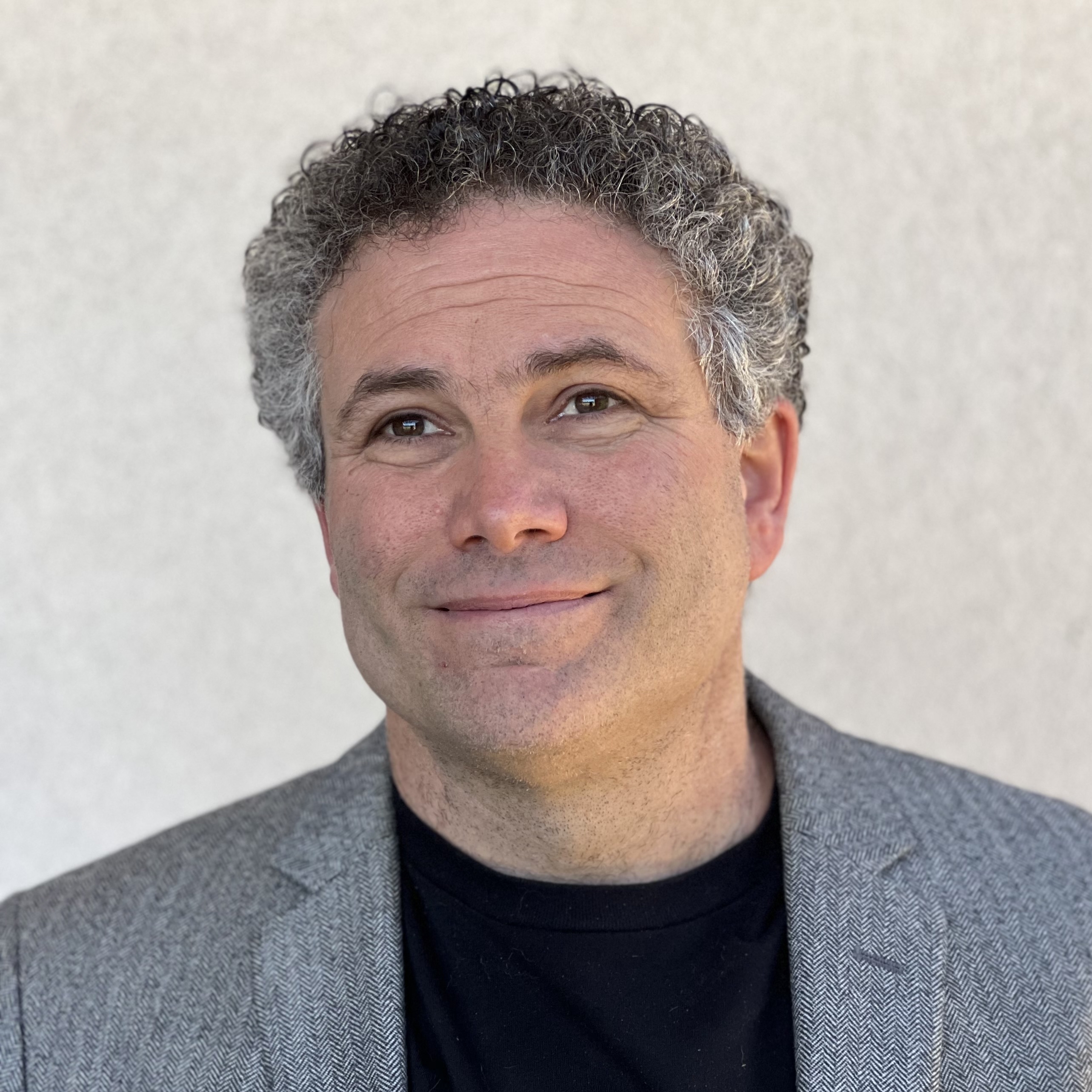
Louis Rosenberg
CEO & Chief Scientist of Unanimous AI; Stanford PhD, early pioneer of virtual and augmented reality, founder of Immersion Corp.
3
APPEARANCES
3
PODCASTS
Sep 15, 2026

Vit LyoshinHOST
So this collective super intelligence system, I guess, does it find actually a better answer or is it looking through like that people agree on the same answer basically?

Louis RosenbergGUEST
So when we connect groups of people together in an optimal way, they will find answers that that are better than any individual would have found on their own.
Louis RosenbergGUEST
And sometimes answers that significantly outperform what most of the people would have got.
Louis RosenbergGUEST
So, you know, had they just taken a vote, had they all voted on this is, you know, this is what we all think is the best answer in a traditional way.
Louis RosenbergGUEST
When they're connected into, you know, a super intelligent system, they will converge on an answer that, you know, that will, at statistically significant rates, outperform what a traditional poll, survey, vote type of scenario is.
Louis RosenbergGUEST
And the way that it works and the reason that it's different than a vote or a poll or a survey is that we turn the human group into a system rather than treat them as a source of data to aggregate.
Louis RosenbergGUEST
And so again, the traditional way is say, okay, I wanna harness the input from 200 people.
25 MINS LATER


Louis RosenbergGUEST
Sure, so last year I talked about being very nervous about AI and about really the future of superintelligence and the impacts of that on humanity and just on what it means to be an individual when there is a superintelligence that we know is smarter than us.
Louis RosenbergGUEST
I also talked about the potential dangers of direct human manipulation when AI and XR converge and we have basically superintelligence systems riding shotgun in our lives, in our glasses, in our earbuds, on pendants that can speak to us and potentially manipulate us on behalf of powers that be or just manipulate us algorithmically.
Louis RosenbergGUEST
I'm more concerned because AI is advancing even faster than I thought it would last year.
Louis RosenbergGUEST
And we're also seeing the convergence of AI being piped into people's heads even sooner than I thought.
39 MINS LATER

James MyersHOST
What if you can give us an overview of how the VR industry has evolved and the major players in it then and now.
Louis RosenbergGUEST
So, uh, when I first got involved in the, in the, uh, the space was, uh, 1991, uh, virtual reality was a field that had just been around as a commercial endeavor for a few years.
Louis RosenbergGUEST
Um, I was lucky enough to work at, uh, At the virtual reality lab at NASA where they were doing some of the early research and that was exciting and and then I went and founded one of the early virtual reality companies, a company called immersion corporation that I that I founded in 93 and.
Louis RosenbergGUEST
The thing about the industry back then, just to give context, is that there was a lot of excitement and hype in the industry.
33 MINS LATER
James MyersHOST
So yeah, maybe if you could just take us through some of the risks, and maybe particularly the risks to young people from these systems.