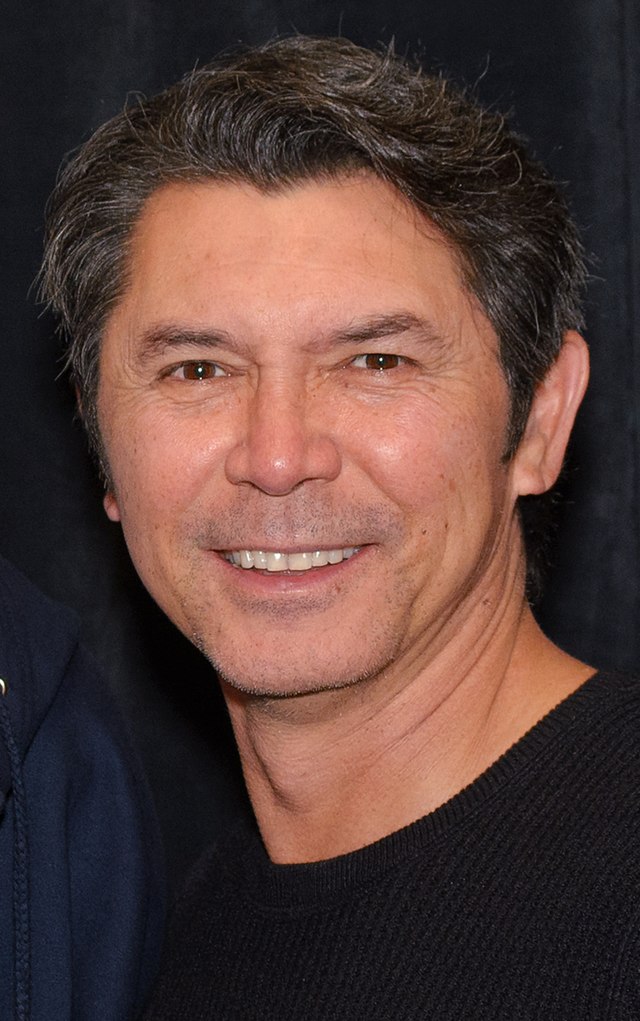
Lou Diamond Phillips
American actor and director
24
APPEARANCES
23
PODCASTS
Nov 13, 2026


Lou Diamond PhillipsGUEST
you know, we really, we had to make all the right choices, you know, so, you know, automatically I bring in, you know, they, they asked me to be an executive producer and I bring on my good friend, Marcus Red Thunder, uh, who I'd worked with on Longmire's Technical Advisor for six years, I knew he'd have a beautiful impact on the script and just really keep us, you know, legit and authentic.
Lou Diamond PhillipsGUEST
Irene Bedard, Kim Guerrero, all good friends of mine, you know, that I'd worked with before, that I knew would deliver.
Lou Diamond PhillipsGUEST
So, you know, key people in key roles that you knew that you didn't have to think twice.
10 MINS LATER

Adam El HagarHOST
I, you know, is there some was there some point in your career where you were finding something difficult, you know, and you made a choice and everything changed?


Lou Diamond PhillipsGUEST
I got a great email from a dear friend, Megan Griffiths, who wrote and directed The Night Stalker, where I played Richard Ramirez.
Lou Diamond PhillipsGUEST
And she had a good friend that that she knew from the festival circuit.
Lou Diamond PhillipsGUEST
And she said, you know, Vincent has this script and you're his first choice.


Lou Diamond PhillipsGUEST
He goes at Toto hard in that first scene in the car, almost like a test, I think.
Lou Diamond PhillipsGUEST
And he comes off with the bravado, but it's all in assessing how thick her skin is and if she can handle this.
Lou Diamond PhillipsGUEST
And what I love, you know, and having played other characters, you know, like Henry Standing Bear and Longmire, you know, for six seasons, these are characters who understand that not every law that has ever been on the books is a just law, that there's a difference between right and wrong and, you know, what is necessarily legal.
Jennifer WeigelHOST
What kind of research did you have to do to really nail it the way that you did?

TabooHOST
You've been a cop in many different
18 MINS LATER
TabooHOST
You got so many things going on, but man, Gangland, it really resonated with

Lou Diamond PhillipsGUEST
You know? Uh, um, I mean, just, just, um- It was, it was just opening your heart and opening up, you know, your, your, your, yourself, uh, and subjugating your ego to the, uh, to the story itself, you know? Mm-hmm.
Lou Diamond PhillipsGUEST
So, um, you know, and, uh, uh, Esai and I still see each other all the time, you know? I mean, it, it, it, it's interesting.
Lou Diamond PhillipsGUEST
I mean, what's funny is that, is that I'm actually older than Esai [laughs] Wow ... and, and, and I'm taller than he is.
Lou Diamond PhillipsGUEST
So, you know, a lot of times I was the one standing on the floor below- Mm-hmm ...

Lou Diamond PhillipsGUEST
Not this sort of, you know, Mike Myers kind of, you know, frightening, you know, thing that we get in the movies.
Lou Diamond PhillipsGUEST
I mean, you know, in the trial, he, you know, gained notoriety because all of a sudden, you know, he put the long hair and the rock and roll persona.
16 MINS LATER

Elisa DonovanHOST
Did you learn anything about the way he regarded his victims once he was incarcerated and in jail?

Elisa DonovanHOST
Did you learn anything about the way he regarded his victims once he was incarcerated and in jail?
Lou Diamond PhillipsGUEST
You know, I mean, we all, if we see a child suffering, if we see an animal suffering, those of us, you know, with a healthy emotional life, you know, feel bad.
Lou Diamond PhillipsGUEST
In many cases, you know, we're horrified even at the death of a stranger, for instance, you know, I mean.

Lou Diamond PhillipsGUEST
An absolute fascination with, with, uh, the morbidity of it, with, you know, the, the fragility of life and how, you know, he could wield power over that.
Lou Diamond PhillipsGUEST
I, I, I think, you know, even a few of them, you know, begged and, you know, uh, uh, you know, it, it, it's, it, it, it sort of had no effect.
Lou Diamond PhillipsGUEST
And, and so, yes, a, a soulless, emotionless, you know, a, a user, a taker of life.
16 MINS LATER
Elisa DonovanHOST
Is there anything, uh, you learned making The Night Stalker that you think tends to get lost when people kind of reduce the story to these, you know, the mythology?
Lou Diamond PhillipsGUEST
I mean, not, you know, in the, b- between the book and all the reporting and everything else, and all, you know, and all the true crime stuff, I, I, I, yeah, I think the thing that, that is most frightening and that is most overlooked, uh, in all the sensationalism is, is how really sort of hyper-normal it is, you know? I mean, it's, you know, I, you know, you, you watch a movie and, you know, the, the editing, you know, ratchets up the tension and the, and the score makes it, you know, you know, uh, uh, frightening.

speaker_0UNKNOWN
[gentle music] Guaranteed Human.
Lou Diamond PhillipsGUEST
[gentle music] Behind every night spent making the kids' lunches, there's a lot of suspense.
Lou Diamond PhillipsGUEST
Will they finally eat the veggies? Will the pesto survive the first bite? Will the lunchbox come home empty, half full, or come home at all? And will you finish episode eight before you're done slicing the cucumbers? Get Bell pure fiber internet with Crave, Netflix, and Disney+ from $94 a month.
Lou Diamond PhillipsGUEST
Price guaranteed for two years on internet with a two-year term and auto-pay credit.
43 MINS LATER
Elisa DonovanHOST
Is there anything, uh, you learned making The Night Stalker that you think tends to get lost when people kinda reduce the story to these, you know, the mythology?
Lou Diamond PhillipsGUEST
I mean, not, you know, in, be- between the book and all the reporting and everything else, and all, you know, and all the true crime stuff, I, I, I, yeah, I think the thing that, that, yeah, is most frightening and that is most overlooked, uh, in all the sensationalism is, is how really sort of hypernormal it is, you know? I mean, it's, you know, I, you know, you, you watch a movie and, you know, the, the editing, you know, ratchets up the tension and the, and the score makes it, you know, you know, uh, uh, frightening.


Prairie MillerHOST
What can you say about the significance of the original title, Keep Quiet, and why it was changed?
Lou Diamond PhillipsGUEST
The original title, to me, I mean, was a bit of a mystery, which is what I love in the respect that when you first heard it, you thought it was like that, you know, what is it, Omerta, the mafia kind of, you know, silence thing.
Lou Diamond PhillipsGUEST
You know, and since it was dealing with gangs, you would automatically assume it was that.
Lou Diamond PhillipsGUEST
But then later in the film, it's revealed that there's much more going on with that title than meets the eye.
Lou Diamond PhillipsGUEST
But in the distributors' research, I guess, they thought that the title was maybe a little too, you know, horror with things like A Quiet Place or...
Prairie MillerHOST
So what was it about this film and the story that grabbed you personally to get on board beyond portraying your character, Sharp?


Lou Diamond PhillipsGUEST
My first three films in Hollywood were La Bamba, Stand and Deliver, and Young Guns in that order.

Jason FraleyHOST
Dish on a little bit of the rapport, the chemistry you guys were able to develop as actors.
Lou Diamond PhillipsGUEST
I mean, that's the beauty of it is that there are no characters in this film that are stereotypical or two-dimensional.


Dana McKayHOST
And I'm wondering, over the years, how has technology changed how you make movies?
Lou Diamond PhillipsGUEST
And we're on the cusp of that already, aren't we? I mean, my goodness, where everybody's scrambling, you know, to figure out what we're going to do about AI.
Lou Diamond PhillipsGUEST
The Academy, you know, we I just got reelected governor of the Actors Branch.
Lou Diamond PhillipsGUEST
You know, I mean, we put the caveat on our, you know, category for best performances by actors.
Dana McKayHOST
How will you be celebrating the Fourth of July this weekend, and what does it mean to you?

7 MINS LATER

Arroe CollinsHOST
And just the expressions on your face say, oh, this is the guy I need to invest my trust in.

5 MINS LATER
Arroe CollinsHOST
And just the expressions on your face say, oh, this is the guy I need to invest my trust in.


Adam MontielHOST
How do you protect the humanity of that world from becoming, I guess, you know, from becoming just a backdrop of a crime?
Lou Diamond PhillipsGUEST
And this script was written by Zach Montague, who is an actual tribal cop in Canada.
Lou Diamond PhillipsGUEST
And it's funny, Vincent Gratiot, just as a director, you know, is looking not only for that truth, but, you know, what's going to make a good movie? I mean, one of the things that he asked Zach was, what's the weirdest thing that ever happened to you? And we get the sequence with the guy in the trunk.
Adam MontielHOST
And even more than like what Teddy's new trainee awakens in him, does working with younger actors or actresses, does that even almost shape you as as an actor in that role?

24:45

uh and uh gangland rather and it'll be coming out on july 10th he's a novelist an actor one of the great bad guys in addition to portrayal of richie valens he's a director a writer a novelist an actor i thought we'd start deep this morning lou first of all thanks for being with us second of all what do you think you're best at and what do you enjoy the most i'm curious
Lou Diamond PhillipsGUEST
wow um You know, you talked about novels, and the first one I wrote, The Tinderbox Soldier of Indira, and then the sequel, Tinderbox Underground Movement.
Lou Diamond PhillipsGUEST
Craig Johnson, who's a dear friend who wrote the Longmire series of mystery novels that the television series was based on, he called me one of the best storytellers he knew.
Lou Diamond PhillipsGUEST
Because being a storyteller covers the writing, the directing, the acting, all of it.
Lou Diamond PhillipsGUEST
And it just depends on what avenue I'm taking to tell that particular story and what is my function within that.
28:22
What drew you to this character, and what are you hoping the audiences get from this portrayal?


Adam CarollaHOST
Is that because they're sort of easily taken advantage of or they're trusting culture, or what do you think that is?
Lou Diamond PhillipsGUEST
Um, uh, and I got, I, I got a lovely, you know, presidential citation from, uh, uh, Gloria Macapagal Arroyo, who was the president at the time, and not accused of corruption.
Lou Diamond PhillipsGUEST
Uh, but, uh, um, th- that whole, I don't know, uh, um, system now is, is, is one that I'm not familiar with.
44 MINS LATER


Josh JohnsonHOST
And, and I'm, I'm wondering how you think they've evolved from, like, what they used to be to what they are now.
Lou Diamond PhillipsGUEST
Oh, yeah, I mean, you know, in the, in the '70s, and I love this, man.
Lou Diamond PhillipsGUEST
In the '70s, you know, you had, you know, Butch Cassidy and, you know, uh, Little Big Man, one of my particular favorites.
Lou Diamond PhillipsGUEST
And, and all of a sudden you, you had these revisionist Westerns that started looking at things from both sides of the line, you know? Uh, Gangland is about indigenous people, you know? Uh, it, it's about gangs, which happen in, in practically every ethnic community [laughs] in this country, you know? Uh, but this is on the res.
Lou Diamond PhillipsGUEST
It's very much like, um, Training Day, Denzel's Training Day on the reservation.
Josh JohnsonHOST
And so what is your, um, your sort of thought process going into your art practice now versus years ago?


Lou Diamond PhillipsGUEST
And once I figured that out early on in my career, I've proudly represented that since.
10 MINS LATER


Trevor McDonaldHOST
Attorney Lou Diamond, who represented Biegenwald as an adult, believes the treatment the young child was given made his problems worse, not better.

Lou DiamondGUEST
They gave him electric shock therapy, to an eight-year-old, and then threw cold water on him naked and let him sleep on a, on a iron table at night, and he'd have to urinate on himself to stay warm, an eight-year-old.
Lou DiamondGUEST
And in those days, it was unknown, uh, what it could lead to, and what it led to was Richard.
6 MINS LATER
Trevor McDonaldHOST
It was work that suited Biegenwald's ruthless nature and his taste for extreme violence.
Lou DiamondGUEST
He always used 22s because, with or without silencers, because the bullet would rattle around in the person's head.
Lou DiamondGUEST
He would go and pick up hookers or drug dealers in Newark and test out new guns and, and silencers on them, and blackouts.


Lou Diamond PhillipsGUEST
Uh, uh, the, first of all, the book, The Night Stalker, by, uh, is it Philip, uh, Carlo or Philip Caputo, it's very good.
Lou Diamond PhillipsGUEST
It's, it's, it, you, you see this guy was destined from, you know, age five to, to end up where he did.
Lou Diamond PhillipsGUEST
Maybe even, you know, in utero because his mom worked in the Nocona Boot factory in El Paso, so, you know, there might've been some, you know, toxic stuff going on there.
Lou Diamond PhillipsGUEST
Uh, I, uh, um, uh, uh, got to, you know, watch obviously the videos and things like that.
Lou Diamond PhillipsGUEST
What's, what's also wonderful though, uh, that, that character by the way was, was sort of the inspiration for Patrick Channing in The First Power.


Sonny BunchHOST
native american cinema it's there's some really interesting stuff going on here i'm curious so what what attracted you to the script not just to act in it but also to serve as the ep you know a lot of actors will put their name on lots of movies as executive producer and it's kind of a vanity credit and you do not do that this is i believe your first film your first feature film as executive producer
Lou Diamond PhillipsGUEST
I think I've gotten credit on a few things that maybe did not see the light of day.
Lou Diamond PhillipsGUEST
It's not something that I've done a lot, as you said, but for projects that needed a little extra oomph, You know, it's something that I was willing to do.
Lou Diamond PhillipsGUEST
I take it when I think that I can have an actual impact on the creative process or even the budgetary process.
26 MINS LATER
Sonny BunchHOST
And I'm curious, what do you what would you have people know about the art of acting? Like, what is the thing that you sit there and think about? And like, this is what I'm doing here is what people need to understand about what I do and how I do it.


Lou Diamond PhillipsGUEST
But when Yvonne and I first started dating, we were getting to know each other and I discovered that she is an absolutely amazing graphic artist.
Lou Diamond PhillipsGUEST
When we met, she was a makeup hair artist and we actually met on a film shoot in Vancouver, Canada.
Lou Diamond PhillipsGUEST
and then started dating, and as I got more familiar with her work, I came across a series of illustrations that she had drawn in anime style.
13 MINS LATER