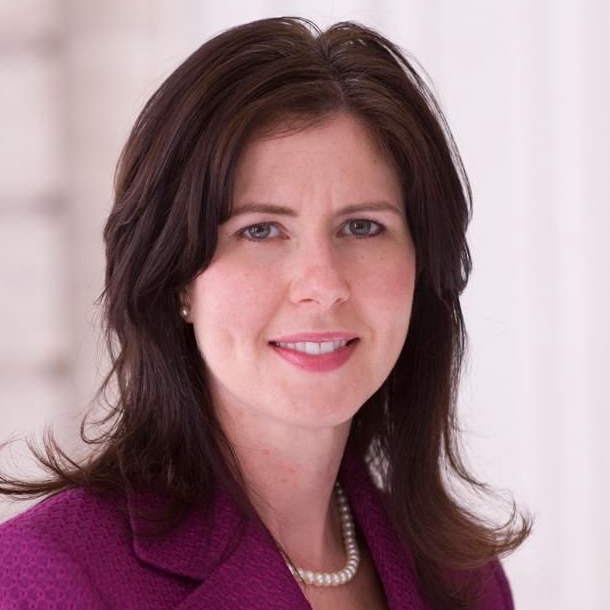
Liz Crowley
Founder of HR Collaborative Solutions (San Francisco), a former investment banker turned senior HR leader who advises CEOs and senior executives through high-stakes leadership conflict.
9
APPEARANCES
8
PODCASTS
Oct 29, 2026

LarisaHOST
Have you ever had a CEO you've worked with that was convinced that somebody else was the issue that they were facing, only then to realize that actually that CEO maybe was contributing significantly to the issue or to the conflict?

Liz CrowleyGUEST
I think when a CEO or founder believes they understand the relationship, then they haven't left room for that other person to sort of bring their own dynamic in.
Liz CrowleyGUEST
It know those are this is more this might come out of the work that we're doing together oftentimes it came out in house because i was deeper in the relationships and i could actually tease it out and say it feels like and i could be sort of a you know unknown third party to the ceo saying it feels like maybe the other person is feeling this way having considered that When it relates to the work I do now, where I'm working with just the one side, I can tease it out because we'll go through sort of a fact-finding mission of what do you think is happening? What do you think the outcome thinks is happening? And then share with me some documents or some circumstances or some emails or Slack or whatever.
Liz CrowleyGUEST
That I can read the words, right? And I could be completely off, but I'm a third party who's not going to be judgmental about which way this is going.
15 MINS LATER
LarisaHOST
So what's something they need to be brutally honest about themselves and how can they go into a conversation, into a room with the other party and start the communication or the conversation with that other party? I


Khudania AjayHOST
Where is the conflict? What are the types of conflicts that generally happens at that level?
Liz CrowleyGUEST
Yeah, I mean, the types of conflict that are going to happen are, you know, perhaps you have a new person who's joining a team And they bring a whole new energy and vibe and they have different personality or characteristics that didn't typically exist.
Liz CrowleyGUEST
And so, you know, the team needs to figure out how to adjust and accommodate and make space for that, but also how to encourage the newer person to, you know, ensure that they're watching what is being modeled that is potentially tied to the vision, mission, and values of the business.
Liz CrowleyGUEST
But there can be some conflict there when you have newer members to a leadership team.
Liz CrowleyGUEST
If they become too significant, then potentially there are other conversations that are happening.
Liz CrowleyGUEST
But that's something that is probably one of the more minor areas of conflict where we have some tweaking and we need to figure out how One person's way isn't right, but what can we do to come together and find something that puts us all on equal ground and we feel like we can be productive? Another area is sometimes when we're growing a business, we are shifting our vision for the business or our growth plan.
Khudania AjayHOST
Or is it only breach of trust that we should understand as conflict? Why should a CEO be worried about different points of view or disagreements rather than something which is going to actually, you know, impact massively?

Khudania AjayHOST
Where is the conflict? What are the types of conflicts that generally happens at that level?
Liz CrowleyGUEST
Yeah, I mean, the types of conflict that are going to happen are, you know, perhaps you have a new person who's joining a team And they bring a whole new energy and vibe and they have different personality or characteristics that didn't typically exist.
Liz CrowleyGUEST
And so, you know, the team needs to figure out how to adjust and accommodate and make space for that, but also how to encourage the newer person to, you know, ensure that they're watching what is being modeled that is potentially tied to the vision, mission, and values of the business.
Liz CrowleyGUEST
But there can be some conflict there when you have newer members to a leadership team.
Liz CrowleyGUEST
If they become too significant, then potentially there are other conversations that are happening.
Liz CrowleyGUEST
But that's something that is probably one of the more minor areas of conflict where we have some tweaking and we need to figure out how One person's way isn't right, but what can we do to come together and find something that puts us all on equal ground and we feel like we can be productive? Another area is sometimes when we're growing a business, we are shifting our vision for the business or our growth plan.
Khudania AjayHOST
Or is it only breach of trust that we should understand as conflict? Why should a CEO be worried about different points of view or disagreements rather than something which is going to actually, you know, impact massively?
LarisaHOST
How does it
Liz CrowleyGUEST
start? Yeah, I think it's trickier because generally the people that are at the top running the business in this scenario, because I know everyone is not an expert and everyone is not very good at their job but in in my scenario that we'll talk about today that's hypothetical you know hypothetically these leaders are uh strong in their skill set and in the the business lines that they're heading and so as a ceo um There needs to be a tight relationship or a relationship where you're all moving in lockstep towards the vision or the mission of the business.
Liz CrowleyGUEST
And ultimately, the CEO is going to want to have them living the values of the business.
Liz CrowleyGUEST
So where it can get tricky is if people, if these leaders are doing an exceptional job, let's say head of revenue is bringing in, you know, their team brings in all of the revenue, maybe 98% of the revenue.
Liz CrowleyGUEST
And then you have a conflict with that person, but their team thinks that they're, they walk on water and they're amazing.
Liz CrowleyGUEST
But there is a conflict that starts to brew or has been brewing between the CEO and that head of sales or head of revenue.
9 MINS LATER
LarisaHOST
How can someone create healthy conflict?

FerdinandHOST
Yeah.
Liz CrowleyGUEST
And this is a tricky one because it is, uh, it's less about the business, and it becomes more personal.
Liz CrowleyGUEST
And a lot of the work that a CEO and a founder do is a little bit more rote, and it's more how do we build the business? [clears throat] And so the reason this becomes more difficult is it can become distracting in a way that they're not typically familiar with on a day-to-day basis.
Liz CrowleyGUEST
They're generally, again, focusing on things that are, uh, moving and building the, the business.
Liz CrowleyGUEST
And when they start to deal with these personal conflicts with their senior leadership team, which is meant to be their most trusted, um, team in an optimal situation, um, it just can become really distracting.
Liz CrowleyGUEST
And distraction can look like, you know, second-guessing email, email or other communications you're having with them and worrying about potentially making the situation worse.
Liz CrowleyGUEST
It can, um, look like staying up at night and waking up in the middle of the night and wondering, did I-- you know, what is my role in this, this issue that we're dealing with? Um, or sh-- you know, what did that other person mean by, you know, what they said? And am I thinking about it objectively, or am I taking it too personally? And when a, a senior person like that CEO or founder starts to feel a little shaky on, um, how that relationship, whether the trust is still there, whether it's a relationship they can still rely on, they are second-guessing themselves.
20 MINS LATER
FerdinandHOST
So I'm asking, uh, how can a leader identify what is the recourse of this issue? What is the recourse of an issue going on in the organization? Do you, do you get what I'm saying?


Liz CrowleyGUEST
And that's the difference between maybe you and someone who is a little bit more impulsive and has a harder time slowing down to do that, hasn't maybe practiced that to see the outcome could be positive.
Liz CrowleyGUEST
Does the person have an interest in having a productive outcome? And if they do, then they're going to try to step back and think about what can I do to help me think this through? You know, you and many other people have a way of moving through meditation or hiking or or moving or finding a way that they can separate themselves from the situation.
13 MINS LATER


Liz CrowleyGUEST
So I think this is a unique situation that a CEO could find themselves in, typically removing 100 miles an hour, lots of decisions to be made, lots of relationships to engage with throughout the day.
Liz CrowleyGUEST
At least my experience with the experience I've seen the CEOs and founders have, those are transactional.
Liz CrowleyGUEST
Those are business decisions that they're using their own experience to make decisions on.
13 MINS LATER


Scott BrandtHOST
And so is it that trust is the biggest factor that starts eating into performance or is it the performance that starts eating to trust when you don't take care of conflict and just let it show up and just sit there and it's like, hey, we're not going to front you.
Liz CrowleyGUEST
I think when there are a couple kinds of areas that I think that are mostly predominant with conflict, which can be, you know, a shift in what got us here won't get us there and everyone on the team isn't on board with like the new strategy for the business to grow to the next level.
Liz CrowleyGUEST
And that has some conflict where I have to lean in and talk to you about, I love you, you're awesome, I want you here, and there's some issues, right? And so there's generally a power dynamic there as it relates to delivering performance feedback, but there's metrics with that too.
Liz CrowleyGUEST
So you can debate those metrics, but you have information that's tangible about why we're in this conversation.
Liz CrowleyGUEST
And then the third one, which might be the hardest, is that I am working with someone who I think is phenomenal.
22 MINS LATER

George DovolisHOST
When it's all behind you, what do you want your legacy to be? What do you want people to think about, you know, what Liz accomplished? What do you want to leave behind for your legacy?

SanaHOST
I mean, like what was the thread connecting you?
Liz CrowleyGUEST
I think, unfortunately, I was in the role heading HR when we were going through the housing crisis here in the U.S. or the collapse.
Liz CrowleyGUEST
And some other big market movers that were putting a lot of compression on all businesses, but, you know, our business as well.
Liz CrowleyGUEST
And so, unfortunately, I started with, unfortunately, I was involved in a lot of layoffs.
SanaHOST
So how exactly does this work? And why do you choose to work that way? And I mean, isn't there a risk of just hearing one side of the story? And then, you know, like how exactly it all works out here? Yeah.