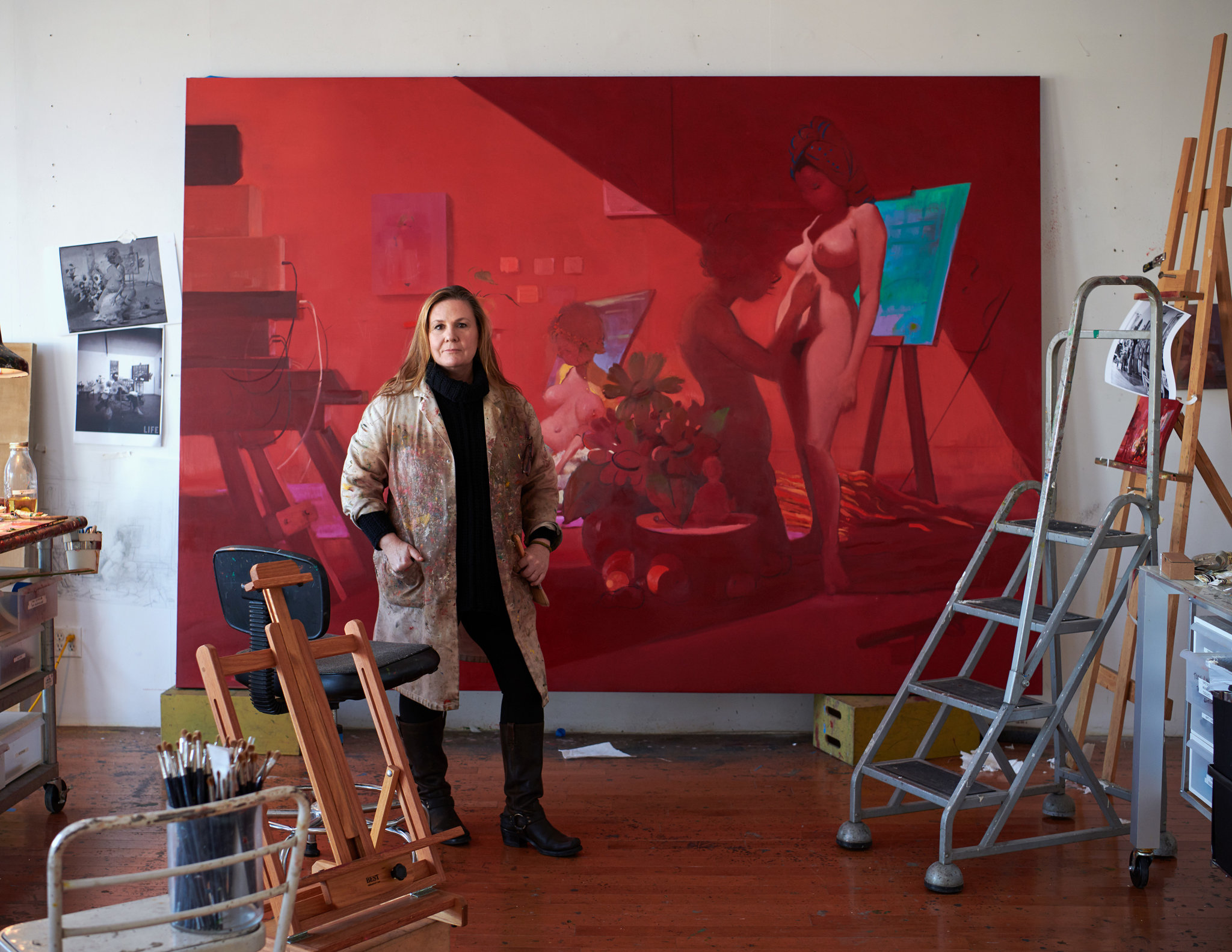
Lisa Yuskavage
American artist
2
APPEARANCES
2
PODCASTS
Jun 9, 2026


Lisa YuskavageGUEST
So I think you, you were basically sitting on the sidelines if you chose to be a figurative painter.
Lisa YuskavageGUEST
And by the way, the only figurative paintings that had any traction were the School of London.
Lisa YuskavageGUEST
So that was a very interesting reality, was that you think about it, besides Balthus, who was making figurative paintings at that period in the 20th century that really had any traction, and that was doing something that you kind of had to think was new.
Lisa YuskavageGUEST
So, like, to know about Freud and, and Bacon and, you know, I di- I don't know if Bacon really is technically a cool School of London, but, like, you know, Arba, Akhasov, I was always curious, like, what is it about America that that's not happening, where we have this new, fresh understanding of painting a thing or an object or a person? At any rate, as an undergraduate, I really learned how to paint what I would call non-objectively, meaning whether you're a figurative painter, an abstract painter, ultimately the information comes from looking at the painting.
Lisa YuskavageGUEST
Someone had asked me, "When I paint, it's, like, in my mind both conceptually and through memory." And I say, "No, no, often I'm really looking at what's happening, and I'm responding to what's happening." And to be honest with you, I'm begging the angels to show me that there is something worth seeing, and to pull it out of the paint, the evocative nature of one color next to another.
Lisa YuskavageGUEST
Even though maybe something's not finished, maybe you, I made a mistake and the painting has done something strange, I have to listen, because maybe that's a better direction.
9 MINS LATER
Ben LukeHOST
I think it's not unexpected that you would love Vuillard, because I was looking through your catalog, and there's a painting you made in 1983 called Undressing, and the first artist I thought of when I saw it was Vuillard, so you must have been thinking about him right back then.

Jarrett EarnestHOST
It is read by the painter Lisa Yuskavage, whose own exhibition of paintings is currently on view at the David Zwirner Gallery, New York.
Lisa YuskavageGUEST
"Radiant, Angry Caravaggio," written by Ingrid D. Rowland, May twenty-seventh, twenty-ten.
Lisa YuskavageGUEST
Four hundred years ago this summer, a half-crazed middle-aged man staggered into the little Italian seaside town of Porto Ercole, muttering incoherently in his nasal Lombard accent about a missing boatload with paintings.
Lisa YuskavageGUEST
He must have been carrying the sword that rarely left his side, but there is no record of it or of those who put him to bed in the town's tiny hospital, a place more accustomed to hosting ailing sailors, port workers, and galley slaves.
Lisa YuskavageGUEST
We know only that there on his sickbed, his fever, his wounds, and his desperation carried him off in the heat of July.