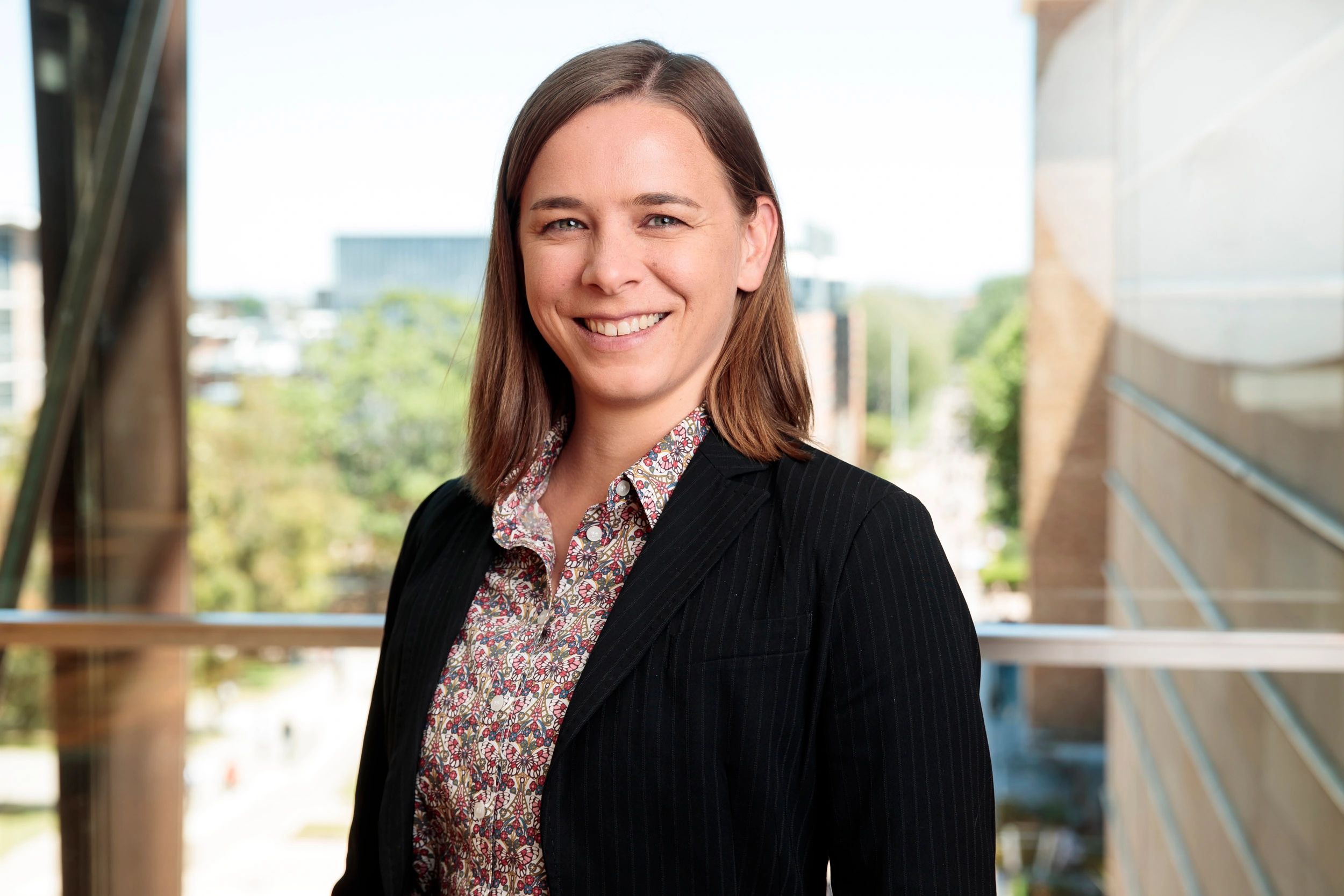
Lisa Harvey-Smith
Australian astrophysicist and author
3
APPEARANCES
3
PODCASTS
Aug 28, 2026


Lisa Harvey-SmithGUEST
I mean, I'm very lucky that my books are published all around the world, and I focus on, mostly on books for young people, illustrated books for kids about things from black holes and stars and galaxies to my most recent book about quarks and quantum physics for young people.
Lisa Harvey-SmithGUEST
So it's not giving people knowledge necessarily that they remember all of.
Lisa Harvey-SmithGUEST
But what they need to do is look at the book and think, there's a new world out there, a new universe that they haven't considered, and that they get that spark and that interest which they can follow throughout their educational career, maybe through their hobbies, as I did as a young kid, doing astronomy and looking up at the stars, or just pursuing sort of mathematical and scientific concepts and exploring how they might impact the world in positive ways using those skills, and that's really what I'm all about.
Lisa Harvey-SmithGUEST
But people are reading less, and that's something Australia Reads and other organizations are highlighting.

Robyn WilliamsHOST
When they wake up CERN and the, the fast collider is there any chance that if you accelerate quarks like crazy you'll get even smaller particles there from which they're made to account for, I don't know, the missing stuff?

Lisa Harvey-SmithGUEST
I mean, I'm very lucky that my books are published all around the world, and I focus on, mostly on books for young people, illustrated books for kids about things from black holes and stars and galaxies to my most recent book about quarks and quantum physics for young people.
Lisa Harvey-SmithGUEST
So it's not giving people knowledge necessarily that they remember all of.
Lisa Harvey-SmithGUEST
But what they need to do is look at the book and think there's a new world out there, a new universe that they haven't considered, and that they get that spark and that interest which they can follow throughout their educational career, maybe through their hobbies, as I did as a young kid, doing astronomy and looking up at the stars, or just pursuing sort of mathematical and scientific concepts and exploring how they might impact the world in positive ways using those skills, and that's really what I'm all about.
Lisa Harvey-SmithGUEST
But people are reading less, and that's something Australia Reads and other o- organizations are highlighting.

Robin WilliamsHOST
But going back to the question of whether physics is wobbling at the moment or being solid as it used to be, when they wake up CERN and the, the fast collider, is there any chance that if you accelerate quarks like crazy, you'll get even smaller particles there from which they're made to account for, I don't know, the missing stuff?

NijHOST
Yeah, like, you need a really special microscope to see them.
Lisa Harvey-SmithGUEST
Hot, swirling gases called helium and hydrogen are churning around with lots of energy.
Lisa Harvey-SmithGUEST
Two hydrogen atoms can crash into each other with so much force that they stick together.
speaker_1AUDIENCE
You shine it so you can see things in the dark.
Lisa Harvey-SmithGUEST
When you shine the light on a tree, you can see it because the light's bouncing off the tree, or the light can bounce off the ground in front of you so you can see where you're going.