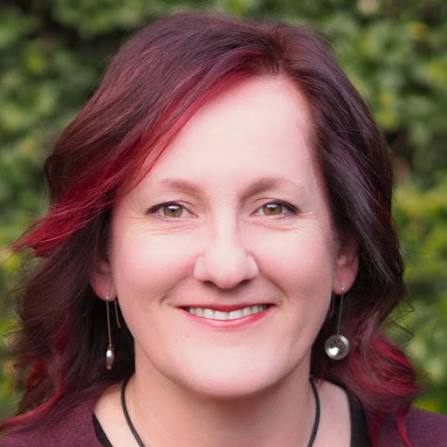
Lisa Given
Canadian-Australian information sciences scholar; Distinguished Professor at RMIT University and Director of the Centre for Human-AI Information Environments.
7
APPEARANCES
6
PODCASTS
Oct 26, 2026


Mary GearinHOST
Tell me, where are we at at the moment in terms of ability to be anonymous online and where would the proposed digital duty of care bill take us?

Lisa GivenGUEST
Yeah, I mean, certainly what we now see is a real mix of people using their real name, whether that's their entire name or partial name.
Lisa GivenGUEST
And we also see a lot of people that have kind of fun anonymous names, Black Cat 34 or something to that effect.
Lisa GivenGUEST
There have over the years, of course, been many people calling for the ability to actually name names and have people held to account.
Lisa GivenGUEST
And of course, another complicating factor is we also have a lot of bots out there.
Lisa GivenGUEST
So sometimes what's behind those account names is not even necessarily a real person.
Mary GearinHOST
the structure, the punishment of a platform that many people don't trust even now?

speaker_0HOST
She says it remains to be seen how this failed IPO attempt will affect the construction of data centres in Australia.
Lisa GivenGUEST
I mean, I think what we expect to see when things are really booming is we see investors really coming to the table.
Lisa GivenGUEST
companies are wanting to go public to really drive that kind of influx of cash into the system, as it were.
Lisa GivenGUEST
I think when we start to see companies shying away from that, it sends a message to the community that, oh, there's a bit of volatility here.
speaker_0HOST
Is this disaster for Firmus or do you think they reload, rethink and get back in the saddle, so to speak?

Lisa GivenGUEST
I mean, we know that any time, even whether it's Taylor Swift or these big games, it's going to put a lot of pressure onto those systems.
Lisa GivenGUEST
But I think the other challenge that a lot of purchasers see is really in the queuing system.


Wallace ChapmanHOST
What would you say then to that, Lisa, that social media is the new smoking?
Lisa GivenGUEST
Oh, it's interesting, isn't it? I mean, I don't think that we're talking about that same type of physical harm.
Lisa GivenGUEST
I definitely agree that there are algorithms and things that can give off addictive properties, if you will, and people do get sucked in.
Lisa GivenGUEST
I think the challenge we've got here is that unlike cigarettes, which we know are bad for everyone, There's actually a lot of good also on social media.
Lisa GivenGUEST
So the minute we talk about a ban, we're also talking about excluding people from extremely useful, valuable sources of information.
Lisa GivenGUEST
And we're also talking, at least in Australia, we've removed also the autonomy for parents to make some decisions for especially older children where they feel they are actually of a developmental age where some content is going to be appropriate for them.

Lisa GivenGUEST
Yeah, I mean, and at the end of the day, you know, the legislation was not even written to say, you know, keep every child off of the social media platforms.
Lisa GivenGUEST
All the tech companies had to do or have to do is show that they've taken what are called reasonable steps to keep kids from having a social media account.
Lisa GivenGUEST
Now, that's a much smaller mandate than what the headlines, I think, let a lot of parents believe.
Lisa GivenGUEST
And at the end of the day, it may end up in lawsuits to kind of prove on their side that they believe they've taken some reasonable steps.

Shane McInnesHOST
Do you think that parents still need to take the ultimate responsibility for their children when it comes to social media, that if you don't want little Johnny or little Sarah using Instagram or TikTok, ultimately it is your responsibility, not that of the big tech companies?
Lisa GivenGUEST
Yeah, I mean, and at the end of the day, you know, the legislation was not even written to say, you know, keep every child off of the social media platforms.
Lisa GivenGUEST
All the tech companies had to do or have to do is show that they've taken what are called reasonable steps to keep kids from having a social media account.
Lisa GivenGUEST
Now, that's a much smaller mandate than what the headlines, I think, let a lot of parents believe.
Lisa GivenGUEST
But it's also a question of how are we defining reasonable steps? I think that the tech companies will likely push this as far as they can.
Lisa GivenGUEST
And at the end of the day, it may end up in lawsuits to kind of prove on their side that they believe they've taken some reasonable steps.
Shane McInnesHOST
Do you think that parents still need to take the ultimate responsibility for their children when it comes to social media, that if you don't want little Johnny or little Sarah using Instagram or TikTok, ultimately it is your responsibility, not that of the big tech companies?

Lisa GivenGUEST
All the legislation said was that tech companies had to take reasonable steps to keep kids under 16 from having a social media account.

Matt GallowayHOST
Why isn't a ban the obvious solution to k- i- i- if the companies aren't going to do it themselves, keep the kids off the, the platforms in the first place?