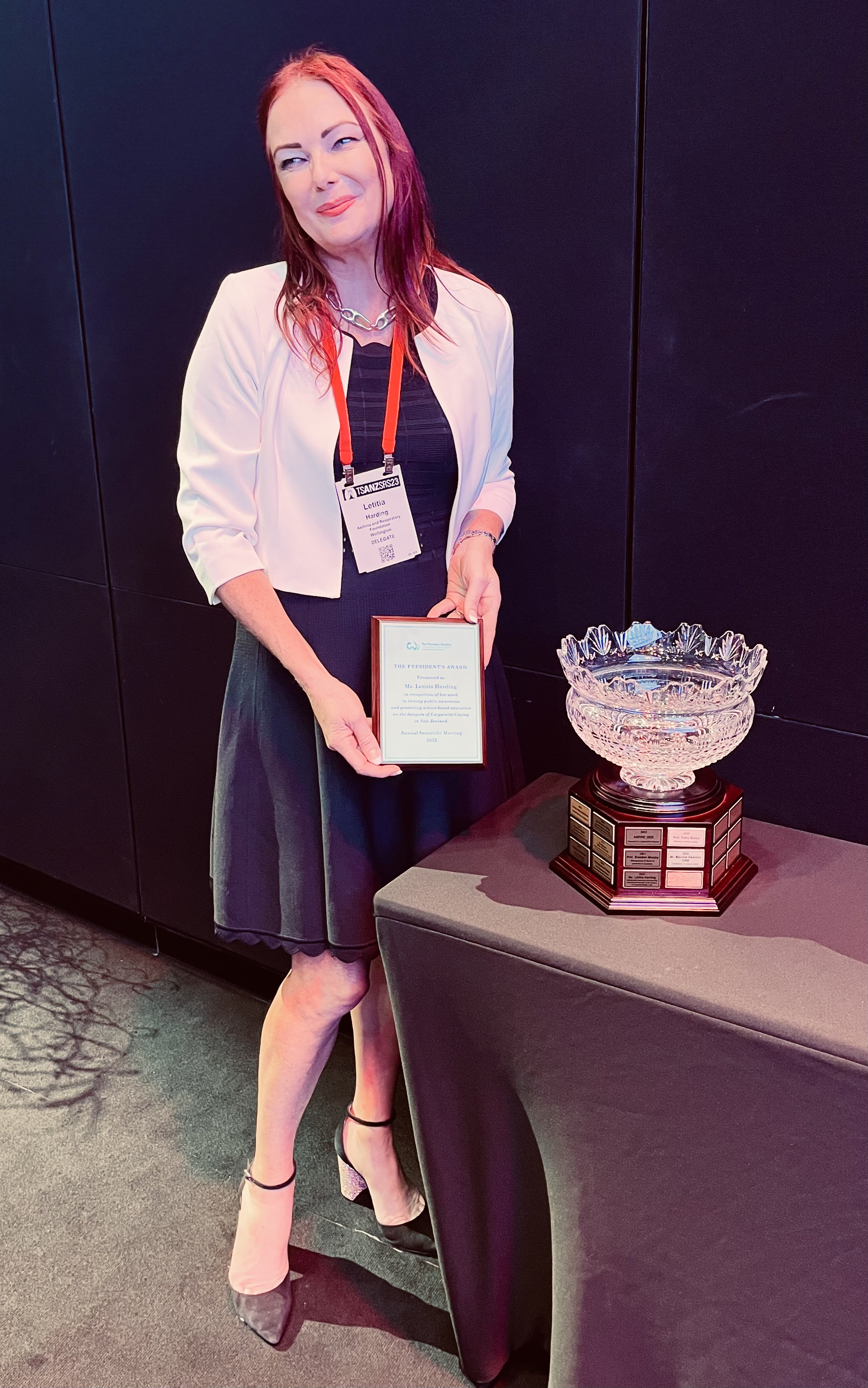
Letitia Harding
7
APPEARANCES
5
PODCASTS
Oct 17, 2026


Letitia HardingGUEST
Seven times more for Pacific people to be hospitalized with bronchiectasis is, is something that we sh- cannot be stand, uh, just standing aside and, and, you know, we need to be taking notice of that.
Letitia HardingGUEST
It's interesting actually, 'cause even in the, in the wealthiest areas, Pacific respiratory outcomes are worse than for others.
Letitia HardingGUEST
So even in, in the most socioeconomic deprived groups, you know, Pacific people still, still fare worse.
Letitia HardingGUEST
So, you know, with these bronchiectasis results, um, what is it? That's basically when you have a lot of scarring or repeat infections in the lungs, especially, you know, our little ones, then it can result into something more chronic, which is this bronchiectasis.
Letitia HardingGUEST
Uh, and to see those rates being so high, seven times, is, yeah, something we need to be taking notice of.

Tiana HaxtonHOST
Why is this? What do you think is driving this disproportionate burden on Pacific communities?

Letitia HardingGUEST
Māori children, of course, also higher at over two and a half times higher for childhood bronchiolitis.
Letitia HardingGUEST
So once again, you know, we've got to make sure that the vaccination programs, flu vaccines, that message is getting out, out into the community in a way that works for the people who need it, and the same goes for, you know, our call for the RSV vaccine.
Letitia HardingGUEST
We know that that's a huge issue, especially in places like Counties Manukau.
Letitia HardingGUEST
We've got to get the RSV vaccine funded for our wee babies and our infants, um, and ready in time April next year so we can prevent hospitalizations with RSV, which leads on to other things like bronchiolitis and pneumonia.
Tiana HaxtonHOST
Now, we are in election season at the moment, so if you could ask the next New Zealand government to prioritize two or three actions to improve respiratory health outcomes here in New Zealand, what would they be?


Letitia HardingGUEST
Yeah, so for the, for the lung cancer, I mean, we know that, you know, it affects, m- uh, Māori much more and that comes, of course, from a, a strong background of, uh, big tobacco and smoking.
Letitia HardingGUEST
Uh, we know that for, um, for lung cancer that we've got almost, uh, 2,000 deaths where, where, um, that occurred in 2022.
Letitia HardingGUEST
And, you know, the thing is that we have to actually get in and invest in the lung cancer screening program.
Letitia HardingGUEST
It was great news from the government to talk about the four-year pilot that's gonna be implemented.
Letitia HardingGUEST
Uh, but really, you know, this is an effective way to save lives, uh, almost 2,000 lives a year, uh, by just getting on and, and doing it.
Letitia HardingGUEST
And we know that Australia and other countries around the world have lung cancer screening programs, so-
Letitia HardingGUEST
Yeah, so for the lung cancer, I mean, we know that it affects Maori much more, and that comes, of course, from a strong background of big tobacco and smoking.
Letitia HardingGUEST
We know that for lung cancer that you've got almost 2,000 deaths that occurred in 2022.
Letitia HardingGUEST
And, you know, the thing is that we have to actually get in and invest in the lung cancer screening programme.
Letitia HardingGUEST
It was great news from the government to talk about the four-year pilot that's going to be implemented soon.
Letitia HardingGUEST
But really, this is an effective way to save lives, almost 2,000 lives a year, by just getting on and doing it.
Letitia HardingGUEST
And we know that Australia and other countries around the world have lung cancer screening programs.

CarolineHOST
Yeah.
Letitia HardingGUEST
Obviously, if there's chest pain, then we say for people to ring, you know, 111.
Letitia HardingGUEST
We recently did raise attention to that because of all of the press around the emergency departments being overrun with flu etc we found that there were people who actually were reluctant to call the ambulance when they were having um heart issues and chest pain and delaying things so you know as our voice as the foundation we we put out to a press release talking about don't delay if you are having you know chest pain make sure that you are calling 111 um don't don't delay it hard as muscle so it can depend on um On the person as well, as I said, between women, they may have different symptoms of pain running down their arm or in their chest or even down aching in the jaw.
Letitia HardingGUEST
But, you know, I think that people just need to really listen to their bodies.
CarolineHOST
Looking across both, I guess, heart health and respiratory health in New Zealand, where are the biggest gaps or inequities and what changes would you most like to make?

Letitia HardingGUEST
Uh, and things like vaping and smoking affect both the heart and lungs, so obviously that's an area that we've been doing a lot of work in, and there's a lot of crossover between different areas as well, things like COPD, heart failure.
Letitia HardingGUEST
Uh, and then the fact that we bring out the, uh, Respiratory Impact Report, and that's a report that really is the sort of state of the nation on the impact of respiratory disease, what areas we need to focus on, um, and also what diseases in the respiratory space.
Letitia HardingGUEST
It shows us what's happening around the country and where we, we really need to be looking at improving things, uh, but also where things are doing well, and hopefully we can help other regions to, uh, look at why they're doing well.
Letitia HardingGUEST
So we have that report, which as I said, we've, we've done over the last twenty years, and of course, we produced the Cardiac Impact Report last year.


Ryan BridgeHOST
So will more babies potentially die because of RSV or associated conditions this winter because we've dropped the ball on this?
Letitia HardingGUEST
I mean, this has been, our understanding is that this was first put to MedSafe way back in, well, 24, 2024.
Letitia HardingGUEST
So, you know, why is it taking so long to get this assessed? We know that kids are going to be hospitalised this winter now because we've missed that window of getting this vaccine available to them.
Letitia HardingGUEST
And that's going to put a huge burden on our hospital system, but also for parents.
Letitia HardingGUEST
There's numerous studies showing that for parents whose children are hospitalised with RSV, a third are taking up to a week off.
Ryan BridgeHOST
Why is it that this drug in particular should supersede or trump all those other medications that might be out there?