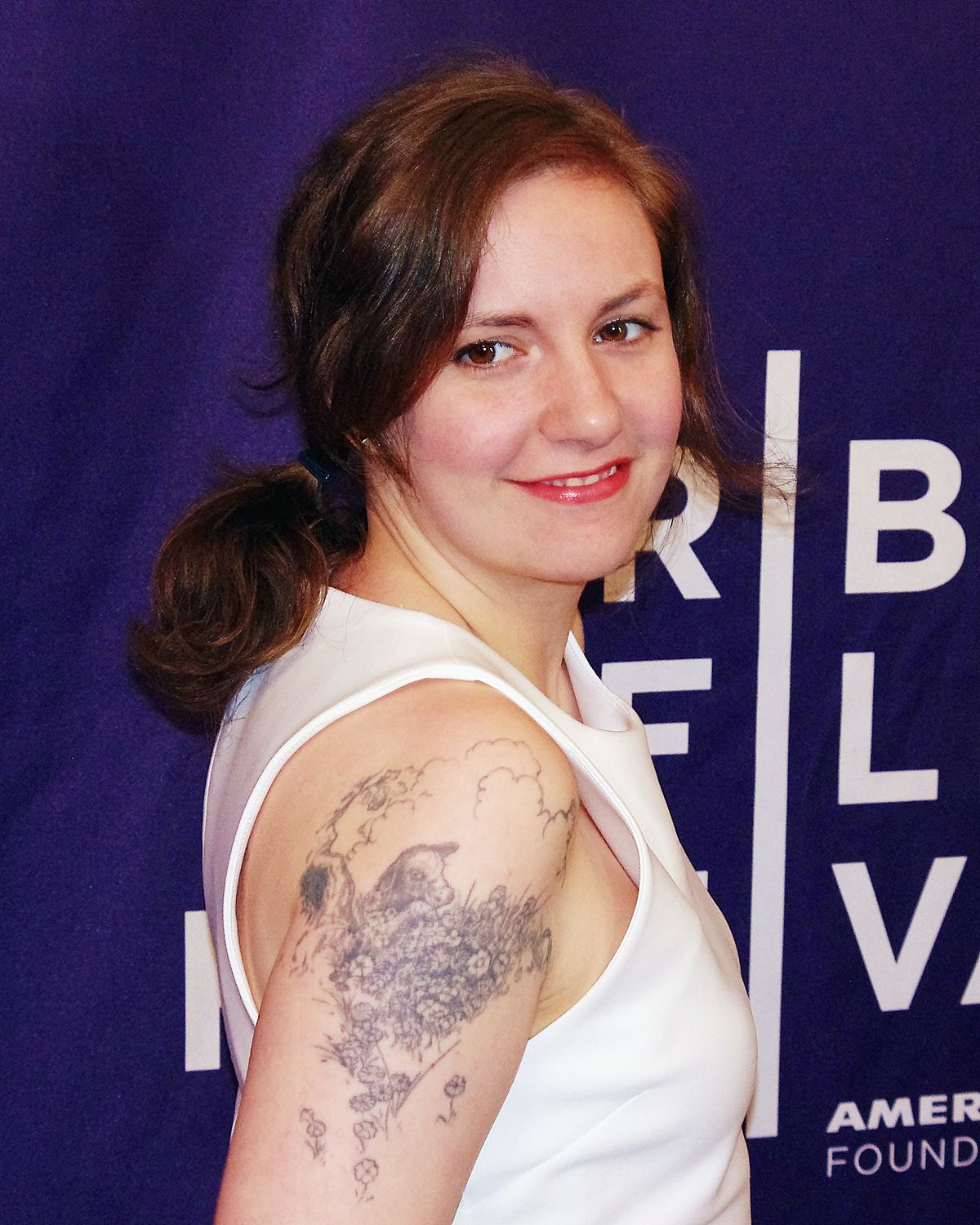
Lena Dunham
American writer and director
19
APPEARANCES
18
PODCASTS
Jun 28, 2026

speaker_0NARRATOR
find, don't call me,

Lena DunhamGUEST
And then she realized that she had no idea how to exist in the wild and the guy that she'd come with wasn't actually that fun and she went home.
Lena DunhamGUEST
But we all have a story like this about this city, but truly I'm so delighted to be here with you guys.
Lena DunhamGUEST
I wasn't even gonna come and then I remembered how fun and vibrant this San Francisco vibe is.
1 HR 12 MINS LATER


Lena DunhamGUEST
was having a moment where I thought that I could sort of reverse engineer back my way into this adult role via the clothes.
Lena DunhamGUEST
And I bought like weird old men's straight pajamas, which I wore with like a leopard dress coat.
Lena DunhamGUEST
And it was like the feeling of getting dressed totally for my own pleasure because I was getting dressed to, I don't know, talk on the phone and watch Bachelor in Paradise.
6 MINS LATER


Amna NawazHOST
I wonder how you dealt with that at the time, how you navigated that on top of managing the responsibility of a successful show and running a team and trying to be creative in the moment.

Amna NawazHOST
I wonder how you dealt with that at the time, how you navigated that on top of managing the responsibility of a successful show and running a team and trying to be creative in the moment.
Lena DunhamGUEST
I mean, I've said I remember s- like joining Twitter the year that Girls started.
Lena DunhamGUEST
We've become used to, you know, I don't know, the Grammys happen and then everybody gets on with like 57 opinions about Sabrina Carpenter's shorts, and we are used to that cycle, but it was new, and, um, people were trying to figure out what it was and what it meant.


Amy PoehlerHOST
So now that you've done a bunch of these, what have you learned about how you like to talk about it? How do you take care of yourself when you talk about it? These are such good questions.
Lena DunhamGUEST
I was like, it's a strange thing to write a book about what it costs you to go on press tours and talk about yourself and then go on a press tour and talk about it.
Lena DunhamGUEST
Like maybe the most truthful thing would have been to like, just, you know, drop it like a surprise album and then go, I'll be in my bedroom for six months.
Lena DunhamGUEST
But at the same time, I really love, this is going to sound, I really love books and, um, but I really love books and I really love, I feel really lucky that I got to write it and really like, and there's, and there's issues in it.
Lena DunhamGUEST
Like, you know, the trying to talk about what it, how we, um, kind of, um, perceive and consume female celebrity, how chronic illness, mental health stuff.
46 MINS LATER

Lena DunhamGUEST
this is gonna be involve a little bit of history, which is that we have a congenital terror.
Lena DunhamGUEST
It's something where we're, where sleep and death get equated early in childhood.
14 MINS LATER


Elissa NadwornyHOST
It's hard, if people, younger people won't remember, but this was such a phenomenon, and you were thrust in the spotlight.
Lena DunhamGUEST
You know, young, when I see young people in the public eye now, there's much of, more of a s- people know the term media training.
Lena DunhamGUEST
There's, doesn't mean that they don't get up to trouble, but there's a different kind of consciousness if you've grown up with it, and this was sort of the Wild West.
Lena DunhamGUEST
So, so these years were very dense with creative, um, education, and I had amazing, I mean, Judd Apatow was my television mentor, and he took me through this process, and I worked with an incredible cast and an incredible crew.
Lena DunhamGUEST
But I also was extreme feeling, I am by nature, um, which sometimes surpri- I'm very introverted.
Lena DunhamGUEST
I think if we're defining introvert by sort of being around people either gives you energy-


11 MINS LATER
speaker_6UNKNOWN
I'm gonna kill them, all of them.

Dolly AldertonMODERATOR
question for people who
Lena DunhamGUEST
And, you know, I think one of the big lessons for me of chronic illness is, you know, we're all headed in the same direction of our, unless Elon Musk is able to pull through and and, you know, give us those cyborg casings.
11 MINS LATER
speaker_5UNKNOWN
Actually,
Mia SorrentiNARRATOR
Let's join the discussion now, live at the Hackney Empire.
speaker_0ADVERTISER
you.

speaker_2SOUNDBITE_SPEAKER
[laughs]
Lena DunhamGUEST
Which is [laughs], which is that you have these things happen to you that are beyond your wildest dreams, where you're getting to live your passion, and you never wanna complain about that.
Lena DunhamGUEST
Because I know so many artists who haven't had that chance, and so, and, but at the same time, you are isolated, and that makes it harder to let people in when something challenging is happening.
Lena DunhamGUEST
People may not take it as seriously because they, because if you have the kind of resources and seemingly the attention for it to be fixed.
Lena DunhamGUEST
And, and now that I look back, you know, my mother said this thing at one point, and I think it's in the book, where I was like, "I'm so glad you're my mother," and she said, "It could've been no other way." And that's really stayed with me, and there have been many challenging moments, but there have also been so many things that have happened where it could've been no other way.
19 MINS LATER


Rachel MartinHOST
If people, younger people won't remember, but this was such a phenomenon, and you were thrust in the spotlight.
Lena DunhamGUEST
You know, young, when I see young people in the public eye now, there's much of, more of us, people know the term media training.
Lena DunhamGUEST
There's, doesn't mean that they don't get up to trouble, but there's a different kind of consciousness if you've grown up with it, and this was sort of the Wild West.
Lena DunhamGUEST
So, so these years were very dense with creative, um, education, and I had amazing...
Lena DunhamGUEST
I mean, Judd Apatow was my television mentor, and he took me through this process, and I worked with an incredible cast and an incredible crew.
28 MINS LATER


Lena DunhamGUEST
Like, you are a signifier of reclamation, the thoughtfulness with which you have engaged.
Lena DunhamGUEST
And what I'm so impressed by is you've not just engaged your own story or kind of w- reworked that, but also worked really hard to engage with other women who have been through things that may not be identical, but, and also work with them to do the challenging and investigative kind of procedure that is involved with underst- And also, I think a huge amount of why we are revisiting, whether it's how we treated teenage girls, the pa- the paparazzi treated teenage girls in the early 2000s-
37 MINS LATER
Lena DunhamGUEST
And, you know, if I'm lucky enough to be a parent, that is what, the thing I would wanna hold onto most in my children.
Lena DunhamGUEST
I just think it's, it's why I love having friends with kids, is just to be with that imagination.


Lena DunhamGUEST
And what I was thinking about was the idea that being famous and being sick are two conditions that we're sort of taught not to talk about.
Lena DunhamGUEST
There are two different kinds of isolation that other people don't necessarily want to hear you complain about for different reasons.
10 MINS LATER

Sheinelle JonesHOST
When did you realize that this is more than just taking it and feeling better, that it was an issue, that it was a problem?


Lena DunhamGUEST
But what was amazing was I had been, I knew I had endometriosis, and I'd been writing about my health, which involved more symptoms.
Lena DunhamGUEST
And this woman had been paying attention, and she said, "Even the way that you run, the way that your skin flushes, it all makes sense." And sent me to this doctor at Johns Hopkins, and now there's more awareness about, there's both more awareness about Ehlers-Danlos syndrome, other sort of autoimmune illness, the intersection between all these things, and endometriosis.
Lena DunhamGUEST
But it was also a huge moment for me, 'cause I was like, you know, a Jewish girl who was raised to be like, "The doctor's always right."
Lena DunhamGUEST
And it's about this family that potentially, it's unclear whether they committed sort of like mass acts of pedophilia or whether there was a sort of, um, like satanic panic moment that happened.

Lena DunhamGUEST
to-You know, I don't know, the Grammys happen, and then everybody gets on with, like, 57 opinions about Sabrina Carpenter's shorts.
Lena DunhamGUEST
And we are used to that cycle, but it was new, and, um, people were trying to figure out what it was and what it meant.
Lena DunhamGUEST
And we happened to be in New York at a moment when New York media was really the center of that, and we were sort of adjacent to the people who were writing, but just far enough away that they could be pretty hypercritical, but just close enough that it could sort of feel a little like eating your own.
Lena DunhamGUEST
It's a fascinating study in, in so much about creativity, human behavior, you know, how we adapt to new technologies.

Lena DunhamGUEST
And he said, "Lena, it's like once you have that experience as a kid, it's like, like the weak wolf that gets picked off the pack.
Lena DunhamGUEST
Like, someone who is looking for that sees you." And it wasn't shaming, it wasn't...
Lena DunhamGUEST
People who wanna cross boundaries are able to identify that you are someone who might not know how to deflect that and...
16 MINS LATER

David MarcheseHOST
And- and I wanna know h- how fame helped deepen that relationship, and then how fame also may have destabilized that relationship.

Lena DunhamGUEST
I mean, I have a whole sort of theory of the case about illness that would take a long time.
28 MINS LATER
David MarcheseHOST
So what do you now understand about sort of processing who you are in kind of a public fashion?

speaker_3SOUNDBITE_SPEAKER
Hmm.
Lena DunhamGUEST
But the other thing that I've learned is that I don't have to respond to everything, which means I say less things, which means that happens less.
Lena DunhamGUEST
And about how the show could have done better in terms of diversity and inclusion.
Lena DunhamGUEST
Why would I ever fight that? And I was so glad that the show was a generator for dialogue around that.
26 MINS LATER