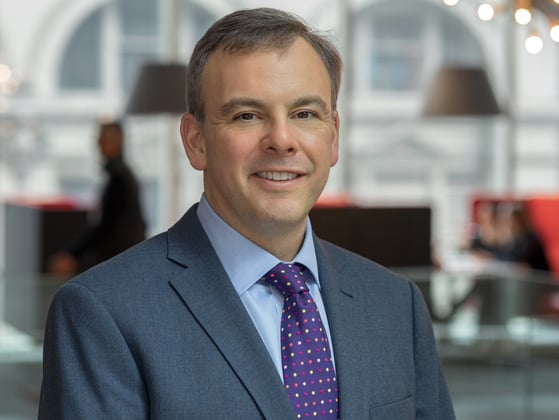
Lee A Klaskow
26
APPEARANCES
4
PODCASTS
Oct 5, 2026
speaker_4HOST
Talk to us about what you see that's particularly interesting when it comes to this deal.

Lee KlaskowGUEST
So what you're doing is the number one freight broker, CH Robinson, is buying the number three freight broker here in the United States, which is RXO.
Lee KlaskowGUEST
Uh, the combined two companies will have around twenty percent market share of the US market.
Lee KlaskowGUEST
Uh, you know, what's really interesting to us, and it kind of, uh, dovetails from the conversation we were having earlier with AI, CH Robinson's really been a leader, uh, within the freight transportation market in terms of investing and creating AI to be a more profitable freight broker.
Lee KlaskowGUEST
And they also have implemented over the last couple of years lean management, uh, systems, which have made their average freight broker, uh, much more, uh, productive than, uh, your average RXO freight broker.
Lee KlaskowGUEST
So you bring in those RXO freight brokers into the CH, uh, uh, Robinson's model, and you should have significant, um, uh, productivity gains, not only from the top line, but also from a, a productivity standpoint.
speaker_4HOST
A- and tell me, why exactly does this deal make sense right now in particular? Is this about gaining mar-- uh, you know, scale in what's a particularly, uh, difficult freight market right now?
Lee KlaskowGUEST
The space is obviously early cycle and people are a little excited about what's going on with the industrial sector.
Lee KlaskowGUEST
economy, given the data center build-out that's really been helping with freight.

Lee KlaskowGUEST
I really do think that the benefits that the current administration is getting are not going to be reversed, because I think that a lot of folks, when looking back in the rearview mirror, think that the lax rules that they had before just didn't work.
Lee KlaskowGUEST
And I think a lot of folks in and out of the industry didn't realize how corrupt some of the bad players were, whether it's when ELDs came, most people thought, oh, this is great.
Lee KlaskowGUEST
But so much is calling an Eastern European hacker and getting into your ELD and kind of rolling back your hours.
10 MINS LATER

Craig FullerHOST
Lee, do you think there's additional operating improvements and operating leverage available for the LTL carriers?
Lee KlaskowGUEST
So, uh, at Bloomberg Intelligence, uh, you know, we cover all modes of transportation.
Lee KlaskowGUEST
Uh, to your point, it's been, uh, a pretty exciting time to be in this space, especially since, uh, the pandemic.
Lee KlaskowGUEST
Um, and, and the, the interest right now is obviously being driven, you know, you mentioned it a couple times, on the truckload market.
13 MINS LATER

Craig FullerHOST
If this cycle does go on for a couple of years, I mean, wh- where, which companies are the best position to take advantage of a elongated cycle?
Lee KlaskowGUEST
You know, what they've been able to show is that their cost controls, they've had a number of different programs in place that are really starting to pay off.
Lee KlaskowGUEST
They noted that they didn't see much demand destruction from higher fuel costs, which is a very good thing to hear.
Scarlet FuHOST
How well positioned or perhaps not so well positioned is FedEx and along with its peers for that?
Lee KlaskowGUEST
And what they tend to do is they go into a market because they want to reduce their costs to serve, their costs to do their core competency, their main businesses, which obviously is the Amazon.com business.
Lee KlaskowGUEST
So what they're trying to do is really take the excess capacity, the expertise that they have, that they built doing things in-house, and kind of be able to lower the, like I said, lower the average cost.
Lee KlaskowGUEST
We think that, you know, for commoditized freight, yes, they can make inroads into the brokers and freight forwarding businesses.
Paul SweeneyHOST
The railroad business would create the first truly coast-to-coast, east-west rail system in the U.S. Lee, but of course, the big, big, big issue is will the regulators allow it? What's the feeling here?
Lee KlaskowGUEST
Obviously, if you're Union Pacific or Northern and Southern, you really think the deal is going to get done.
Lee KlaskowGUEST
If you're the other railroads or maybe some trucking companies, you might be hoping that it doesn't.
Lee KlaskowGUEST
A long time ago, I think it was 2001, they changed the rules for mergers at the STB.
Paul SweeneyHOST
If I'm CSX, do I feel the need to maybe reach out to Union Pacific or maybe the other Western Railroad there and figure out that we need to do a deal as well?
Scarlet FuHOST
And Lee, a good report here from FedEx, whose shares are right now up about 2%, a forecast that came in better than most people expected, including the range that it offered.
Lee KlaskowGUEST
Yeah, it definitely was a nice print for their third quarter, which includes their peak season in December.
Lee KlaskowGUEST
Their freight business, which is their less than truckload business, continues to struggle.
Paul SweeneyHOST
What are you looking for there? What's the what's what's the story there, do you think?
Lee KlaskowGUEST
Yeah, I mean, we all have our own issues, but FedEx certainly does have a number of them.
Lee KlaskowGUEST
And, you know, they've been busy trying to restructure their European business.
Lee KlaskowGUEST
that they'll come out of this transformation a more nimble parcel provider that can really take advantage of some of the strong B2B markets that they're going after and higher margin B2C business also as well.
Paul SweeneyHOST
Lee, what do you make here of what we're seeing in the Middle East and how it may impact global trade? How are you thinking about it?
Lee KlaskowGUEST
So, I mean, at the end of the day, it's going to put upward pressure on rates because there's now a premium on capacity, especially as it relates to the tanker industry.
Lee KlaskowGUEST
They're The ripple effect really for my world, because I cover marine shipping, air freight guys, and also the folks here in the U.S., the railroads and trucking companies, the biggest impact is going to be the inflationary aspect and the higher diesel prices.
Lee KlaskowGUEST
When diesel prices rise significantly, it tends to weigh on margins because there is a lag effect on the fuel surcharges that they charge their customers.
Scarlet FuHOST
So what is the story with J.B. Hunt and how it's positioned for the current market environment?
Lee KlaskowGUEST
Yeah, if you take a look at the stock, it's been up a lot over the last couple of months.
Lee KlaskowGUEST
And some of that has been in anticipation of the trucking spot market to kind of turn more positively.
Lee KlaskowGUEST
It was off a lot in the after markets last night, but it's come back a little bit.
Lee KlaskowGUEST
And that's really being driven, I think, because of that kind of high expectations.
Scarlet FuHOST
Is that the catalyst to get people excited again about J.B. Hunt? You know, what kind of cost savings it can realize this year? Maybe it can go further than what it had projected when it comes to reducing expenses?
Paul SweeneyHOST
For more, guest hosts Kristine Aquino and I are joined by Lee Klaskow, Bloomberg Intelligence Senior Transport, Logistics and Chipping Analyst.
Lee KlaskowGUEST
We're thinking that next year is going to be a better year, but it's not going to be a great year.
Lee KlaskowGUEST
I think investors would really like to see it get into the double digits and even mid teens.
Lee KlaskowGUEST
But I think we might be a ways out for that for a while, and that's really being driven on the demand side.
Lee KlaskowGUEST
We're really expecting tepid demand across the board at low single-digit growth.

Kristine AquinoHOST
Yeah, well, if that does not clear the regulators, Lee, what do you think that will say about the future of potential consolidation or strategic partnerships across the rail industry? Do you think people are going to see it as a one-off sort of situation, or is it kind of a harbinger of challenges to come when it comes to M&A in this space?
Lee KlaskowGUEST
And, you know, they gave us some color about the peak season, peak season from an average daily volume growth.
Lee KlaskowGUEST
That could increase to high single digits because there's one extra operating day in the quarter or during peak season, I should say.
Lee KlaskowGUEST
The problem is, is that in their second half, they're going to be having a lot of headwinds that they're going to have to deal with.
Scarlet FuHOST
Can you compare and contrast their approach to some of the macro challenges that faces the industry?
Paul SweeneyHOST
For more on this, guest host Lisa Mateo and I were joined by Lee Klaskow, Bloomberg Intelligence Senior Transport, Logistics, and Shipping Analyst.
Lee KlaskowGUEST
What's going on at UPS is they are making progress and they're executing on their plan and their plan plans.
Lee KlaskowGUEST
really is to create a network that can not only handle but thrive in an ever-changing environment.
Lee KlaskowGUEST
And what they've been able to do is increase productivity through technology, whether it's automation or AI.

Lisa MateoHOST
Where were they seen? And what kind of, let's say, year-over-year cost savings does it expect in 2025 from all of this?
Lee KlaskowGUEST
Yeah, trust me, I enjoy being a flavor of the month, so I'm glad to be here and talk about transport.
Lee KlaskowGUEST
You know, what's going on at UPS is they are making progress and they're executing on their plan.
Lee KlaskowGUEST
And their plan really is to create a network that can not only handle but thrive in an ever-changing environment.
Lee KlaskowGUEST
And what they've been able to do is increase productivity through technology, whether it's automation or AI.
Lisa MateoHOST
Where were they seen and what kind of, let's say, year-over-year cost savings does it expect in 2025 from all of this?
Paul SweeneyHOST
How do you look at them and their business models as it's kind of reflective of maybe how the U.S. economy is going?
Lee KlaskowGUEST
Well, you know, what I would say is, you know, their stock is on fire right now.
Lee KlaskowGUEST
A lot of that has to do with them doing company specific company driven cost cutting measures.
Lee KlaskowGUEST
It's kind of more about, you know, what is J.B. Hunt doing? And they've increased their productivity or reduced costs for around $20 million, which added 16 cents to the bottom line and helped fuel that beat.
Lee KlaskowGUEST
What I would say, though, to the macro is we are pretty interested in management's comments on the peak season.
Paul SweeneyHOST
Talk to us about the state of the of that part of the business, just, I guess, attracting and retaining drivers.

Lee KlaskowGUEST
A lot of those headwinds are related to the kind of more protectionist stances from the Trump administration.
Lee KlaskowGUEST
One of those, which actually had bipartisan support back in the Biden days, was getting rid of de minimis exemptions, which really allows lower valued goods to be imported into the United States.
Tom BusbyHOST
But FedEx had a couple of initiatives, Drive and Network 2.0. How have the company cut costs and shed businesses? How has that impacted the business? And what is there left besides FedEx Freight to cut?
Lee KlaskowGUEST
Yeah, I think the whole speculation before the deal was formally announced about a possible consolidation And I think people are just trying to take maybe a breather right now because there are some execution risks, right? This deal is not going to close.
Lee KlaskowGUEST
If it does close until early 2027, it needs regulatory approval, which is not an easy thing to do.
Lee KlaskowGUEST
There were certain rules that were created at the Surface Transportation Board to make it very difficult for large Class 1 rail mergers to happen.
Lee KlaskowGUEST
That was because at one time in the 80s and 90s, Those sorts of deals resulted in terrible service.
Lee KlaskowGUEST
I think that the rails today were much more cognizant of service as it relates to integration.
Lee KlaskowGUEST
And I don't really think either company, once assuming a merger does happen, are going scorched earth in terms of what they're going to do to their networks.

Isabelle LeeHOST
How do they plan to make money back? What are the financial wins, so to speak, to justify that hefty price tag?

Lee KlaskowGUEST
Yeah, I think the whole speculation before the deal was formally announced about a possible consolidation, you know, really fueled shares of Norfolk Southern previously.
Lee KlaskowGUEST
And I think people are just trying to take maybe a breather right now because there are some execution risks, right? This deal is not going to close if it does close.
Lee KlaskowGUEST
until early 2027, it needs regulatory approval, which is not an easy thing to do.
Lee KlaskowGUEST
There were certain rules that were created at the surface transportation board to make it very difficult for large class one rail mergers to happen.
Lee KlaskowGUEST
That was because at one time in the 80s and 90s, Those sorts of deals resulted in terrible service.
Lee KlaskowGUEST
I think that the rails today were much more cognizant of service as it relates to integration.
Isabelle LeeHOST
How do they plan to make money back? What are the financial wins, so to speak, to justify that hefty price tag?
Lee KlaskowGUEST
I mean, it's possible, given where the surface transportation rules are now as it relates to large acquisitions.
Lee KlaskowGUEST
You know, we give it a relatively low probability, maybe 25, 30, 35 percent chance of happening.
Lee KlaskowGUEST
The STB is actually in August reviewing some of its rules to streamline some of the processes that it deals with.
Paul SweeneyHOST
What cost do I take out? What are the synergies, do you think? What's the reason for doing this deal?
Lee KlaskowGUEST
so um their last quarter was a decent quarter but the quarter uh looking forward their first physical quarter is not going to be a great quarter and that's really just given the uncertainty that is being driven by the tariffs so you know they're seeing weakness in their b2b business they're seeing weakness in their industrial kind of end markets, and they're obviously seeing some weakness for volumes that are coming out of China into the United States.
Lee KlaskowGUEST
Plus, at the end of the day, the company is transitioning from one that used to be B2B, business to business, is now is mostly, you know, the growth really is B2C, so that e-commerce business, which is more expensive to deliver.
Alix SteelHOST
They're going to focus on higher margin packages that could wind up being much more stable and profitable, right?
Lee KlaskowGUEST
They mentioned on the call that some of their business out of Amazon fulfillment centers just really wasn't profitable for them.
Lee KlaskowGUEST
And if they're able to create capacity by getting rid of some of this business and filling it with uh what they call smb small to mid-sized businesses um you know that's going to be a good thing for its margins overall and it'll allow them to generate the kind of returns that they can reinvest in in their network because you know while they're doing a lot of investing and now in automation and they're closing some um some facilities just to be a little more nimble than they were in the past they're still going to continue to have to make those investments because technology continues to change and those benefits will need to be driven by those investments.
Lee KlaskowGUEST
Well, we've been saying for a while that tariffs are not good for the freight markets.
Lee KlaskowGUEST
And the reason for that is obviously they're inflationary and the consumer is a big part of the U.S. economy.
Lee KlaskowGUEST
Those are marine shipping lines because they'll be hauling less containers from Asia to the United States.
Lee KlaskowGUEST
It'll impact railroads such as hauling less freight, and it'll impact truckload carriers and LTL carriers, and also it's going to obviously impact the parcel carriers like FedEx and UPS.
Paul SweeneyHOST
Lee, I'm going to ask kind of the same question I asked to Poonam Goyal about Nike, which is how much of the underperformance in FedEx results was due to just maybe the market being a little softer, the consumer being a little softer, or FedEx specific issues?
Lee KlaskowGUEST
Hey, Paul, I think it's a lot has to do with the fact that the macros is a little weaker than they thought.
Lee KlaskowGUEST
And the weakness that they were seeing is in the business to business volumes, as well as the industrial economy.
Lee KlaskowGUEST
You know, they have a lot of exposure to the industrial economy in their FedEx freight business, which is their less than truckload business.
Lee KlaskowGUEST
That business kind of disappointed on the earnings, while its parcel business, express business, slightly beat expectations.
Paul SweeneyHOST
That looks pretty attractive, but I guess you have to buy off on management's ability to execute, right?


Tom KeeneHOST
What do the tariffs mean to the I-42 manufacturing cor- corridor in North Carolina?
Lee KlaskowGUEST
Well, interesting enough, like, you know, there is a long secular trend of bringing more manufacturing back to the United States.
Lee KlaskowGUEST
So just because tariffs go on doesn't mean there's gonna be a light switch and manufacturing's gonna start, and that's gonna just increase the demand for trucking.
Lee KlaskowGUEST
The industrial sector's gonna be impacted because of lack of demand, and we're seeing that in flatbed rates.
Lee KlaskowGUEST
So flatbed rates are usually tied to the industrial economy, uh, and they, and they've been, uh, pretty weak, uh, uh, recently.
Scroll for more appearances