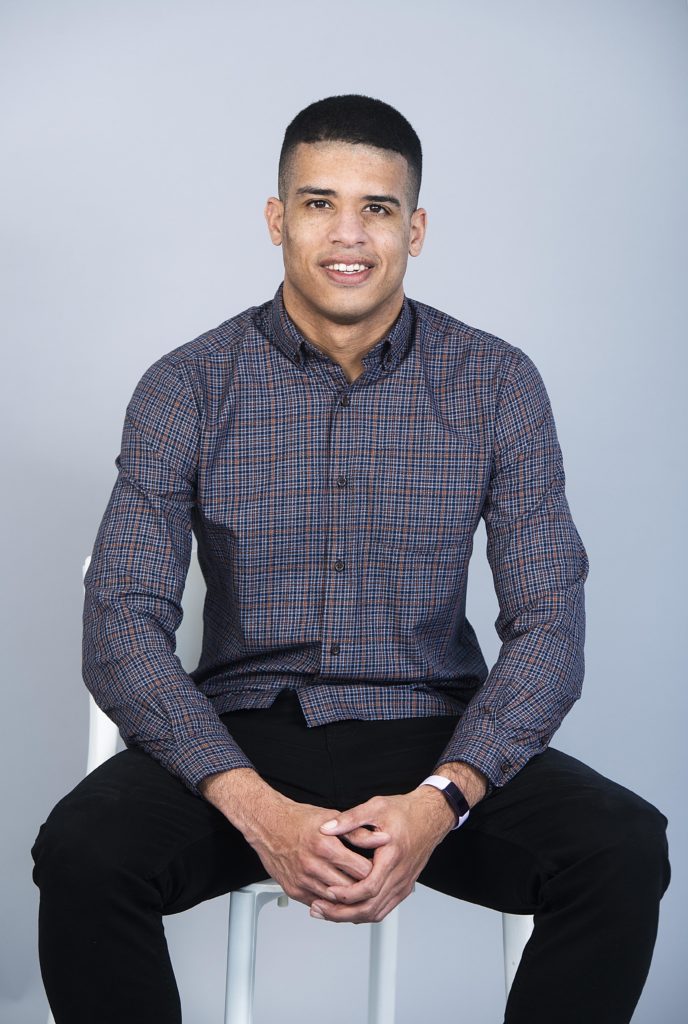
Lee Chambers
CEO of Male Allies UK
6
APPEARANCES
6
PODCASTS
Oct 9, 2026


Adam FlemingHOST
Um, Lee, do you think that, that the, the people on the group chat not saying anything or apparently not intervening as the, as it seems, that goes as far as complicity in, in a potential crime?

Lee ChambersGUEST
So from obviously looking at how extreme it is, the objectification, dehumanization, especially if you're a survivor, but to be honest, if you're just generally human, uh, you can see that.
Lee ChambersGUEST
Uh, and I think that, yeah, it does get us to reflect on sadly just how normalized that has become.
Lee ChambersGUEST
If I look at the women that I work alongside who do similar work to me, if I think about what I get in terms of, I get mocked, I get a bit of racism.
Lee ChambersGUEST
And there's a very different normalization of just how toxic people can be in those digital environments and how that turns into actual, tangible, damaging, harmful behaviors in real life.
15 MINS LATER
Adam FlemingHOST
Because if, because if, if most men think it's bad, why do they end up in situations like the, the ones Olivia just described, where everyone at the party is rating the girls out of 10?


Lee ChambersGUEST
it brought up associations that felt very combative, very kind of good versus bad, very binary, and very much not about building bridges, but more like blowing up bridges.
Lee ChambersGUEST
And reflecting on why, it's because there's so much around the First and the Second World War in British education, the allied forces, the alliance, the allies coming to support each other.
Lee ChambersGUEST
They definitely don't like that kind of terminology because it simply sounds very, very fighty.
6 MINS LATER

Crystal HicksHOST
So you work a lot in workplaces with organisations, just really keen to understand, like, do you think there's a bit of a perception gap, a bit of a bias around how men and women experience the workplace? I wonder if you could speak a little to that.
Lee ChambersGUEST
Yeah, I mean, I think there's so much to be said, Crystal, and it's one of the reasons why your campaign is so important.
Lee ChambersGUEST
I mean, what we found is one of the first pieces of research I came across when I started this journey 10 years ago was the Work With Me research that was carried out in America and Canada.
Lee ChambersGUEST
And what that showed is they interviewed men and women to find out what the gap between women's live reality and men's perception of women's reality was.
Lee ChambersGUEST
And it was fascinating because 81% of women felt some form of exclusion at work, but 91% of men didn't think they were excluding women.
Lee ChambersGUEST
And that massive gap in perception versus reality is in many ways the lived experience gap we still see in workplaces today um where women you know we women's the centering of women's stories hasn't been done from a historical context you can walk along the street and almost all the statues of men there's more statues of animals than statues of women who've lived and changed the world all the streets are named after men the history textbooks omitted a lot of women to ensure there was lots of space for men um and workplaces were built in a way that still to this day we think about much of the terminology that we use was co-opted from the military at a time when women were not allowed to enroll in the military either and we still use company and firm and battlefield and chains of command and hierarchies and strategies and All the things that terminology has been taken from a very combative, very competitive and very one-dimensional world that's still deeply woven into the business landscapes that we work within.
Lee ChambersGUEST
And that's before we look at the massive advances that women have made over the past 50 years in many, many areas of society.
Crystal HicksHOST
So, yeah, just have you seen storytelling and the impact and create change in this space? Do you think it's as important as our making it out to be?


Joeli BrearleyHOST
[upbeat music] Next up, we have friend of the podcast and founder of Male Allies, Lee Chambers.

Lee ChambersGUEST
So there's definite connection between the threads around what boys are consuming, where the sources of education come from different areas, uh, how they feel about the lack of physical spaces and how that is driving them into online spaces.
Lee ChambersGUEST
Uh, the lack of sometimes emotionally available adults in their own lives or lack of places to attach to, which makes them search for a place to belong, a place to be understood, and a place to be listened to, and then how that then plays a role in how they turn up in the real world, and how they also consume online content where they go to learn about topics, again, such as sex, uh, their own perspectives around masculinity and femininity.
Lee ChambersGUEST
Uh, and what we found from a lot of the boys is they are actively searching for understanding at that age while they're going through adolescence, and they are getting a lot of mixed messages that then create confusion, that then relate back to some of these, some of these statistics that we found in our research.

Nuala McGovernHOST
Um, so for example, why do you think that one in three boys that you surveyed think women's rights aren't important? How do you think that intersects with AI?
Lee ChambersGUEST
So we dug a little bit deeper into why they felt that way after providing them insight around, you know, women's bodily autonomy, right to property, right to vote, right to stand, uh, to give them a bit of concept.
Lee ChambersGUEST
I think some boys didn't really understand the history, the f- fight that had gone for those rights and how quickly they could be potentially reverted.
Lee ChambersGUEST
They didn't really have a lot of context around their own lived experience, around some of the barriers that women and girls face, and obviously some of the content they'd consumed had given them ideas that actually feminism had gone either too far or would sort itself out without their engagement.


Sean MoncrieffHOST
Is that what it is? Is it a lack of life experience as there's something else going on here, particularly for young boys, that the real world, they find it a slightly hostile place or they find it an uncomfortable place?
Lee ChambersGUEST
Well, definitely from, obviously our research is much bigger than just the AI question.
Lee ChambersGUEST
We had 81% of boys saying that they don't feel there are enough physical spaces for them to mess around, to be boys, to make some mistakes, to learn how to be men, to just hang out anymore.
Lee ChambersGUEST
They also feel that all the conversations around masculinity are almost always negative conversations.
Lee ChambersGUEST
and that they're being blamed for some of the things that their grandfather might have done, but they're not even a man yet.
Lee ChambersGUEST
And that does mean that sometimes they can fall into certain spaces online that actually tell them it's not their fault, it's everyone else's fault.
Sean MoncrieffHOST
Well, I mean, apart from the, you know, horrible Andrew Tate types, but there's very few male role models for these young lads.