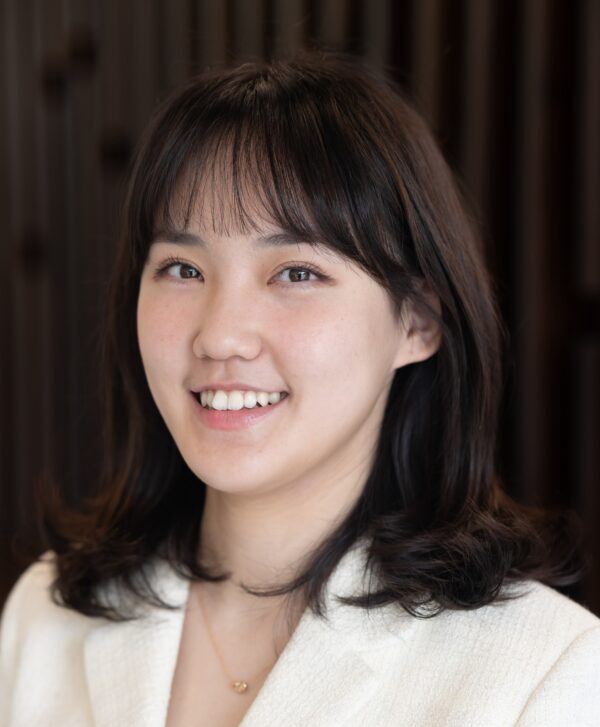
Leah Kim
Leah 수진 Kim is a storyteller, mental-health advocate, and podcaster, and author of "Mom, Unfiltered" (Bloomsbury, 2026); formerly Nike's Global Yoga Ambassador.
6
APPEARANCES
6
PODCASTS
Sep 17, 2026


Leah KimGUEST
Yeah, I've been always interested in sort of like, doing things together, like listening together, sort of people talk about like inter listening, where you kind of listen mutually and create meanings, your storytelling and sound making and listening to a sound in a certain way.
Leah KimGUEST
And I guess doing that, radio is such a good platform and medium to do that, because you can sort of share stories and sounds through radio wave to tons of people across the world, but also in your community.
Leah KimGUEST
and I guess when I started out I was sort of exploring through the university radio and then I started doing sort of pre-recorded shows on N10AS and also Radio Halitiva but when I entered FBI radio it was sort of more physical and kind of connected in a way that I can look at other people in the eyes and tell them stories and that was such a beautiful connection that I found here and I guess I was really drawn to Race Matters that way.
Leah KimGUEST
And thanks to Sahaj, I could sort of explore ways of using sound and sort of like exploratory and like experiential sound making as a way of storytelling.
7 MINS LATER

speaker_3ADVERTISER
Task performance does not guarantee future results.
Leah KimGUEST
I think that as a Korean American, second generation, and I grew up in California.
Leah KimGUEST
where my parents always tried to get us into the more white suburbs and white schools because from their perspective as immigrants, that is what meant safety, success, and all of that.
Leah KimGUEST
And I didn't have the language for it because I grew up in very progressive environments where people were like, oh, obviously we love all cultures and racism is over and all this kind of la-la land mentality.
Leah KimGUEST
But I could feel, without any overt experiences, I didn't witness violent racism or things like that, but I could feel it.
7 MINS LATER
Hollay GhaderyHOST
And in the way that you talk to your children about, the way your husband talks to your children about it, that you relate to us, I would love for you to tell our listeners about what you are trying to nurture with your children and these biracial and bicultural little humans.

speaker_3NARRATOR
Again, thank you for seeing that and understanding how intentional that was.
Leah KimGUEST
I think that as a Korean American, you know, second generation, and I grew up in California where my parents always tried to get us into the more white suburbs and white schools because from their perspective as immigrants, that is what meant safety, success, and all of that.
Leah KimGUEST
And I didn't have the language for it because I grew up in very progressive environments where people were like, oh, obviously we love all cultures and racism is over and, you know, all this kind of la-la land mentality.
Leah KimGUEST
But I could feel, you know, without any overt... experiences i i you know i didn't witness by like violent racism or things like that but I could feel it.
Leah KimGUEST
I could feel the way that, like, why weren't there more Black children in my schools? And then when the L.A.
Leah KimGUEST
uprising, or, you know, sometimes called the riots, L.A. riots, happened in 1992, and Koreatown was pitted against the Black community, That just struck something so deep in my soul of this injustice that my Korean, you know, community ancestors was part of perpetrating, you know, against Black people.
6 MINS LATER
Hollay GhaderyHOST
I would love for you to tell our listeners about what you are trying to nurture with your children and these biracial and bicultural little humans.

speaker_3ADVERTISER
All season long on ESPN and streaming on the ESPN app.
Leah KimGUEST
I think that as a Korean American, second generation, and I grew up in California.
Leah KimGUEST
where my parents always tried to get us into the more white suburbs and white schools because from their perspective as immigrants, that is what meant safety, success, and all of that.
Leah KimGUEST
And I didn't have the language for it because I grew up in very progressive environments where people were like, oh, obviously we love all cultures and racism is over and all this kind of la-la land mentality.
Leah KimGUEST
But I could feel, without any overt experiences, I didn't witness violent racism or things like that, but I could feel it.
7 MINS LATER

Hollay GhaderyHOST
I would love for you to tell our listeners about what you are trying to nurture with your children and these biracial and bicultural little humans.

Serena WilliamsSOUNDBITE_SPEAKER
To stay informed about serious side effects, go to roe.co slash safety.
Leah KimGUEST
I think that as a Korean American, second generation, and I grew up in California.
Leah KimGUEST
where my parents always tried to get us into the more white suburbs and white schools because from their perspective as immigrants, that is what meant safety, success, and all of that.
Leah KimGUEST
And I didn't have the language for it because I grew up in very progressive environments, right? where people were like, oh, obviously we love all cultures and racism is over and all this kind of la-la land mentality.
Leah KimGUEST
But I could feel, without any overt experiences, I didn't witness violent racism or things like that, but I could feel it.
7 MINS LATER
Hollay GhaderyHOST
I would love for you to tell our listeners about what you are trying to nurture with your children and these biracial and bicultural little humans.

19:08

I mean, this is now 11 years ago, right? But how it challenged at the time the way, how you understood yourself.
Leah KimGUEST
I mean, I think the, there's this huge push in the so-called natural birth, right? Which that doesn't even make sense.
Leah KimGUEST
'Cause to say that a vaginal birth is natural implies that any other, you know, like a C-section or any intervention is unnatural.
Leah KimGUEST
And, like, who wants to be categorized as unnatural, especially at, like, the most vulnerable time in, you know, a mother's life? And I think, like, in that one word of natural lives patriarchy, lives white supremacy, lives, like, economic privilege, all, all of that, right? And so, um, I think for me it was that how much that part had not been investigated.
9 MINS LATER