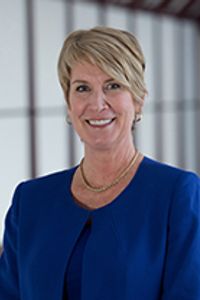
Laura Devlin
American Politician
2
APPEARANCES
1
PODCASTS
Oct 6, 2026

Marcius ExtavourHOST
view and part of this thinking goes our our time horizon over which we think about stuff has shrunk for a million reasons but often the current circled reason is uh the pace of capital markets and the acceleration of technology and the need to just have a new update all the time say in business or have some new iphone that comes out every year even if there isn't really a new innovation in iphones there's just a new phone every year capitalism yeah capitalism let's simplify it to that i don't totally believe this but i am i'm not sure i guess what i think about it but i am attracted to the idea that huh if we thought in tightly longer time scales that would be better so yeah whether maybe that's true maybe it's not true is it more difficult do you think now i mean because of pressures around us to think long term are we just focused on getting through the week or is it just always as difficult as it has been maybe

Laura DevlinGUEST
Yeah, I mean, I don't know if I can speak to that, like from an educated point of view, because I think you would have to look at maybe social psychology and people's perception of time and the future.
Laura DevlinGUEST
What I can speak to is the fact that in trauma therapy, you know, one of the symptoms of PTSD is the sense of a foreshortened future.
Laura DevlinGUEST
So the idea that after you've experienced something traumatic, an illness or death of a loved one, a big accident, a life-changing event, the sense of danger and the way that that shifts your sense of self and the sense of the world around you.
Laura DevlinGUEST
Like I've worked with people that have been victims of very serious crimes or had a family member that was a victim of very serious crime.
Laura DevlinGUEST
And that sense that, yes, cynicism, it changes your worldview about people and yourself in it.
11 MINS LATER
Laura DevlinGUEST
So it's essentially a, it's a, It's based on neurobiology of how we store trauma and essentially involves using eye movement and bilateral stimulation to help people reform new relationships with traumatic memories.
Laura DevlinGUEST
But in terms of like creating a more guided approach to therapy, which is kind of our one of our main pillars of our of our brand that we are.
Laura DevlinGUEST
hoping to anchor our clinics in as we grow is the idea of a therapy roadmap so that when people are making connections with therapy, with our therapy practice, because they're in a state of crisis or they think, you know, their partners told them they need to go to therapy or their kids having panic attacks or whatever it is, they don't feel confused about what it involves because there's actually research and there's actually a lot of information about what, the therapy process looks like and what predicts better outcomes and what are really the active ingredients in therapy.
Laura DevlinGUEST
And surprisingly, the active ingredients in therapy are not any specific modality.
Laura DevlinGUEST
Now, that's not to say that specific modalities don't have evidence-backed data and research behind them.
Marcius ExtavourHOST
Are these common? Is this what you're trying to respond to with the roadmap? I'd love to hear about that.