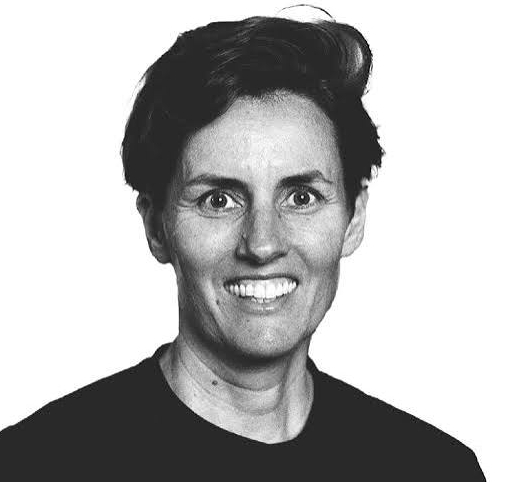
Kylee Ingram
Co-founder and CEO of Wizer, a decision intelligence platform; Australian-born former documentary and TV producer and Head of Production at Boomtown Innovation.
5
APPEARANCES
5
PODCASTS
Nov 3, 2026

Helen HoneysetHOST
So what does the research actually tell us about decision-making? What could leaders need to know about making great decisions?

Kylee IngramGUEST
I think there's a saying, no, there's probably not a saying, it's probably just out of the three people that will agree about decision signs.
Kylee IngramGUEST
If you think you have bias, and I think if we look at WISER in its heart of why we're there, it's to help people improve decisions.
Kylee IngramGUEST
But if you ask what that's about, I think it's about addressing those structural forces that stop good decisions.
Kylee IngramGUEST
And in Dr. Burke's research, she showed that there were three main pieces of bias that get in the way.
Kylee IngramGUEST
And Daniel Kahneman in Thinking Fast and Slow spoke about the biases we have as individuals.
5 MINS LATER
Helen HoneysetHOST
How can a leader actually work to shift the tide of that a little bit so they're getting that inclusivity?


Daria RudnikHOST
yeah well tell us about like how did you come up with this what you're doing now what's your path
Kylee IngramGUEST
well yeah as you said i was in television and i was doing documentaries and tv there's a very small amount of broadcasters people within the broadcasters that are commissioning editors and it can be feel very frustrating because you're like who is making these decisions and you see what's on tv and you're like i don't know what is going on and so I got into decision science then and crowd wisdom and I did a project called Crowd TV and that went really well.
Kylee IngramGUEST
We had so much fun building that with through the wisdom of the crowd and I really got into it then and I kind of moved out of TV into interactive about the same point and got couple of nominations at Cannes for the stuff I was building.
Kylee IngramGUEST
And so my co-founder did his research in Wise Crowds and came to me and said, Hey, I think you'd enjoy this.
Kylee IngramGUEST
And I think it's a bit of disruption using science of the system to say, Hey, there's a way to design decision rooms that gets you better outcomes, but are you willing to listen to it? And At the same time, I met Dr.
Kylee IngramGUEST
Juliette Burke and she was running a department at Deloitte or she'd just finished.
7 MINS LATER
Daria RudnikHOST
Maybe in your experience, do you have any cases when you can help balance this understanding of this professional kind of background and decision-making style and skills needed?

ShannonHOST
[laughs]
Kylee IngramGUEST
You know? There can be one or two people that stop, stop, stop your show from going forward.
Kylee IngramGUEST
And I got into, uh, crowd science, like, uh, wise crowd science, like how are these one or two individuals stopping something, uh, probably a decision that should be made by a bigger group, um, and what should that group look like? And from that, I got some funding and did, um, an interactive project called Crowd TV that went...
Kylee IngramGUEST
Like, it was such a fun experience, and we created a documentary, and I learned a lot about crowd science then.
Kylee IngramGUEST
And then my co-founder came to me and said, "Hey, I've just done my research on wise crowds, and I know you did this.
ShannonHOST
[laughs]


Sonia CHOST
So when did you realize that groups can sometimes make better decisions than individuals? Because I know that's something that you talk about.
Kylee IngramGUEST
Yeah, and I think part of television is there's so few – there's these gatekeepers that have access to everything.
Kylee IngramGUEST
And I thought, how on earth does this stuff get selected? And I really took a deep dive looking at – the concept of crowd wisdom and there's a number of books on it.
Kylee IngramGUEST
And, you know, the idea that it's, you know, scientific that a group of people, the right people can make a better decision than an expert and what that means.
11 MINS LATER
Sonia CHOST
So what happens if a founder doesn't have that team and they want to have someone alongside help them make that decision? Do they go to another professional? Do they go to a friend? What's your advice? I think it depends


Yvonne HeimannHOST
Would you talk about what's the difference and why does that distinction matter of how a leader actually uses decision intelligence and implements it?
Kylee IngramGUEST
There's a few things to unpack there because I think right now with AI, decision intelligence is often seen as AI making intelligent decisions for you.
Kylee IngramGUEST
And AI, even if you said to AI, "I need somebody in the room like this," it can't interrogate for a long time the way a person can.
Kylee IngramGUEST
It-- We use AI to look at some of the insights for you, but really we're trying to find you the right people.
Kylee IngramGUEST
So when we c- talk about decision intelligence, sometimes I use the word decision science to keep away from that AI piece or distinguish it, but that's kind of what it means.
10 MINS LATER