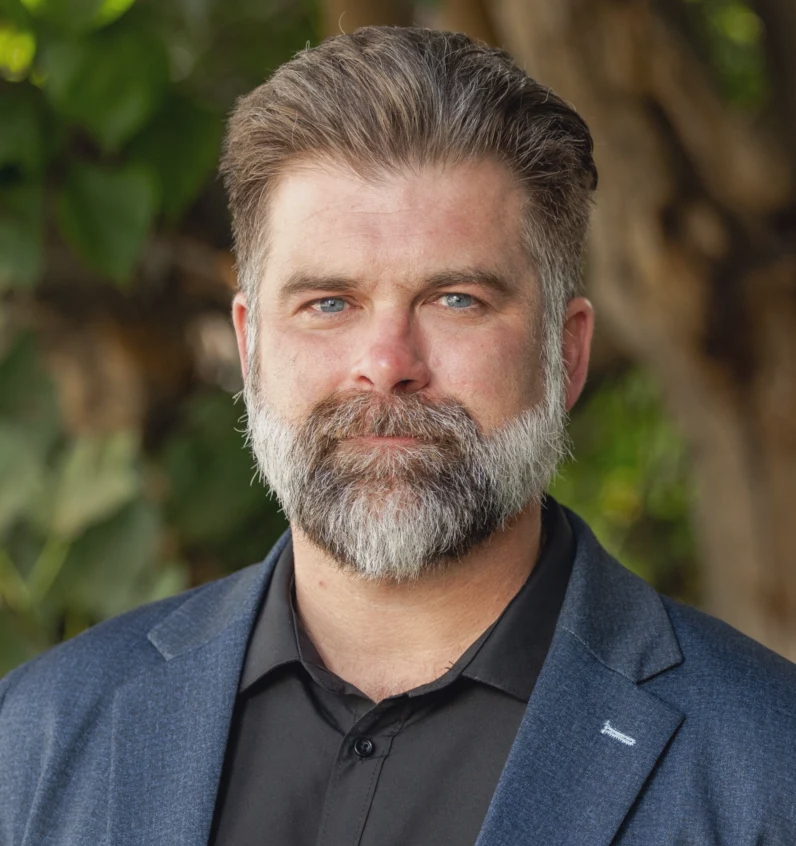
Kutter Callaway
Theologian and professor of theology & culture at Fuller Theological Seminary, author of Be Afraid and host on horror, film, and faith.
13
APPEARANCES
10
PODCASTS
Oct 30, 2026

26:11

Um, Zach, Zach, but Jennifer is, I'm close to friends with Jennifer.

Kutter CallawayGUEST
And I believe as a horror fan, um, uh, she actually submitted to a contest we had called Feared Makers where it was pitching horror films as biblical adaptations.
Kutter CallawayGUEST
So like it was a short film, you're adapting a biblical text as a horror film.
Kutter CallawayGUEST
But all these Christians were telling me that they saw horror actually as the most theological genre that there is in part because, uh, evil is named and it's seen as something that is not good, right? Like we want to overcome it, defeat it, resist it, something.
5 MINS LATER

Kutter CallawayGUEST
So as you rightly said, there's there's not like a a clear like here it is and here it is.
Kutter CallawayGUEST
famous i i can't remember exactly where it was but it was there was a famous like senate hearing on with the fcc about what you could be shown on you know public uh broadcasts and and when and where it was pornography versus art right and and the senator i can't remember who was said something like well i can't define it for you but i know it when i see it you know um so That's a little bit it, right? Like, yeah, it's hard to say here's exactly what's going on.
Kutter CallawayGUEST
But I'm like, oh, there's this doesn't pass the sniff, the smell test, right? Like this is doing something that is potentially damaging, you know, destructive.
13 MINS LATER


Kutter CallawayGUEST
yes yes so um and and and one of the you know when it comes to them a theology of a film or any audio visual medium one of the things i i think i say in the book or maybe i've developed since then is because of that, there are these nested narrative worlds that we inhabit when we go see a film.
Kutter CallawayGUEST
It's also true if you read a book or something, but with film, there's an interesting way in which the medium itself, those boundaries are porous.
Kutter CallawayGUEST
And so you go in as a spectator to a world that you know a narrator is telling you, and then you have the world of the characters, and it gets really blurry as to which parts are fascinating for the characters, which parts are for us, which parts are just kind of hovering out here.
Kutter CallawayGUEST
And so I kind of say like, for a film to even work, you have to go in kind of assuming what I would call transcendence.
Kutter CallawayGUEST
There are worlds outside of these characters' worlds that are impacting them.
29 MINS LATER


Mark LabbertonHOST
What were, besides the intellectual breakthroughs, what were the... emotional impacts or influences or experiences that you would describe came out of this?
Kutter CallawayGUEST
And and actually just yesterday or the day before, my younger sister, she had this classic story when she was little.
Kutter CallawayGUEST
She's at a gymnastics class and a friend of hers just told her about this movie called Child's Play.
24 MINS LATER

Stephen RoachHOST
You do talk about Stranger Things and the Demogorgon and Lots of different examples, but whether it's a supernatural monster or just a monster that's deeply human, I'd be curious to know in your view, what is the monster actually mirroring in our culture right now that maybe we can learn from?
Kutter CallawayGUEST
I think, maybe I'll start with sort of the personal or individual side of things.
Kutter CallawayGUEST
And that is, I think the best horror, and this is where I'm probably taking my categories a bit from scripture, right? That the texts of scripture that I would categorize as like in the horror genre, and not horror fiction, because it's you know, describing real world things that happened, um, many times, not always, but many times that I think what I appreciate about scripture when it's doing its work is that it, it both forces us to kind of stare into the dark heart of this monstrosity, whatever those are.
Kutter CallawayGUEST
I mean, we've got monsters like a Goliath, like a literal monster, right? You know, um, the Leviathan, you have actions, but regardless of, of, of what happens with that monster, um, the best of scripture calls us to account, right? We are never left off the hook as readers, as people who are reading this or experiencing it.
Kutter CallawayGUEST
We come to realize, I think, that we often are implicated in creating the monster or creating are ourselves monstrous, right? That we are the ones that are actually the monster.
24 MINS LATER


Kathy EmmonsHOST
So keeping horror in mind and then keeping like the hope and fear, how do those things go together? Right.


Joshua JohnsonHOST
Um, and so is, is the horror genre helping us fear rightly? And what does it look like to fear rightly and not manage fear, and what's the difference?
Kutter CallawayGUEST
So the answer is, I, I think the answer is it can, uh, and that's why I just want to qualify.
Kutter CallawayGUEST
Sometimes it's awful and, uh, and I say that, it, and I always want to say, "And so are all sorts of other genres and such." So it's not unique to the horror genre that there are some failures, and I do think it's important.
Kutter CallawayGUEST
And most of the time for me when they, when I call them a failure, I think it's an artistic failure first.
Kutter CallawayGUEST
Usually, there's something that it's like, oh, before I even get to the sort of theological Christian, even psycho...
8 MINS LATER


Kutter CallawayGUEST
I think for people that are sort of hesitant, I often say horror is not for everyone.
Kutter CallawayGUEST
But there are some things that are kind of like you can dip your toe into the deep end.
Kutter CallawayGUEST
It's more psychological thriller, but a couple of the seasons are pretty horror, like a supernatural horror type stuff.
10 MINS LATER
Kutter CallawayGUEST
And it's like, "Oh, well, let me, let me, let me give it a try." Um, so I'll try to do that.
Kutter CallawayGUEST
Um, and this wasn't, I won't, I don't wanna say intentional, but it kind of emerged after the fact.
Kutter CallawayGUEST
Um, and the first really is just to say that the best of horror fiction, um, and I focus primarily on, on movies and television, but you could expand that.
Kutter CallawayGUEST
The best of horror fiction provides us a, an actually safe space to grapple with real fears, um, and in doing so, I think, um, both psychologically, theologically, et cetera, actually flexes or, or, or exercises a muscle that allows us to go back out into the actual real world of chaos and, and, and trauma and violence and, and have the capacity to reckon with that in a way that we wouldn't otherwise.
Kutter CallawayGUEST
I think that's the sort of core argument that I'm, that I'm making, but there's two related ones for people of Christian faith, and that is that, uh, for me anyway, I, I study sort of pop culture and, um, cultural engagement from a Christian perspective, and one benefit of engaging something like horror, [laughs] which a lot of people are like, "What?" Um, is that anything, um, outside of the Christian faith that can, that we can interact with, um, and explore I think has this opportunity to shed light on our own sacred texts, our own theologies, and we might call this reversing the hermeneutical flow.
14 MINS LATER

Kutter CallawayGUEST
You know, it's like the, like a black mass version of what we think about is this sort of sacred American ritual, right? The Norman Rockwell.
Kutter CallawayGUEST
And even today, right? I mean, that people will talk about the nuclear family as like the thing that is propping up all of western democracy you know like if if that goes down the whole the whole thing goes down and um And so you could take it a few different ways.
Kutter CallawayGUEST
One, clearly, I think the film is doing that sort of like black mass thing, right? Like this is a profane version of something that is held sacred.
Kutter CallawayGUEST
One is just pure sort of self-motivated reasons to have anyone listening go and sign up for my newsletter that's called The Wrong Kind of Christian.
Kutter CallawayGUEST
And the very first I just started, it just started a sub-sack like a week or two ago.
13 MINS LATER

Ryan DoesHOST
And really what she found out was like, no, there was a flag thrown and we have to go all the way back to the beginning.

Kutter CallawayGUEST
But we're actually asked and encouraged to, to go back to that story over, and over, and over again, um, and dwell on it as, as the word of God.
Kutter CallawayGUEST
And that's what I find interesting when we translate back over to, say, horror films.
Kutter CallawayGUEST
It's like, oh, that's bad for you, or that's unhealthy, or that, you know, God doesn't approve of that.
Kutter CallawayGUEST
[chuckles] In this case, it's, it's horror fiction that we're not just supposed to acknowledge, but actually dwell on.
10 MINS LATER
Kutter CallawayGUEST
So I have been and continue to be sort of averse to it in some ways, in part because of exactly what you're describing.
Kutter CallawayGUEST
But I kind of went into it more because I claim to have this expertise on theological criticism of contemporary popular culture.
8 MINS LATER
Dru JohnsonHOST
Do you put these on a spectrum somewhere? Are there different axes for comparing apples to apples here?