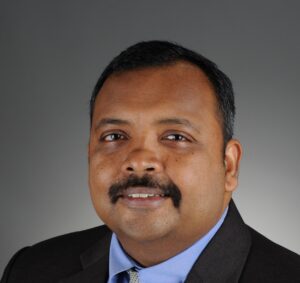
Kumar Ramakrishna
Dean of the S. Rajaratnam School of International Studies
3
APPEARANCES
3
PODCASTS
Sep 10, 2026

Daniel MartinHOST
This incel beliefs, grievances, male ideologies, extremism, anti-this, anti-that, this pick and choose, is that going to make the idea of radicalization even harder to spot?

Kumar RamakrishnaGUEST
I can tell you the situation has certainly evolved a lot since 25 years ago when we first heard about Jamaah Islamiyah.
Kumar RamakrishnaGUEST
I mean, back then, right, Many of these individuals, they were radicalized into Islamist extremism.
Kumar RamakrishnaGUEST
So once you were able to deconstruct the extremist ideology and show the ways in which the extremist ideology deviated from the mainstream understanding of the faith, that was a big part of the battle won.
Kumar RamakrishnaGUEST
But today, because of such an explosion of social media platforms, so much choice, available to anybody with access to a mobile phone, you have the opportunity to mix and match ideological fragments drawn from far-right ideas, far-left ideas, anti-Semitism.
Daniel MartinHOST
So, I mean, that begs me to my final point that I want to address, which is tomorrow friday 11 september marks 25 years since the september 11 attacks a quarter of a century on i wonder whether the goalpost has moved where 25 years ago like you said we were trying to understand the radical groups and the ideologies and therefore understand how we can tackle that but now do we also have to think about adding to that list i don't know the tech companies and the algorithm as well as part of this

Kumar RamakrishnaGUEST
So this is not something which is, uh, entirely, uh, bought out of the blue globally.
Kumar RamakrishnaGUEST
But perhaps in, uh, this recent case, uh, it's a bit of a wake-up call, if you like, that, you know, in Singapore, you know, schools are also places where these sorts of, uh, potential attacks could happen.
Kumar RamakrishnaGUEST
Globally, for several years now, uh, we have seen, uh, uh, many cases of youth radicalization, teenagers, right, uh, very much, uh, uh, indoctrinated by what they have observed online.
Kumar RamakrishnaGUEST
Social media is very much, uh, unfortunately implicated in the, these, uh, cases of, uh, radicalization of young people, teenagers, you know? So, uh, in Singapore, so far the, the youngest, uh, are 14.
Kumar RamakrishnaGUEST
I mean, a few cases of 14-year-olds, but overseas they are even younger, right? And when you are that young, where do you go every day? You'll go to school, right? So this is something which, uh, certainly the, uh, security community, uh, has to pay attention to.
30 MINS LATER

Tiffany AngHOST
If our audience, uh, remembers nothing else from our [laughs] conversation, it went on for quite a while, what is one thing you want every parent or teacher listening in to take away from this conversation?


Keith YapHOST
What was the kind of paradigm shift, if one might use that word, uh, when I guess the Americans or people in the security space undertook after the 9/11 attack?
Kumar RamakrishnaGUEST
I remember in the lead up to the September 11 attacks, so September 2001, at that time, the, the Bush administration had just come to power and they were focusing very much, very much like now on the US-China geopolitical competition.
Kumar RamakrishnaGUEST
The thinking at that time in the early 2000s before September 11 was there is, there was a need for the US military to prepare for a future conflict with China.
Kumar RamakrishnaGUEST
And in fact, in, uh, April that year, there was a collision between a US aircraft and a Chinese, uh, military aircraft.
Kumar RamakrishnaGUEST
So the thinking was, you know, the f- the future, and this was the early 2000s before September 11, the, the, the future would be about great power competition.
Kumar RamakrishnaGUEST
But after September 11, there was a huge rethink, and certainly in the US, in the affiliated militaries, there was thinking that there's a need to sort of refocus attention on creating, uh, special forces, special forces that would be able to engage with- Smaller, uh, agile terrorist groups around the world.
12 MINS LATER
Keith YapHOST
But why is that the case that you still see, say, people who are educated, well-educated, join, join such group?