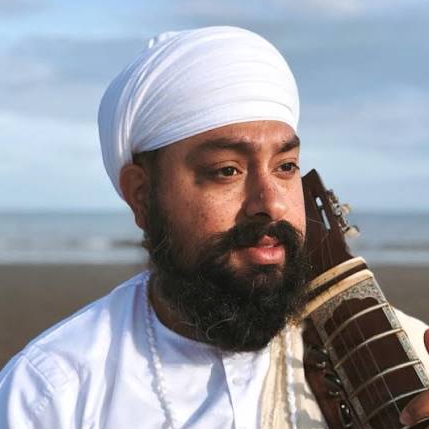
Kirpal Singh Panesar
UK-based Hindustani classical musician, regarded as one of today's leading tar-shehnai, dilruba and esraj players, who trained under Ustad Bismillah Khan and Ustad Surjeet Singh.
2
APPEARANCES
1
PODCASTS
Sep 27, 2026

speaker_2UNKNOWN
Right.

Kirpal Singh PanesarGUEST
I think other than that, because it was used primarily as a um as a accompanist instrument as well so you know there was people nobody kind of picks something up and thinks i'm going to be someone's assistant later on in life you know everyone wants to be the main thing so so um, I, I do think up until a certain, certain time, you know, people, uh, would have just done it as, you know, for a little while and not done too much more, but then there were some great musicians, my Ustadji, Ustad Gurudev Singhji, Ustad Piyara Singhji, who's Ustad Gurudev Singhji's Ustadji.
Kirpal Singh PanesarGUEST
And especially with Boeing, my Ustad Gurudev Singhji, who was a great solo player, Ustad Amit Ali Khan Sahib.
Kirpal Singh PanesarGUEST
And, um, Dirdir Ang, to play that with a bow on the gauze is something that I would say Ustad Gurudev Singh ji kind of pioneered and which is meant, you know, subsequently then great artists like Ustad Baljeet Singh ji were able to then, you know, kind of use that type of music and make this instrument into what it is today.

Ranjana GhatakHOST
and study this music you know I'm seeing that with the students that I'm teaching there's a lot of people who have either been born and raised in India or born and raised here they might have not learned any of it or learned a little bit of it but are really wanting to to connect to the subject deeper so
Kirpal Singh PanesarGUEST
I see that too as well you know I through through my students as well I get to see you know it's not just the music that they're after I think they're after that that those life lessons um you know i i've said this to you and i said this to many other people you know our music uh it's entertaining and you know lots of like you know uh lots of people come to watch you play and listen to your music um and they all clap at the you know the parts where you're playing faster and the the intricate dance and whatnot but our music is supposed to be more than entertainment you know our music is a way of life And it's the life lessons that you learn through this.
Ranjana GhatakHOST
I was interested in what drew you to the Esraj and the Dilruba and can you talk about the role that music plays in your spiritual practice and in your spiritual community?
Kirpal Singh PanesarGUEST
I think I, from the Namtari Sikh tradition, And I'm born in a very traditional family who were devout Sikhs.
Kirpal Singh PanesarGUEST
And growing up, I was always doing what I was told to do without realizing what the reasoning behind it was.
Kirpal Singh PanesarGUEST
um those people who are my generation would remember you know if you asked too many questions that the answer you would get was do it because i told you to do it and that's it and we that was good enough uh for for us you know we we kind of trusted what our parents were saying and so we went along with whatever they were saying to do uh and music was one of these things that you know just like every other family every other nantari family um We were all taught to learn music.
Kirpal Singh PanesarGUEST
Sri Sathya Pujit Ji Singh Ji were the main reason that the music was such an integral part within Naam 36. very strongly wanted everyone to learn music for many reasons, but I'll go through those later.
Kirpal Singh PanesarGUEST
And they found that the easiest way to stay connected to our heritage and to our roots is through music.
20 MINS LATER
Ranjana GhatakHOST
I recall you saying that you had to, how many times was it before that you actually got to sit in front of him and learn? And this is also a great lesson and an insight for people listening and watching of know i think it's it's such a case of timing to learn this music especially at time now where we're always in a rush and we want to get from zero to 100 in a 12-step program and it just doesn't work like that within team music and so you know can you speak a little bit more about that