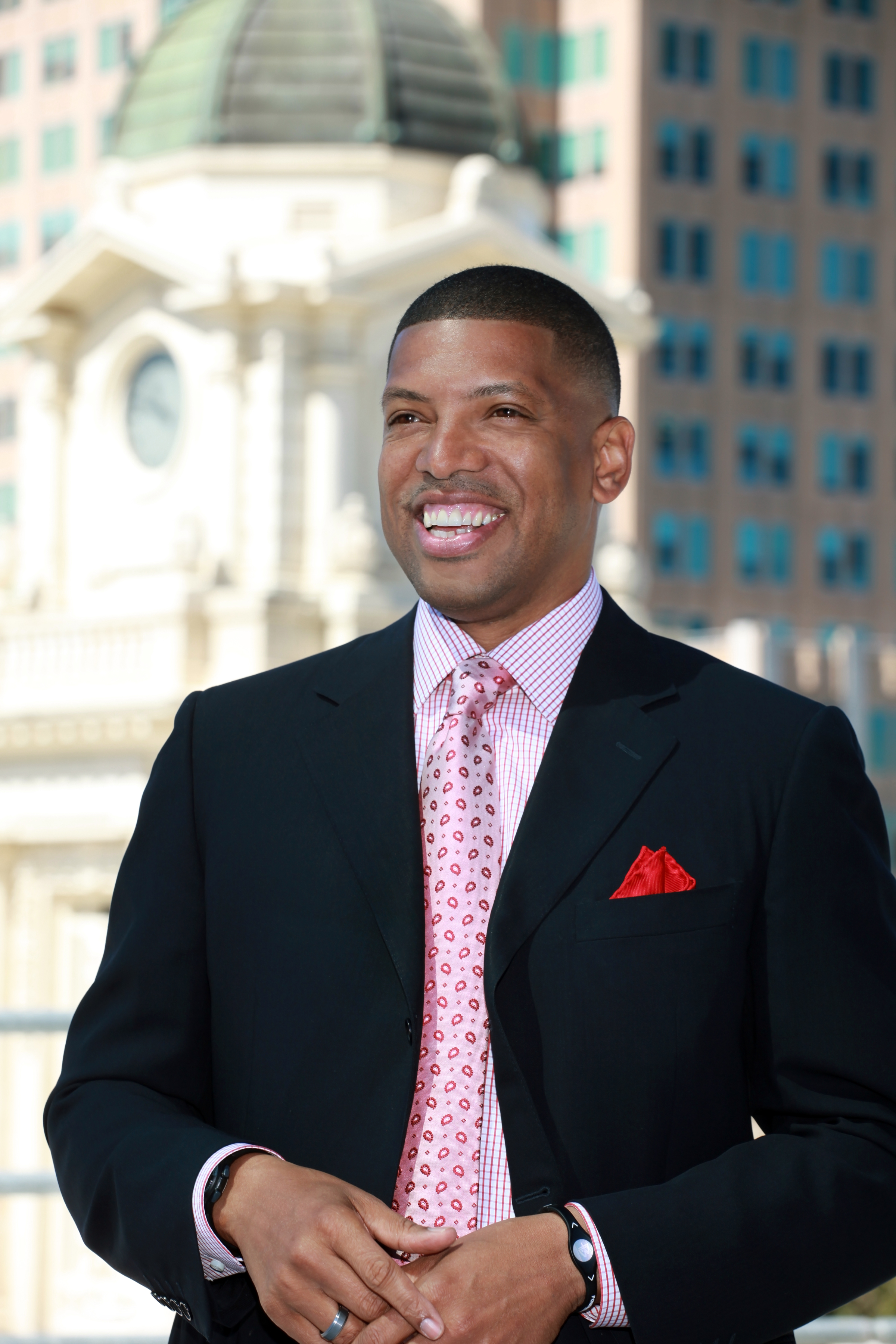
Kevin Johnson
American former basketball player and politician
8
APPEARANCES
8
PODCASTS
Nov 25, 2026


Kevin JohnsonGUEST
For a long time, and this is probably not the answer a lot of people would give, but nothing.
Kevin JohnsonGUEST
And one of the things I always tried to do was be conversational, not be the radio guy.
9 MINS LATER

PaulHOST
Kerfin getting over the line in the end against Monk, by the way, Michael Foley's long-range kicking, particularly in the first half, obviously, that set the platform for to give Montbelly with my law the lead going in at the interval, but really professional the way Kerfin went about the business straight after halftime.
Kevin JohnsonGUEST
So it's two championship games in a row that they've had to ask questions of themselves at halftime, but come out in both second halves and really, really, you know, turn the screw, you can nearly say.
Kevin JohnsonGUEST
But they'll be again, similarly to Mike Cullen and Saltilnakna Cara, they've put themselves in a very strong position.
Kevin JohnsonGUEST
They're more or less now, I think, in the quarterfinals with six weeks towards them.
8 MINS LATER
PaulHOST
But how do you look back on it all?

Kevin JohnsonGUEST
I'm looking to create a community, first of all, that understands that love is the greatest motivator, it's the greatest factor, it's the greatest thing that changes people.
Kevin JohnsonGUEST
So the main thing, these kids, when they come to this program, they'll tell you, Coach Casey's going to tell you he loves you.
Kevin JohnsonGUEST
I say, the people that love you tell you what? And they'll go, what we need to hear, not what you want, what we want to hear.
Kevin JohnsonGUEST
So I truly believe in creating an environment where kids feel safe that they can fail.
29 MINS LATER

Chase JacksonHOST
Then all the athletes that you've coached kind of come in, where have the mistakes that you've seen some of them make when they've lost a game or they've had a failure? What's kind of, how's that showed up in terms of that behavior and how do you think that's kind of negatively impacted them compared to the, go ahead.


Kevin JohnsonGUEST
Um, so we've been kinda steadily growing- Over the 10 years that I've, I've been on, and we're not a strictly traditional band by any means.
Kevin JohnsonGUEST
We like to stretch out and, you know, all the guys have, uh, effects pedals and stuff, so you have like some wah-wah on the banjo, and sometimes the guitar player turns on his distortion, and we like kinda the crunchier side of that stuff.


Sue HitzmannHOST
So what are the principles behind developing real-world explosiveness in young athletes?
Kevin JohnsonGUEST
Power is something that people stress a lot, but power without balance and control, to me, it shouldn't be the order.
Kevin JohnsonGUEST
I want to make sure my athletes have a lot of core stability, balance, control before we start putting all these heavy weights.
Kevin JohnsonGUEST
I can get an athlete that could, let's just say we go, I'm going to have you do some hex bar jump squats with a 45 on each side, and I'm looking at them, but the ground contact time is not even adhering to plyometrics.
32 MINS LATER

PJ HalloranHOST
But I mean, when you first heard about it, when he first approached you and said, "Hey, you know, I got this, we're standing up this technical hazard response unit," I mean, was that immediate, like, "Yeah, I'm in," or did you-
Kevin JohnsonGUEST
S- at that time, the, the culture of the FBI was we will, we will train our, our existing agents to do anything that needs to be done, and that was how they did things, which was, you know, which was fine.
Kevin JohnsonGUEST
We had, after the attacks overseas in Japan with, with nerve agent, and then, uh, Oklahoma City, that was, those were both in '95, and then we had the Olympics coming to town in '96.
30 MINS LATER


Kevin JohnsonGUEST
Well, Chief Justice Roberts, writing for a majority of the court, held that the Citizenship Clause of the 14th Amendment bestows citizenship on persons, including undocumented immigrants, or the children of undocumented immigrants, born in the United States.
Kevin JohnsonGUEST
This has been a long and traditional rule of the common law and the 14th Amendment.
Kevin JohnsonGUEST
And Chief Justice Roberts, writing for majority of the court, reaffirmed that rule and rejected President Trump's declaration through an executive order that birthright citizenship could be limited to the children of citizens and lawful immigrants.
Billy CruzHOST
The fact that there were three justices who sided with President Trump in this case, what does that tell us about this Supreme Court and how it views and interprets the Constitution? And what could this mean for future challenges to particular amendments?
Kevin JohnsonGUEST
Well, I think that Justice Thomas, Justice Alito, and Justice Gorsuch all dissented, which is more than I would have predicted.
Kevin JohnsonGUEST
But they added some language to the 14th Amendment, in my estimation, that would limit citizenship to the children of US citizens and lawful immigrants.
Kevin JohnsonGUEST
It strikes me that Justice Thomas, who ordinarily is committed to originalism, went out of his way in a very lengthy 90-plus page dissent to justify limiting the plain language of the 14th Amendment.

Kevin JohnsonGUEST
By closing courts and resigning cases, I think that the Executive Office for Immigration Review is thinking, how do we change that pro-immigrant culture that we saw in the immigration courts for many years?