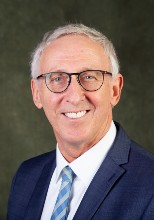
Kevin Hall
Former president of the University of Victoria
23
APPEARANCES
17
PODCASTS
Nov 2, 2026


Kevin HallGUEST
It was a study about what's happening in our brains when we consume ultra-processed foods.
Kevin HallGUEST
And whether or not we see the same changes in a brain chemical called dopamine that we do in people who consume highly addictive substances like nicotine or cocaine or methamphetamine.
Kevin HallGUEST
And so what we did was we designed a study to test whether or not you saw the same sorts of things when people were exposed to ultra-processed milkshakes really high in fat and sugar.
Kevin HallGUEST
And we used this very sophisticated brain imaging technology, the same one that our colleagues in the Addiction Science Institutes use to assess what happens to brain levels of dopamine.
Kevin HallGUEST
And to our surprise, and I think many other people's surprise, we didn't see an average increase in dopamine in the brain.


Brian LehrerHOST
How did you group the participants? What did they eat? And what do you think you may have established?
Kevin HallGUEST
yeah sure so this was it was a very small sort of mechanistic study to try to understand is there something about ultra processed foods per se that might be driving excess calorie intake which is kind of on the pathway to weight gain and obesity and what we did was we designed two sets of diets where the nutrients were matched between them not all not all the nutrients but the typical players the the calories the carbs the fat the protein the sugar the fiber those kinds of things that we often think of as either health promoting or health deteriorating.
Kevin HallGUEST
These were matched between two sort of diets that we had our cooks and our dieticians design.
Kevin HallGUEST
But in one case, all those foods came or 80% of the calories came from ultra processed foods, that category four foods that we talked about in the NOVA system.
Kevin HallGUEST
And in the other case, 80% of calories came from minimally processed foods, category one.
Kevin HallGUEST
And we basically had people come to live with us in our research center at the NIH, took complete control over their environments, and for one month, continuously, they spent with us, and we either gave them, for the first two weeks, the ultra-processed diet, followed by the minimally processed diet, or the reverse.
8 MINS LATER


Simon HillHOST
Would you say that it's, it's case closed today on the idea that carbohydrates or fat are uniquely fattening, uniquely a problem?
Kevin HallGUEST
No, I, I don't think the case is ever closed really, but I also think that, you know, the different studies had different contexts, which I think are, are important to kind of unpack, right? So the...
Kevin HallGUEST
Again, I c-- I came into this field from a very different place, right? I was trying to build computer simulation models of how the body adapted to different fuels, and in the diet and within the body, and where we kind of get our fuels from when we're not eating and how that changes when we are eating, and those types of things.
Kevin HallGUEST
And I, I heard about this kind of phrase of a calorie is a calorie, and I didn't really know where it came from at the time.
Kevin HallGUEST
[chuckles] It's like, what, what did, what do you mean by that, number one? Of course, I mean, you just repeated the same word and put an is in the, [laughs] in the middle.
Kevin HallGUEST
It's like, [laughs] what-- how is this insightful, right? And the challenge that I was having was, you know, I'm trying to build this computer simulation model where you have this input of nutrients, carbohydrate, fat, and protein.
7 MINS LATER
Simon HillHOST
So if someone's listening today and is thinking, "Well, I live a pretty sedentary lifestyle, but I don't have type two diabetes," what you're saying is despite the fact that you haven't been diagnosed with a metabolic condition, if we were to take out the microscope, we took a biopsy of your muscle tissue, we would be i- be able to identify that there is decay, deterioration occurring, mitochondrial dysfunction, and you are on the path to metabolic disease despite not currently having it.

Sarah GoldingHOST
I mean, what can Shannon not do that's, you know, utterly ludicrous and ridiculous? What do you think of Shannon's writing? How would you explain it to somebody who hasn't yet found this show?
Kevin HallGUEST
Um, I do know that she and, and Eric, uh, grew up generally in the same area that I grew up, central Illinois area.
Kevin HallGUEST
So, and I know she's mentioned watching, uh, our public broad- our local public broadcasting that, uh, throughout the, uh, late '70s and early '80s, uh, well, even into the early '90s, I don't know if they still do it, I haven't watched it lately because I don't have local channels anymore with satellite and streaming services and everything.
8 MINS LATER
Kevin HallGUEST
Huh, this used to be so much easier when Olivia was opening up the doors for us.


Matty DalrympleHOST
When you locate these, is it always apparent who you need to contact about this, or d- is this a wh- a whole other research effort to find that out?
Kevin HallGUEST
When you look at the magazines, usually within the first couple of pages, sometimes it's on the last page, but in the first couple of pages, it will actually list who the editorial staff is.
Kevin HallGUEST
And nowadays, I haven't seen one in a while that didn't also include, "If you have an article, submit to this email," and they'll give you a name.
Kevin HallGUEST
Contact those folks, and you wanna keep it brief, and I go into that in the book with an example in the book, and that's the other thing I do put into the book, all the exact examples I have used to get into print, to get into radio, and I have not been on TV yet, but I'll talk about that in a minute.
23 MINS LATER
Brian LehrerHOST
How did you group the participants? What did they eat? And what do you think you may have established?
Kevin HallGUEST
So this was y- it was a very small sort of mechanistic study to try to understand, is there something about ultra-processed foods per se that might be driving excess calorie intake, which is kind of on the pathway to weight gain and obesity.
Kevin HallGUEST
And what we did was we, uh, designed, uh, two sets of diets, uh, where the nutrients were matched between them.
Kevin HallGUEST
Not all, not all the nutrients, but the typical players, the, the calories, the carbs, the fat, the protein, the sugar, the fiber, those kinds of things that we often think of as, as, uh, either health promoting or health deteriorating.
Kevin HallGUEST
These, these were matched between two sort of diets that we had, uh, our, our cooks and our dieticians design.
Kevin HallGUEST
But in one case, all those foods, uh, came, uh, or 80% of the calories came from ultra-processed foods, that category four foods that we talked about in the NOVA system.
9 MINS LATER
Brian LehrerHOST
How did you group the participants? What did they eat? And what do you think you may have established?
Kevin HallGUEST
So this was, it was a very small sort of mechanistic study to try to understand, is there something about ultra processed foods per se that might be driving excess calorie intake, which is kind of on the pathway to weight gain and obesity.
Kevin HallGUEST
And what we did was we designed two sets of diets where the nutrients were matched between them.
Kevin HallGUEST
Not all, not all the nutrients, but the typical players, the, the calories, the carbs, the fat, the protein, the sugar, the fiber and, Those kinds of things that we often think of as either health promoting or health deteriorating.
Kevin HallGUEST
These were matched between two sort of diets that we had our cooks and our dieticians design.
Kevin HallGUEST
But in one case, all those foods came or 80% of the calories came from ultra processed foods, that category four foods that we talked about in the NOVA system.
9 MINS LATER

Kevin HallGUEST
Why? Where? What's doing this? And then as I researched it further, there was a comedian that when I was a more of a teenager, uh, 20 years of age, that kind of thing, Sam Kinison.
Kevin HallGUEST
Sam was a child of a Baptist family, but Sam could get rather wild in his comedy.
11 MINS LATER

Charles GracieHOST
What's some of the feedback you're getting from the people using it and what's their experience with it?
Kevin HallGUEST
I mean, one, you have recruiters that are now having deeper conversations because they have more time.
Kevin HallGUEST
So when they pick up the phone, they actually know what that driver is interested in.
Charles GracieHOST
What's your vibe on what's happening in the market right now? And are you optimistic about the direction things are going?


Kevin HallGUEST
And after you account for exports and whatnot, it drops, I think, to something like 12,000 calories per person per day.
Kevin HallGUEST
That's all the fruits and vegetables and whole grains and the things that, uh, are like the, uh, legumes and things that you, uh, th- are, are kind of at the top of the list of, of, uh, at least the whole dietary guidelines for Americans.
12 MINS LATER


Bob McDonaldHOST
Well, you spend a lot of your research time looking at ultra-processed foods and First of all, what do you categorize as ultra-processed and what are they doing to our body?
Kevin HallGUEST
It has a very long definition, but the upshot is that if it contains ingredients that you wouldn't find in your home kitchen or a chef wouldn't typically use them in a restaurant, then that probably categorizes the food as ultra-processed.
Kevin HallGUEST
And so what we were interested in is basically the idea of, well, is it really more about the ultra processing of foods that's driving poor health consequences or is it something about the nutrient content of foods? And so we've done studies when I was at the National Institutes of Health where we would match various different food environments for the calories presented and the nutrients.
Kevin HallGUEST
and vary the number of foods that were so-called ultra-processed, either from zero to up to 80% of calories that were presented to people.
Kevin HallGUEST
And in our study that we published, this was the first randomized controlled trial of diets varying in ultra-processed foods, but matched for these different nutrients.
Bob McDonaldHOST
So what is it about the ultra-processed food? Is it that it's like higher in salt, so you go after it, or high in sugar or something like that? What is it that makes it so appealing to us?
Simon HillHOST
Would you say that it's, it's case closed today on the idea that carbohydrates or fat are uniquely fattening, uniquely a problem?
Kevin HallGUEST
But I also think that, you know, the different studies had different contexts, which I think are, are important to kind of unpack, right? So the...
Kevin HallGUEST
Again, I c-I came into this field from a very different place, right? I was trying to build computer simulation models of how the body adapted to different fuels, and in the diet and within the body, and where we kind of get our fuels from when we're not eating, and how that changes when we are eating, and those types of things.
Kevin HallGUEST
And I, I heard about this kind of phrase of a calorie is a calorie, and I didn't really know where it came from at the time.
Kevin HallGUEST
[chuckles] It's like, what, what d-what do you mean by that, number one? Of course, I mean, you just repeated the same word and put an "is" in the [laughs] middle.
Kevin HallGUEST
It's like, [laughs] what-- how is this insightful, right? And the challenge that I was having was, you know, I'm trying to build this computer simulation model where you have this input of nutrients, carbohydrate, fat, and protein.
26 MINS LATER
Simon HillHOST
Is education, is, is transparency, front-of-pack labeling, is that enough? Or do you feel like significant regulation would be required to change the food environment?
Charles GracieHOST
Oh, you mean that thing that people put in their job ads and think it's like a perk?
Kevin HallGUEST
So, I mean, if you look at what do you want? What do you want in a career? What do you want in an employer? You want a great brand? You want a great culture? You want caring? You want respect? Obviously, pay is a big part of that, right? But there's offsets in those, at least in my mind.
Kevin HallGUEST
It's the people that you work with, the culture, the type of environment it is, the respect that you have, the safety.


Kevin HallGUEST
So I think it's important to realize that at the NIH before this administration, there still was not much investment in nutrition research.
Kevin HallGUEST
In fact, the metabolic ward unit that I told you about where we keep people for weeks and months at a time and have complete control over their food environment, measure every morsel of food that they eat, that metabolic ward was actually threatened to be closed by the previous administration.
Kevin HallGUEST
um so so it's not that you know things were all great back in the day and they just got bad uh we were always struggling to kind of do this kind of science um but and so that's why you know in the run-up to the election you know i was actually pretty excited that this was a bipartisan sort of talking point that, you know, Bernie Sanders and Cory Booker, as well as Bill Cassidy and others and RFK Jr. were all talking about these topics and the importance of addressing diet-related chronic disease, improving nutrition science and research.
Kevin HallGUEST
And, you know, we'd had plans for many years of how could we expand on the facilities that we would need so that a study that has taken us, you know, two or three years could be done in two or three months.


Derek ThompsonHOST
What did these trials do? What did you find? And how were those findings consistent with this idea that, as Julia put it so beautifully, our food environment disrupts the symphony of metabolism inside of us?
Kevin HallGUEST
So we were actually trying to isolate the effects of the foods per se, right? So there's all these other aspects of the food environment that, that Julia alluded to, the kind of the social environment that we find ourselves in, the, uh, advertising, the cues in our environment, um, the expense, the, uh, the time commitments that it takes to require, uh, to require to prepare, uh, healthy foods or unhealthy foods, as the case may be.
Kevin HallGUEST
We decided to try to remove all of that from these experiments, and we brought people in, uh, to the NIH Clinical Center, where I used to work, and we basically, uh, removed people from their normal food environments.
Kevin HallGUEST
Pr-- created this very artificial f- food environment for them, just to kind of isolate that, uh, food environment and basically expose them to, uh, diets that had plenty of calories, more than double the number of calories that they would require to, to maintain their weight.
Kevin HallGUEST
Tried to match them for as many of these different sort of nutrients of concern that we often hear about: the salt, sugar, fat, carbs, uh, glycemic load of the diets, uh, matched again for the total calories that we presented to pe- uh, people with.
Kevin HallGUEST
And in one instance, we presented them with a diet that contained none of these so-called ultra-processed foods.
34 MINS LATER

Julia BelluzGUEST
I don't know if you want to, want to get into that in more detail at this stage, but, um, I think there have been efforts made to, to recognize these chronic health issues and to prevent them, but I, I think it's a little bit more difficult, and we've also allowed these, like, gaping, um, loopholes to emerge that, that don't solve the problems we're setting out to solve.

Kevin HallGUEST
I mean, uh, in the past, we had lifestyle interventions that have led to modest amounts of weight loss and, like I said, some benefits for many, many people.
Kevin HallGUEST
But there are others that could, uh, benefit from more weight loss, but we're not achieving that benefit because it, it just turns out to be so darn hard for folks to kind of incorporate major changes into their everyday lifestyles.
Kevin HallGUEST
And then there's the bariatric surgeries where we've seen, you know, huge amounts of weight loss and, and these large benefits.

Marielle SegarraHOST
So if someone does want to lose weight, what are your top tips based on the research?


Ian SampleHOST
He believes that hyperpalatable UPFs can be addictive, but is the mechanism the same? Would an ultra-processed milkshake cause the same large surge of dopamine in the brain that can happen with highly addictive drugs?
Kevin HallGUEST
Surprisingly, what we found was we were unable to detect a significant dopamine increase in the brain after consuming these ultra-processed milkshakes high in fat and sugar.
Kevin HallGUEST
We wrote up a paper and it was coming out in a journal and it basically said, yeah, look, these foods might be addictive in some people, but they seem to be working slightly differently than these highly addictive drugs.
Kevin HallGUEST
And we had a press release ready and we're ready to kind of tell the world about this discovery.
Ian SampleHOST
I wonder... whether you have any faith in the administration to regulate where it's needed and to tackle the specific kinds of problems that you're talking about.


Kevin HallGUEST
We weren't able to rehire, um, people who, um, were leaving on a regular basis that run our studies.
Kevin HallGUEST
Um, s- fortunately, some of those things have turned around a little bit at the NIH.
Kevin HallGUEST
They're still experiencing some of these difficulties purchasing research supplies, for example, still to this day, but we were experiencing a really acute problems then.
Kevin HallGUEST
So I was -- and I've been talking with our scientific leadership, like, "What's, what's gonna happen here?" Um, right around that time, it had leaked that there's gonna be a forty percent cut to the NIH budget and very dire time.
Kevin HallGUEST
So I, I wrote to these folks and said, "Look, not only are we experiencing these problems, but, you know, we're totally aligned, and we can make a lot of progress." In fact, I told them about these ongoing studies, how we're making progress understanding mechanisms of ultra-processed foods, why do they make people overeat, um, that we'd been able to redesign an ultra-processed diet that was still eighty percent of calories from ultra-processed foods that didn't actually cause people to overeat, um, by focusing on mechanisms, that we could do a lot more in the future if we, uh, kind of engaged in this plan.
26 MINS LATER

Cynthia GraberHOST
Everything is interlinked, and scientists don't understand everything about how they work together to try to keep you at your set point.
Kevin HallGUEST
The, I think the prototypical example was this hormone called leptin, which is secreted by our fat cells roughly in proportion to how much body fat that we have, and, uh, that's providing a signal to the brain to tell us how much stored energy do we have on our body.
Kevin HallGUEST
And what people noticed a long time ago in mice was that if they lack a functioning version of this leptin, that the mice become ravenously hungry and will eat, uh, constantly.
Kevin HallGUEST
And, uh, no matter how much body fat they have, they will act as if they are starving because they're not getting the signal from the body that they have plenty of calories on board.
6 MINS LATER

Nicola TwilleyHOST
One of the biggest takeaways is that there's still a ton we don't know about how our bodies regulate the complex business of fueling themselves, and some of what we think we know is wrong, or at least overly simplistic.
Derek ThompsonHOST
What did these trials do? What did you find? And how were those findings consistent with this idea that, as Julia put it so beautifully, our food environment disrupts the symphony of metabolism inside of us?
Kevin HallGUEST
So, we were actually trying to isolate the effects of the foods per se, right? So, there's all these other aspects of the food environment that- that Julia alluded to, the kind of the social environment that we find ourselves in, the, uh, advertising, the cues in our environment, um, the expense, the, uh, the time commitments that it takes to require, uh, to require to prepare, uh, healthy foods or unhealthy foods, as the case may be.
Kevin HallGUEST
We decided to try to remove all of that from these experiments, and we brought people in, uh, to the NIH Clinical Center where I used to work, and we basically, uh, removed people from their normal food environments, pro- created this very artificial f- food environment for them just to kind of isolate that, uh, food environment, and basically exposed them to, uh, diets that had plenty of calories, more than double the number of calories that they would require to- to maintain their weight, tried to match them for as many of these different sort of nutrients of concern that we often hear about, the salt, sugar, fat, carbs, uh, glycemic load of the diets, uh, matched again for the total calories that we presented to pe- uh, people with.
Kevin HallGUEST
And in one instance, we presented them with a diet that contained none of these so-called ultra-processed foods, uh, and in another occasion, we presented them with a diet that contained 80% of calories from ultra-processed foods and just gave people very simple instructions, "In this new food environment, you know, we're interested in seeing how it affects your biology.
Kevin HallGUEST
We're gonna be poking and prodding you, putting you in respiratory chambers, measuring your body composition, all sorts of things." Uh, what they didn't know was that we were gonna be measuring all their leftovers, and we would basically be trying to figure out how much of the food presented to them did they actually eat and which foods did they eat, which ones did they leave on their plate? And, uh, really simple instructions.
36 MINS LATER
Julia BelluzGUEST
But I, I think it's a little bit more difficult and we've also allowed these, like, gaping, um, loopholes to emerge that, that don't solve the problems we're setting out to solve.


Kevin HallGUEST
Yeah, so I had been working for- for, uh, about a year or more actually with, uh, various university scientists around the country, uh, to prepare a- a really comprehensive review on what we know about ultra-processed foods in various aspects.
Kevin HallGUEST
And part of the paper was, uh, written by a colleague at a university on- on health equity and how these foods are, you know, being targeted to, uh, to underprivileged communities, and- and why this is a- a potential problem.
Kevin HallGUEST
Um, and I put the paper through the usual NIH process of getting approval to- to have this, uh, paper submitted for publication, and it actually went through the process, uh, u- until the very next day where it was flagged that, um, the, because of this description of health equity in the paper, um, that would have to be edited, uh, to, uh, comply with executive orders, um, or else I would have to remove myself as an author.
Kevin HallGUEST
I wasn't gonna censor my colleague, and so I- I- I voluntarily removed myself as an author.

Cynthia GraberHOST
And the participants were also periodically asked how full they were, and no matter their diet, they didn't report being hungry.
Kevin HallGUEST
But, um, despite the no differences in appetite, they ended up consuming about, uh, 500 calories per day more on average during the ultra-processed, um, food environment, and they were gaining body weight and gaining body fat.
Kevin HallGUEST
They're kind of have their backs to the scales when they're being measured every day, and they're wearing loose-fitting scrubs, so they can't tell if their clothes are getting tighter or looser.
Kevin HallGUEST
But they were spontaneously gaining weight on the ultra-processed food, um, environment.
Kevin HallGUEST
And the same people, when they were in the minimally processed food environment, just spontaneously lost weight.
Nicola TwilleyHOST
There are so many possible causes for why ultra-processed foods might be bad for us, but doing the research to tease out what it is about them that is leading to obesity is a key first step.
Kevin HallGUEST
Because if we could figure that out, then we could inform people who make policies about what it is that we need to do in order to shift the food supply to one that doesn't drive excess calorie intake.


Kevin HallGUEST
I actually saw the last few minutes of the TV show, which is, like, the weigh-in, right? Where they make people take off their shirts if they're men, and it's just, like, this horrible fat-shaming horror show.
Kevin HallGUEST
But the part that struck me was, you know, people would step on the scale, and the announcer would say, "Yeah, you lost 15 pounds last week." And I'm like, how is that even possible? Like, that, that kind of goes against everything I've ever seen, and well, how many calories are these people burning with this exercise, and, and what are they actually eating?
Kevin HallGUEST
So I eventually found out the name of the physician who was in charge of the, the care of these folks, and I called them and [laughs] said, "Hi, this is..." Like, "This is Dr.
Kevin HallGUEST
I'd like to speak with who's in charge of the, the clinical care of these participants." Anyway, I got this guy on the phone.
Kevin HallGUEST
He was an interesting character, and I was just kind of asking him, "Do you, you track how much they're eating? Do you measure their metabolic rate? Do you know how many calories they're burning?" He's like, "No, no, we don't know any of that stuff."